
Same-day & Next-day Delivery

Quality Guaranteed

Unlock Your Welcome Offers: FREE Delivery | Up to 80% OFF | Free 30-day JoyPlus trial
Download the APP
A solar installation helps reduce cables, recharging and electrical work around a house, balcony or business premises. However, you still need to choose a product suited to its surroundings. A camera installed beneath a tree, a poorly positioned panel or a light that is not powerful enough can quickly lose autonomy.
Before buying solar outdoor equipment, it is therefore worth separating genuinely useful features from vaguer marketing claims. Here are the points to check when choosing a solution suited to the climate, exposure and everyday use in France.
An integrated or additional panel only produces energy when there is enough available light. In winter, in overcast weather or on a north-facing wall, charging can slow considerably. A solar camera therefore remains highly dependent on where it is installed and how much light it receives.
To avoid unpleasant surprises, check:
A 4K security camera can display more detail than a lower-resolution model. However, image quality also depends on brightness, the optics, video processing and compression. Resolution alone does not guarantee clear identification in every situation.
Choose night vision suited to the scene, an auxiliary light if necessary and adjustable activity zones. These settings can reduce alerts triggered by branches, animals or passers-by in the street.
A camera may appear standalone while still requiring a connection hub. This is the case with the eufyCam 3 additional camera featured here: it requires a HomeBase 3 to operate. Similarly, the phrase ‘subscription-free’ deserves closer examination: certain features, storage options or remote services may depend on a separate plan.
Before ordering, check compatibility with your existing setup and the storage method provided.
The installation location should receive as much direct sunlight as possible. A roof overhang, tree or nearby wall can reduce energy production. An adjustable panel makes it easier to fine-tune the angle throughout the year according to the sun’s path.
The Arlo solar panel for cameras VMA7600-10000S has a 360° adjustable mount and a 2.4 m cable. This allows you to install the panel in a brighter area than the camera, provided that the micro-USB port is compatible.
For outdoor use, check the manufacturer’s specifications for rain, snow, humidity and supported temperatures. A weather-resistant camera should be installed with its interfaces properly closed. Connectors and cables must also be protected from standing water.
Wireless installation makes fitting easier, but it does not remove the need to secure the mount firmly. If the camera is to be installed at height, use stable equipment or call in a professional to prevent falls and property damage.
Depending on the features provided by the manufacturer, a camera with AI facial recognition may distinguish certain registered profiles from unknown visitors. This tool is primarily designed to sort alerts; it does not guarantee perfect identification.
In France, take care not to film public roads or neighbouring properties. Point detection zones towards your own land and inform the people concerned when regulations require it. Also check whether videos are stored locally, on a hub or in the cloud, as well as how long they are retained.
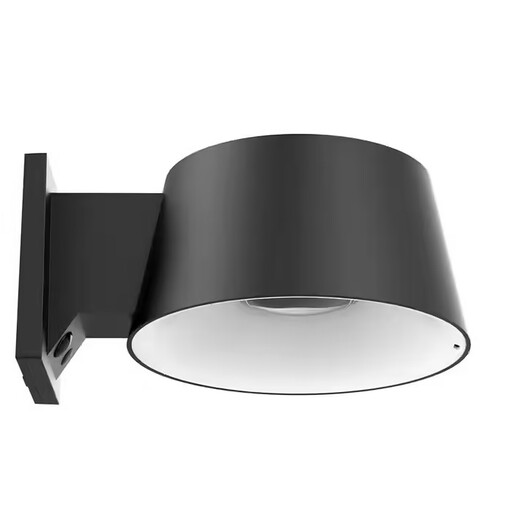
Why this choice suits this profile : This light is ideal for an entrance, balcony or passageway where the main aim is to improve visibility without running an electrical cable.
Its integrated panel means you do not need to buy a separate accessory. However, it must be positioned where it receives direct exposure to light.
Solar wall light with a downward-directed beam, wall mounting and a design intended for outdoor use.
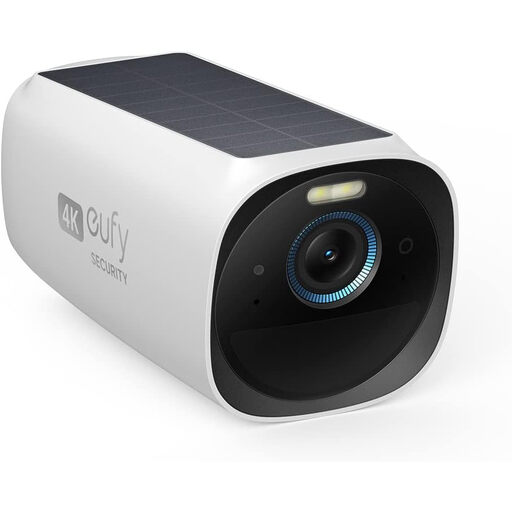
Why this choice suits this profile : This camera is aimed at households looking to monitor an outdoor area with 4K imaging, an auxiliary light and advanced detection features.
The product details specify expandable local storage, with the hard drive not included, and no monthly fees in this configuration. However, the HomeBase 3 is still essential.
Advertised 4K resolution, integrated solar panel, two-way audio, spotlight and facial recognition via HomeBase 3.
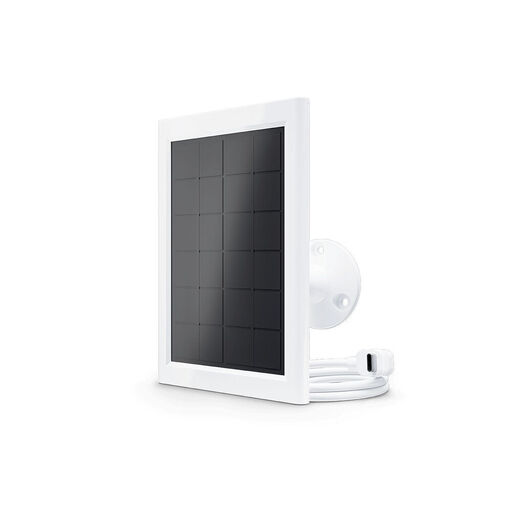
Why this choice suits this profile : This panel is designed for users who already own a compatible Arlo camera and want to reduce manual recharging.
Compatibility must be checked before purchase. The panel does not include a battery and uses a 2.4 m micro-USB cable.
360° adjustable mount, design resistant to outdoor conditions and a cable that allows the panel to be installed away from the camera.
We have put together a complete, real-time-updated selection of products that meet these demanding criteria and European safety standards.
Over time, a battery may lose some of its autonomy, particularly when exposed to extreme temperatures. Always consult the instructions for the recommended storage, charging and usage conditions.
Yes, it can continue operating on battery power, but charging slows when sunlight is limited. Battery life depends on the battery capacity, the number of detections, recording frequency and the amount of light received by the panel.
Some solutions work without monthly fees, particularly when they offer local storage. However, you should still check which accessories are required, such as a connection hub, as well as which features are available without signing up for an additional plan.
Install it on a façade or wall that receives enough direct sunlight during the day. Avoid locations beneath a balcony, behind a tree or near lighting that could interfere with automatic activation at dusk.