
Livraison le jour même ou le lendemain

Qualité garantie

Débloquez vos offres de bienvenue: Livraison GRATUITE | Jusqu'à -80 % | 30 jours d'essai gratuits à JoyPlus
Téléchargez l'application
Enjoying your garden or patio after dark is a true pleasure. However, installing lighting can often turn into a headache: digging trenches, running cables, not to mention the impact on your electricity bill... It's enough to put anyone off. This is where the solar garden light comes in: a practical, cost-effective, and eco-friendly solution.
To help you see things more clearly, we've broken down the essential criteria for choosing the right wireless outdoor lighting. Discover our buying guide and our selection of the best models, whether you're looking to create a soft ambiance, mark a pathway, or enhance your plants.
Before you take the plunge, it's helpful to understand a few technical basics. They will make all the difference in your day-to-day use.
An outdoor light is, by definition, exposed to the elements. Its Ingress Protection (IP) rating is therefore crucial. This international standard measures its resistance to solid objects like dust (the first digit) and to water (the second digit). In our climate, where rain is common, an IP65 rating is the minimum requirement. It guarantees that your light can withstand water jets from all directions, ensuring its longevity.
Different needs call for different types of lights:
Battery life is crucial. It depends on the battery and solar panel combination. Most models last between 6 and 12 hours after a full day's charge. Also, be sure to check the available modes: continuous light, flashing effects, or a motion sensor. The latter is a smart feature: it only activates full brightness when movement is detected, which significantly conserves the battery.
We have selected a few gems for you that cater to specific uses, all chosen for their performance and ease of installation.
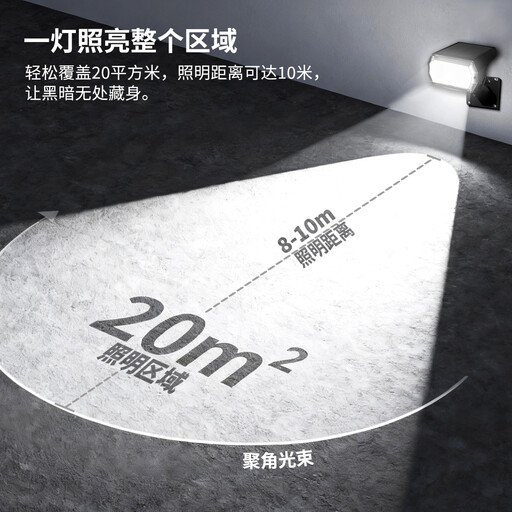
Why We Recommend Them
This set of two spotlights is perfect for sculpting specific areas of your garden. Each spotlight contains 48 LEDs that emit a warm white light, ideal for a welcoming atmosphere. The real standout feature? The solar panel and the light head are independently adjustable. This allows you to capture maximum sunlight while aiming the light beam with surgical precision.
Advantages
Who Is It For?
For anyone who wants to create bright focal points and add depth to their garden, whether to enhance a beautiful shrub, a stone wall, or the entrance to their home.

Why We Recommend It
The key strength of this outdoor solar string light is undoubtedly its versatility. Its 12-metre copper wire, both thin and malleable, bends to your every creative whim: wrap it around branches, run it along a railing, or integrate it into a table setting. With 120 LEDs per string and 8 lighting modes (steady, flashing, waves...), it unleashes your creativity for truly unique luminous garden decor.
Advantages
Who Is It For?
Ideal for dressing up a balcony, patio, or entertainment area with light during long summer evenings, parties with friends, or holiday celebrations.
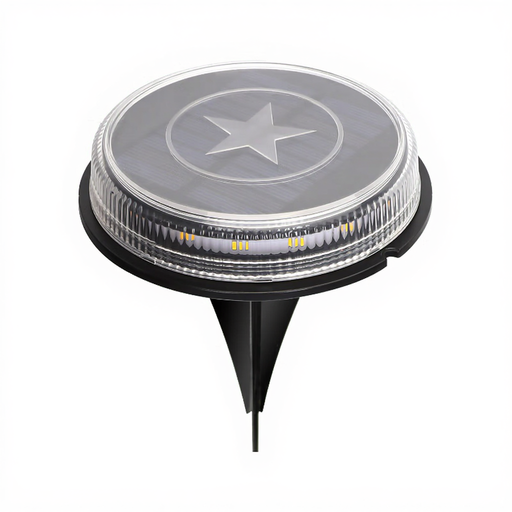
Why We Recommend It
The Aigostar solar marker light focuses on durability and discretion. Its flat, circular design is made to be installed flush with the ground, whether in a wooden deck, a gravel path, or even a lawn. Its key feature? It is drive-over rated, meaning it's designed to withstand the weight of a car. Add to that an IP66 protection rating for foolproof waterproofing, and you have a product that is built to last.
Advantages
Who Is It For?
For those seeking durable, safe, and perfectly integrated marking for a driveway, path, or the perimeter of a deck.
Solar power is fantastic for its simplicity and zero running costs. But for certain projects, its limitations can become apparent: power is dependent on sunlight, and intensity can sometimes be moderate. If your project demands constant, high-power output, a traditional wired solution remains a better fit.
For more substantial lighting needs, feel free to explore our range of outdoor post lights with an electrical outlet. There you will discover robust models designed to provide long-lasting illumination for large areas.
It depends on two components. On one hand, the LEDs, which have an exceptional lifespan (often over 20,000 hours). On the other, the rechargeable battery, which is the main component subject to wear. Expect an average of 2 to 4 years, depending on the product's quality and your usage. The good news: on many models, it's easily replaceable.
Yes, but their performance will naturally be reduced. A modern solar panel can capture light even in overcast weather, but the evening runtime will be shorter than after a bright summer day. In winter, the equation gets more complicated with shorter days and a lower sun, which further limits charging time.
It's simple! Place the solar panel where it will receive the most direct sunlight, ideally south-facing and away from shaded areas (trees, walls...). Another good habit to adopt: regularly clean its surface with a soft cloth. Dust, leaves, or bird droppings can create a film that significantly reduces its efficiency.
By the Joybuy Editorial Team