
Livraison le jour même ou le lendemain

Qualité garantie

Débloquez vos offres de bienvenue: Livraison GRATUITE | Jusqu'à -80 % | 30 jours d'essai gratuits à JoyPlus
Téléchargez l'application
Outdoor solar lighting can transform a patio, illuminate a path or improve visibility around an entrance, all without laying a single electrical cable. But choosing the right model is essential. Disappointing battery life, a poorly positioned panel, misunderstanding the IP rating or installing a light in the shade can all lead to unwelcome surprises.
Before buying LED solar string lights, a solar garden light or a solar wall light, take a moment to check a few key points. Here’s what to look for to find lighting that really suits your needs.
IP44, IP65 and IP67 ratings indicate the level of protection against solid objects and water. They don’t necessarily mean that a product can be submerged in water.
Even with waterproof solar lights, the panel and connections should never be left in a puddle or submerged.
The stated battery life is usually measured after several hours of direct sunlight. In the UK, however, the amount of sunshine varies considerably depending on the season, region and location.
A panel facing a shaded wall will inevitably charge less effectively than one in an open spot. Performance also depends on how clean the panel is, the temperature and the condition of the battery. A stated battery life of 8 to 14 hours should therefore be treated as an estimate based on usage conditions, not as a guaranteed duration every night.
Outdoor string lights are primarily designed to create atmosphere. They won’t replace a security light designed to illuminate an entrance or path effectively.
To light a route at night, look instead for a motion sensor, its range and detection angle, and the different lighting modes. For decorative lighting, the number of LEDs, cable length and lighting effects are often more useful to consider than the stated power.
An integrated battery powers the LEDs once it gets dark. The manufacturer may state that a full charge takes 6 to 8 hours of direct sunlight, but a shaded position will inevitably increase this time.
Before installation:
For solar patio or balcony lighting, also check the length of the cable connecting the panel to the LEDs. If the cable is too short, you may have to position the panel in a less suitable spot, reducing the performance of the whole set-up.
Choose an IP rating to suit the conditions where the light will be installed. ABS casings, stainless steel and copper wire are commonly used in products designed for outdoor use. However, real-world durability also depends on the quality of the assembly and seals.
IP65 models are suitable for many outdoor installations, but still need regular maintenance. IP44 products, such as some Christmas decorations, can be left outside if they’re in a relatively sheltered spot. Avoid exposing them to severe weather or installing them where snow is likely to build up.
For an RGB solar light, check whether you can adjust the colours, whether the settings are saved and whether you change them using the unit itself or a remote control.
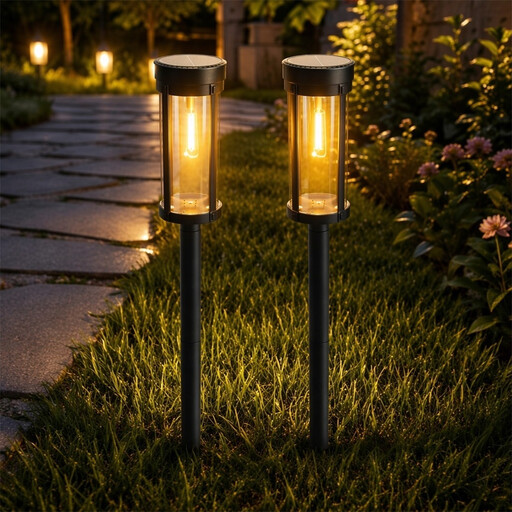
Why this is a good match: These two lights push straight into the ground to mark out a path, lawn or border, with no wiring needed. Their warm white light at 3,000 K creates a subtle ambience.
The IP65 rating is clearly stated, and the stake-mounted design keeps cables off the ground. The panel still needs 6 to 8 hours of direct sunlight.
Two lights, 10 lumens per unit according to the product information, automatic switch-on and a construction combining ABS and stainless steel.
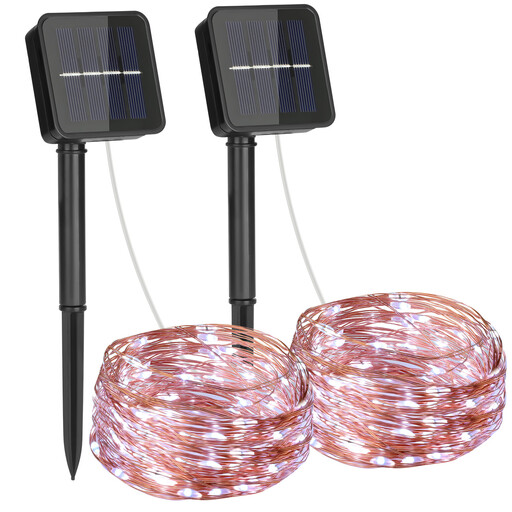
Why this is a good match: The two 12-metre strings provide plenty of coverage for a patio, tree, fence or outdoor gathering.
The product information lists an IP65 rating, eight lighting modes and a stated battery life of 8 to 14 hours, depending on the weather. Keep the panel clear and never submerge it.
120 multicoloured LEDs per string, a memory function and flexible copper wire that’s easy to shape around your space.
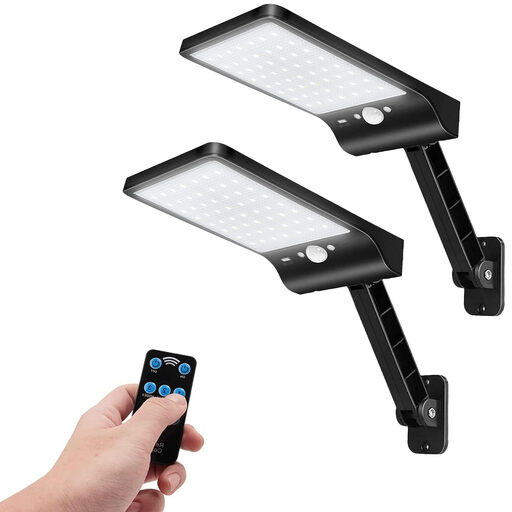
Why this is a good match: This pair of wall lights is ideal for an entrance, garage, patio or passageway where you need lighting that switches on when someone is nearby.
The sensor has a stated range of 1 to 8 metres and three operating modes. Choose the setting to suit whether you want occasional or continuous lighting.
56 LEDs per light according to the product information, a remote control, tool-free installation and an IP65 rating for outdoor wall mounting.
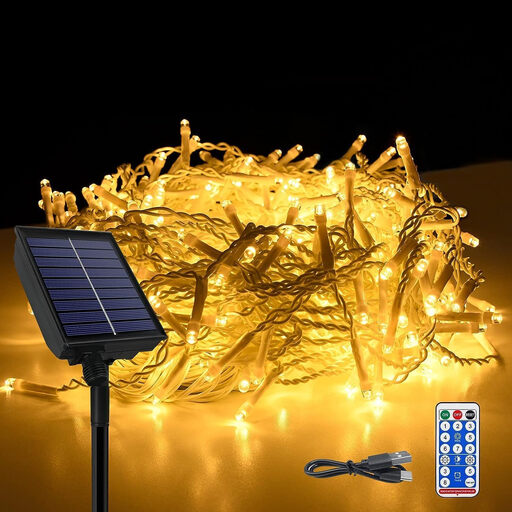
Why this is a good match: With 400 LEDs, this outdoor string light is ideal for a wall, balcony or Christmas display when you want a curtain effect.
Its IP44 rating is a reminder to keep it out of severe weather. The timer can be set for 3, 5 or 8 hours to avoid unnecessary use.
Eight lighting modes, a memory function, a 5-metre power cable and a design described as connectable.
We’ve put together a comprehensive, real-time list of products that meet these strict selection criteria and comply with European safety regulations.
For consistent lighting, position the panel away from trees, walls and canopies. Also avoid areas lit artificially at night, as this could delay the dusk sensor from switching the lights on.
Clean the panel several times a season and check the cables after windy weather. In winter, a shorter lighting time is perfectly normal. If you won’t be using the product for an extended period, follow the manufacturer’s advice on the switch and rechargeable battery.
Product information often states 6 to 8 hours of direct sunlight. This varies depending on the season, region, panel orientation and shade. A full charge before first use at night may be recommended.
Yes, as long as the sensor’s range and angle cover the area properly. Also check the selected mode, mounting height and panel position. At an entrance, it provides visibility lighting; it isn’t a certified security system.
It runs on energy stored by its panel and generally doesn’t need to be connected to the mains. So you won’t use mains electricity while it’s operating. However, battery life and brightness still depend on sunlight, battery condition and the settings you choose.