
Livraison le jour même ou le lendemain

Qualité garantie

Débloquez vos offres de bienvenue: Livraison GRATUITE | Jusqu'à -80 % | 30 jours d'essai gratuits à JoyPlus
Téléchargez l'application
Outdoor solar lighting can mark out a path, create a warm atmosphere on your patio or improve visibility around a doorway — all without running a single electrical cable. But some purchases can quickly disappoint: the light is too dim, the battery runs flat before the evening is over or the casing doesn’t stand up to the weather.
Before choosing a garden solar light, it’s worth distinguishing decorative lighting from functional lighting and checking a few important technical details.
A solar LED light packed with diodes won’t necessarily be brighter than another model. Where it’s listed, the lumen count gives you a much clearer idea of the light output. A decorative solar string light or floral-effect lamp can create a pleasant atmosphere, but may not be bright enough to light a step or entrance properly.
For a path, courtyard or exterior wall, look for directional lighting, a light output stated in lumens and, if possible, a motion sensor.
Run time depends on several factors: the amount of sunlight, the panel’s orientation, the temperature and the condition of the battery. The stated duration after a full charge can therefore be much shorter in winter, in cloudy weather or when the panel is shaded by a tree.
A separate panel, as found on some decorative lights, lets you position the light source in a shaded spot while pointing the panel towards the sun. This is particularly useful on a balcony, a north-facing wall or in a garden surrounded by walls.
The IP rating indicates the level of protection against dust and water. An IP44 solar light is generally suitable for normal outdoor exposure, but that doesn’t mean it will withstand powerful jets of water. An IP65 model is better suited to a wall, fence or area directly exposed to rain. An IP67 product offers even greater protection, provided you follow the manufacturer’s instructions for use.
However, the IP rating doesn’t directly indicate resistance to impact, UV rays or frost. The casing material and the quality of the mounting also play an important part.
Check the battery capacity, stated in mAh, but don’t use this alone to estimate run time. You’ll also need to consider the power of the LEDs and the different lighting modes. A 600 mAh battery may be enough for gentle decorative lighting, while a motion-sensor floodlight manages its power differently.
Place the panel somewhere that gets several hours of direct sunlight. Clean it with a soft cloth when dust or pollen starts to build up. Before using the light for the first time, also check that the switch is set to “ON” — it’s an easy detail to overlook.
A stake should go far enough into soft ground without putting too much pressure on the casing. On a hard surface, screw mounting is more suitable. For a wall light, check that the screws and wall plugs are suitable for the wall, wood or fence. Positioning the panel facing south can help it charge, but keeping it out of the shade is the key factor.
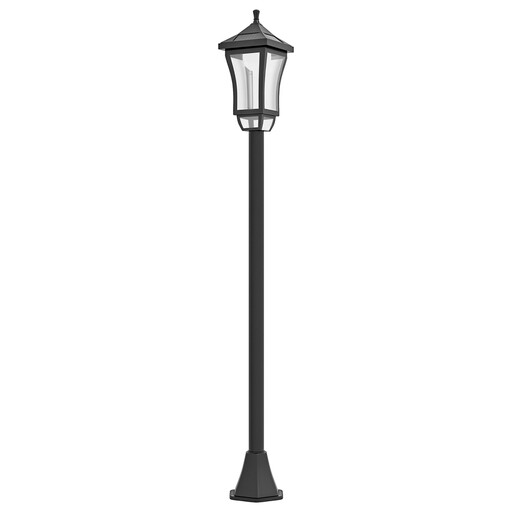
Why we recommend it: This 127 cm floor lantern is easy to stake into the ground and provides 30 lumens of cool white light. It’s a good choice for a first installation beside a patio, balcony or path.
The product details specify a light output of 30 lumens and IP44 protection. This makes it easy to tell the difference between ambient lighting and a proper security floodlight.
Switches on automatically at dusk, has an on/off switch and can be installed in soft ground or on a hard surface.
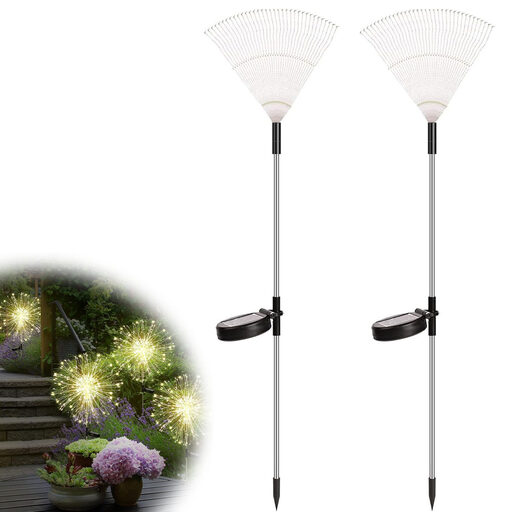
Why we recommend it: With 120 LEDs, two colour temperatures and eight modes, you can tailor the lighting to your garden, patio or flower bed.
The separate solar panel makes it easier to place the light in a sunny spot, while the aluminium stem is rated IP44. This model is still intended for decoration, rather than lighting a path for safety.
Flexible copper wire, a choice of warm white or daylight white, a stated battery capacity of 600 mAh and a stated run time of up to 10 hours.
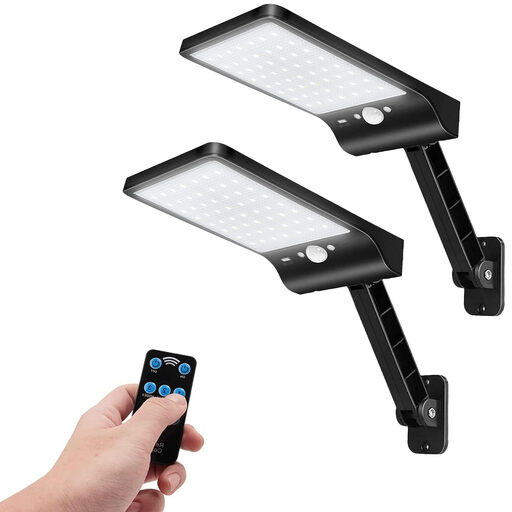
Why we recommend it: This set of two wall lights is designed for entrances, garages, porches and passageways where the light needs to come on as soon as movement is detected.
The product details specify three modes, a detection range of 1 to 8 metres and IP65 protection. These details are more useful for judging how it will perform than the number of LEDs alone.
56 LEDs per light, a stated remote control, wall mount and a recommended position facing an area that gets plenty of sun.
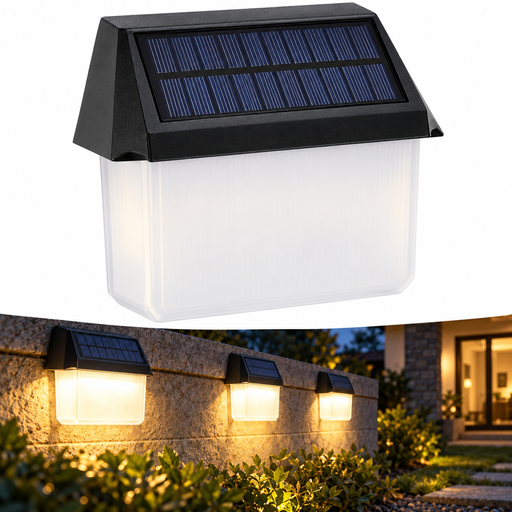
Why we recommend it: Its compact design suits walls, fences and smaller patios. The RGB, white and warm white modes work just as well for relaxed evenings as they do for celebrations.
The product details state its dimensions and weight, and describe its ABS casing as weather-resistant. However, don’t rely on it to light a large path on its own.
Stated built-in battery capacity of 1 200 mAh, stated lighting time of 12 to 16 hours after a full charge, and screw or double-sided adhesive mounting.
We’ve put together a comprehensive, regularly updated selection of products that meet these demanding criteria while complying with European safety regulations.
It depends on the panel and the weather. Product listings often state that a full charge takes between 4 and 8 hours of direct sunlight. In winter or under cloudy skies, charging can take longer, reducing the run time.
Yes, as long as its IP rating and materials are suitable for the conditions it will face. An IP65 model will generally be better suited to an exposed wall than an IP44 model, but always follow the manufacturer’s recommendations. Clean the panel regularly and inspect the seals, any cables and the mounting after spells of frost or windy weather.
Once installed, it uses no mains electricity and requires no wiring. However, you’ll need to replace the battery when its capacity starts to fall, and maintain the panel regularly. The overall cost therefore depends on the purchase price, the lifespan of the components and how often you use the light.