
Livraison le jour même ou le lendemain

Qualité garantie

Débloquez vos offres de bienvenue: Livraison GRATUITE | Jusqu'à -80 % | 30 jours d'essai gratuits à JoyPlus
Téléchargez l'application
The idea of installing a solar garden light is appealing: no wires to run, no spike in your electricity bill, and an eco-friendly choice. Yet, the experience often ends in disappointment. A dim light that dies after an hour, a fixture that gets waterlogged in the first downpour... It's an all-too-common scenario.
My role as a Product Expert at Joybuy is to help you see things more clearly. Let's cut through the marketing jargon and focus on what really matters. Here are the three most common pitfalls and, more importantly, how to avoid them so you won't regret your purchase.
Many solar lights carry a "waterproof" or "water-resistant" label, but this claim is often far too vague. A product with a low Ingress Protection (IP) rating, like IP44, is only protected against water splashes. It won't survive a heavy summer storm or your lawn's automatic sprinkler system. The result? Condensation seeps in, the electronic circuits oxidise, and the light dies in just a few months.
"Up to 8 hours of battery life" is an enticing promise, but it relies on a full day of perfect sunshine—a condition rarely met in our climate. The culprit is almost always the same: an undersized panel and battery combination. A small, poor-quality solar panel paired with a low-capacity battery (in milliampere-hours, or mAh) will never store enough energy to light up your patio all evening, especially in autumn and winter.
Some lights, especially entry-level models, emit a glow so faint that they're more of a gimmick than a true outdoor solar light. If your goal is to mark a pathway for safety or to illuminate a walkway, this simple decorative glow will be useless. It's crucial to distinguish between a purely aesthetic product and a functional lighting fixture.
To avoid falling into these traps, you just need to check three technical specifications. These are the true guarantors of the quality and durability of your future wireless solar light.
The IP rating is an international standard that classifies a device's level of protection against solid objects (dust) and liquids (water).
For outdoor use in our climate, aim for a minimum rating of IP65. This guarantees your light is completely dust-tight and, crucially, can withstand powerful water jets (like driving rain or sprinklers). In short, it's your peace-of-mind certification.
The battery life and reliability of your light depend entirely on the quality of this duo.
These two values define the final output of your lighting.
To move from theory to practice, here are a few models that tick all the right boxes, each suited for a different purpose.
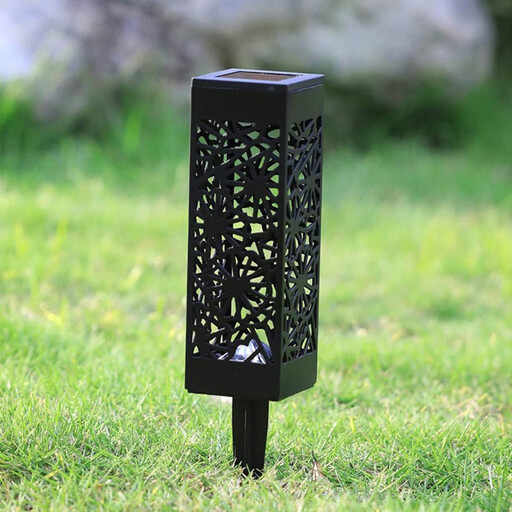
Why we chose it: Perfect for creating a warm ambience along a path or in a flowerbed without breaking the bank. The 6-pack allows you to cover a good-sized area on a controlled budget.
With its IP65 rating and durable ABS plastic construction, this model is designed to withstand the weather without failing, avoiding the "false waterproof" trap.
Its cutout shade projects elegant patterns onto the ground, adding a unique decorative touch that stands out from the ordinary.
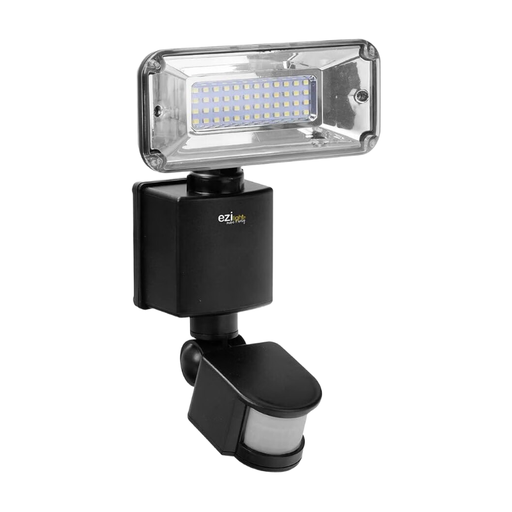
Why we chose it: Ideal for securing an entrance, a garage driveway, or a dark corner of the garden. It combines powerful lighting with smart activation for true peace of mind.
This isn't a gimmick, but a true solar floodlight with a motion sensor. It only turns on at full power when needed, which preserves its battery life and avoids the "dead battery" trap.
Its adjustable head allows you to direct the light beam with precision, for a custom installation exactly where you need it.
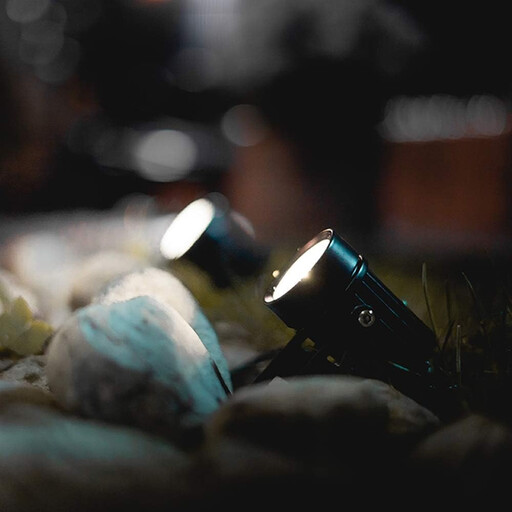
Why we chose it: For gardening enthusiasts who want to create a true light display, highlighting trees, flowerbeds, or architectural features.
It bypasses the "dim lighting" pitfall by offering several powerful, targeted spotlights powered by a single high-performance solar panel. The result: effective, customised lighting that's a far cry from the "night light" effect.
The multiple, fully adjustable spotlights offer complete flexibility to sculpt the light in your garden and illuminate several areas at once.
We have selected a full range of products that meet our quality criteria and safety standards.
Yes, but expect reduced performance. Modern solar panels can capture light even on overcast days, but charging is less efficient than in direct sunlight. Consequently, the nightly runtime will be shorter. Our advice: keep the solar panel clean and well-positioned to capture what little light is available.
It all depends on the quality of the components. The panel and LEDs can last for over 10 years. The weakest link is the rechargeable battery, which has a lifespan of 2 to 4 years. The good news? On many quality models, the battery is a standard size (AA or AAA NiMH) and is easy to replace, giving your light a second life.
Maintenance is minimal but crucial. The most important thing is to regularly clean the surface of the solar panel with a damp cloth. Dust, pollen, or dead leaves can create a film that reduces charging efficiency. And in winter, remember to clear off any snow that might cover it.