
Livraison le jour même ou le lendemain

Qualité garantie

Débloquez vos offres de bienvenue: Livraison GRATUITE | Jusqu'à -80 % | 30 jours d'essai gratuits à JoyPlus
Téléchargez l'application
Installing a solar garden light? The idea is appealing: no cables to run, no impact on your electricity bill, and an installation process that anyone can handle. Yet, the experience often ends in disappointment. A light that flickers out after just two hours, a string of lights that gives up the ghost after the first heavy downpour… These letdowns are usually the result of well-honed marketing traps. As a Product Recommendation Manager at Joybuy, my mission is to help you decode the labels and make a truly informed choice, far from the empty promises.
Before you take the plunge, beware of these three classic pitfalls that can turn a promising purchase into future e-waste.
To avoid these traps, you just need to check a few technical specifications. This is what will allow you to distinguish a reliable product from a disposable gadget.
The Ingress Protection (IP) rating is THE only reliable data point for assessing the resistance of a waterproof outdoor solar light. It consists of two digits:
For outdoor use in our climate, here are the essential benchmarks:
The battery life depends on an inseparable pair: the battery's capacity (in milliampere-hours, or mAh) and the solar panel's efficiency.
Not all solar lights are created equal, nor do they serve the same purpose. Clearly identify your needs to choose the right format:
To put theory into practice, here are a few products that tick all the boxes for durability and performance, each tailored to a specific need.
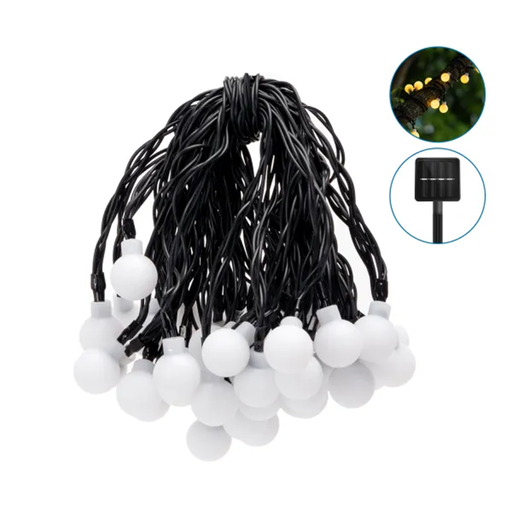
Why we love it: Perfect for recreating the festive and warm spirit of festoon lighting on a terrace, balcony, or in the garden. Its warm light (2700K) guarantees a cosy atmosphere for long summer evenings.
With its IP65 rating, this string light is truly designed to withstand the elements, going far beyond mere splashes. It won't let you down at the first downpour.
Its 8 lighting modes and 800 mAh battery ensure great decorative versatility and reliable battery life (up to 12h according to the manufacturer).
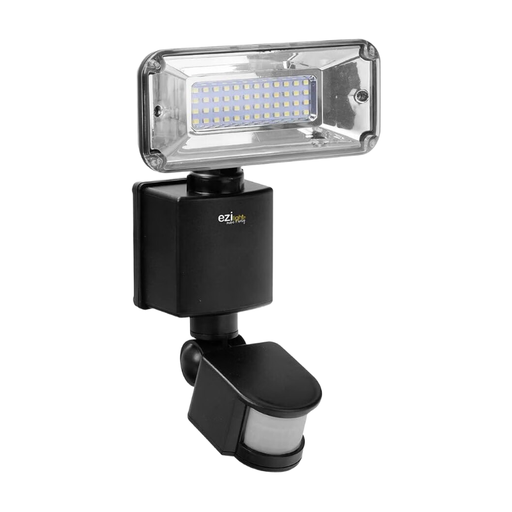
Why we love it: The perfect solution for anyone needing functional, security-focused lighting near an entrance, garage, or dark passage, without undertaking any electrical work.
This spot light doesn't promise the moon with continuous lighting. Its motion detector activates the light only when needed, preserving the battery for maximum efficiency, even in winter.
The combination of a powerful LED spot and a motion sensor provides a practical, energy-efficient, and highly effective security solution.
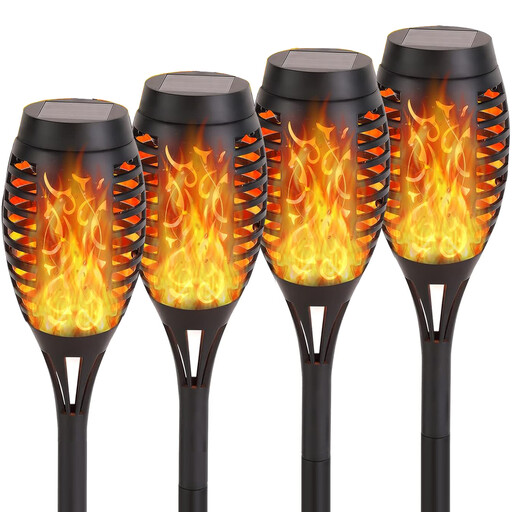
Why we love them: Ideal for those who want to line a pathway or highlight a flowerbed with ambient light, steering clear of harsh, pale lighting. The dancing flame effect adds a truly unique touch of sophistication.
Their IP65 rating and elevated design (51 cm) effectively protect them from both rain and ground moisture, two common causes of failure in entry-level solar post lights.
The flickering flame effect is strikingly realistic and instantly creates a warm atmosphere. The set of 4 allows for a coherent and aesthetically pleasing pathway marking at a reasonable cost.
We have compiled a complete and up-to-date selection of products that meet our selection criteria and current safety standards.
It all depends on the quality of its components. The LEDs themselves have an almost unlimited lifespan (often over 30,000 hours). The weakest link is the rechargeable battery, which will last between 1 and 3 years depending on its quality and usage. The good news is that on many models, it can be easily replaced. Finally, the robustness of the housing (materials and IP rating) is crucial for the overall longevity of the product.
Yes, but their battery life will logically be reduced. A solar panel needs light, not necessarily direct sun, to charge. The charging will simply be slower and less complete on a gloomy winter day than on a bright summer day. Models equipped with large solar panels and high-capacity batteries will always perform better in these conditions.
Maintenance is minimal but essential. The key step: regularly clean the surface of the solar panel with a soft, damp cloth to remove dust, pollen, or dead leaves. A clean panel captures light much more efficiently. In winter, also remember to clear any snow off it so it can continue to recharge.