
Livraison le jour même ou le lendemain

Qualité garantie

Débloquez vos offres de bienvenue: Livraison GRATUITE | Jusqu'à -80 % | 30 jours d'essai gratuits à JoyPlus
Téléchargez l'application
A garden, patio, or pathway plunged into darkness is wasted space once night falls. Do you dream of bringing a touch of light and warmth to these areas, but the thought of running cables and watching your electricity bill soar is off-putting? Solar lighting is the perfect solution: cost-effective, eco-friendly, and incredibly simple to install.
As a product expert for Joybuy, my mission is to decode the market for you and guide you toward the best choice. This guide will give you everything you need to choose your solar lighting wisely and discover our selection of products for every need, from purely decorative to highly functional.
Before you dive in, let's review the essential criteria for making a... bright choice.
A solar garden light is, by definition, exposed to the elements. Its Ingress Protection (IP) rating is therefore the primary guarantee of its longevity. This rating consists of two digits: the first for protection against solids (dust) and the second against liquids (rain).
The desired effect will determine the type of light you should choose.
The great advantage of solar power is the freedom from constraints. No wires to run, no electrician to call. Most models are wireless solar lights that are ready to use right out of the box. Stake lights push directly into the ground, while other models can be placed or mounted on a hard surface. Finally, consider the overall aesthetic: do you prefer a discreet design that blends into the landscape, or a true decorative object that adorns your garden, even in broad daylight?
We have selected three models that stand out from the crowd, each with its own strong character.
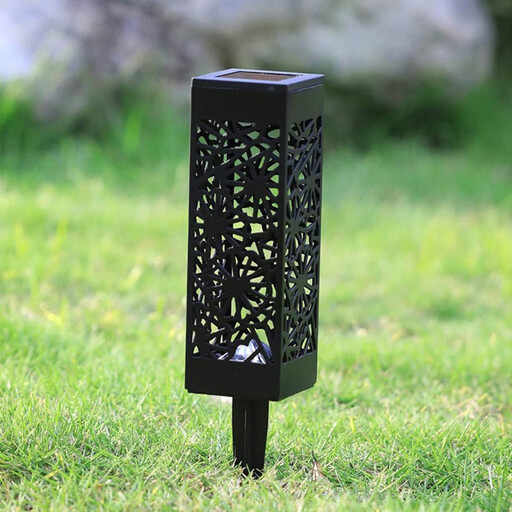
Why this set stands out: Because it doesn't just illuminate; it decorates. Its cut-out design projects elegant floral patterns onto the ground, transforming a simple path into a poetic scene.
Key features:
Who is it for? For those who want to combine function and style, merging pathway lighting with outdoor garden decor. Ideal for accenting a path, flowerbed, or patio with a touch of originality.
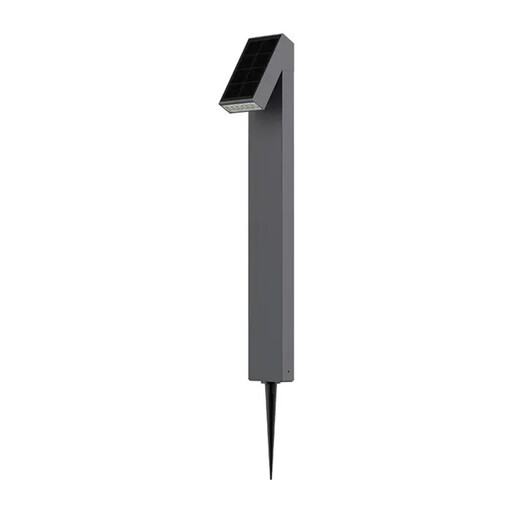
Why it stands out: For its minimalist, angular design that brings a truly modern touch. An outdoor solar beacon that integrates with understated elegance into contemporary gardens.
Key features:
Who is it for? For those who prioritise understated design and flawless efficiency. The logical choice for safely lighting a pathway with discreet and high-performing solar garden lighting.
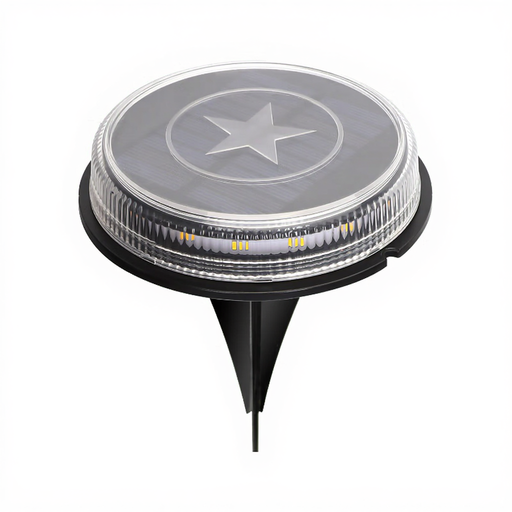
Why it stands out: Its rock-solid durability. This ground-level spot light is drive-over rated, meaning it can withstand the weight of a car. With its IP66 rating, it's the most durable in our selection.
Key features:
Who is it for? The ideal solution for lighting high-traffic areas or those subject to heavy stress: a garage driveway, a courtyard, or a patio where it might be stepped on without a second thought.
Bistro-style string lights, designer wall sconces, powerful floodlights... The world of solar lighting is much broader than this selection. If you haven't found what you're looking for yet, feel free to explore other options.
? Discover our complete collection of solar lamps and outdoor lights to find your inspiration.
1. What is the lifespan of a solar garden light? It depends on two components. First, the LEDs have a virtually unlimited lifespan (often over 20,000 hours). The rechargeable battery is the weaker link, with a life expectancy of 2 to 4 years depending on its quality and your usage. Pro tip for longevity: regularly clean the solar panel to ensure optimal charging.
2. Do solar lights work in winter or on cloudy days? Yes, but their performance will naturally be reduced. A modern solar panel can capture light even on an overcast day, but the charge will be slower and the runtime at night will be shorter than after a bright summer day. Our advice for winter: place your lights in the most unobstructed spot possible, ideally facing south.
3. What brightness (lumens) should I choose for my garden lighting? It all depends on the desired effect. Brightness is measured in lumens (lm). For ambient lighting or decorative pathway marking, a low intensity (between 5 and 50 lumens per light) is more than enough. To properly light a walkway or a staircase, aim for more powerful models offering 100 lumens or more.