
当日/次日达

品质保障

开启新人专享福利: 全场免邮 | 低至 2 折 | 免费试用 30 天 JoyPlus 会员
下载 Joybuy
Want to light up your garden without increasing your electricity bill or running cables?? The promise of solar lighting is tempting. But be warned: the market is flooded with products whose promises fizzle out after the first downpour or in the dead of winter. To make a truly informed and lasting choice, it's best to know the most common pitfalls.
As a product expert for the editorial team, my mission is to help you decode technical specifications to find the models that truly deliver. Here are the 3 essential points to watch out for.
The 3 Pitfalls to Avoid When Buying Solar Lighting?:
To avoid falling into the trap, here are the technical specifications to scrutinise. They are true guarantees of performance and longevity.
This rating consists of two numbers. The first indicates protection against solids (like dust), and the second against liquids (like water). For outdoor use, here's what you need to know?:
Battery life depends on two factors: the solar panel's ability to capture energy and the battery's capacity to store it. A powerful solar lamp designed to light a pathway will need a larger photovoltaic panel and a higher-capacity battery (measured in milliampere-hours, or mAh) than a simple outdoor decorative light. Ensure the panel size and battery capacity are consistent with the advertised light output.
The robustness of the materials is the key to durability. Favour products made from ABS plastic, known for its resistance to impact and UV rays, or from metal (aluminium, stainless steel) for the structures. For string lights, a sheathed copper cable will provide much better flexibility and durability than a simple plastic wire.
Rather than a random list, here is our selection of products tailored for specific uses, all vetted against the quality criteria we've just discussed.
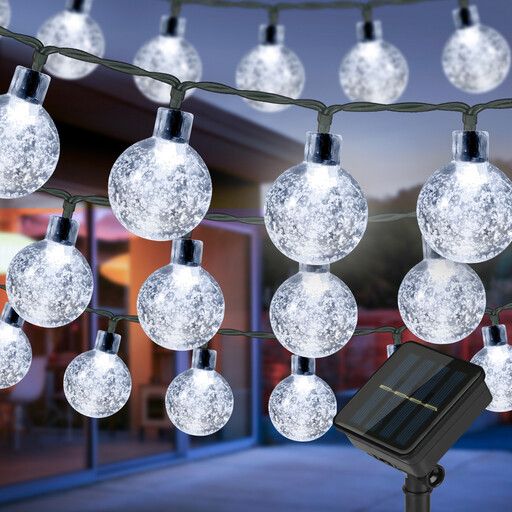
Why we love it : Perfect for creating a solar festoon light atmosphere on a patio, balcony, or in the garden during long summer evenings. Its 11-metre length allows you to decorate a generous space.
Its IP65 certification guarantees flawless protection against heavy rain, avoiding the "superficial waterproofing" trap. The high-performance solar panel ensures a real-world battery life of 8 to 14 hours, far from empty promises.
Its 8 lighting modes (steady, flashing, etc.) and memory function let you return to your favourite setting every evening without having to reconfigure everything.
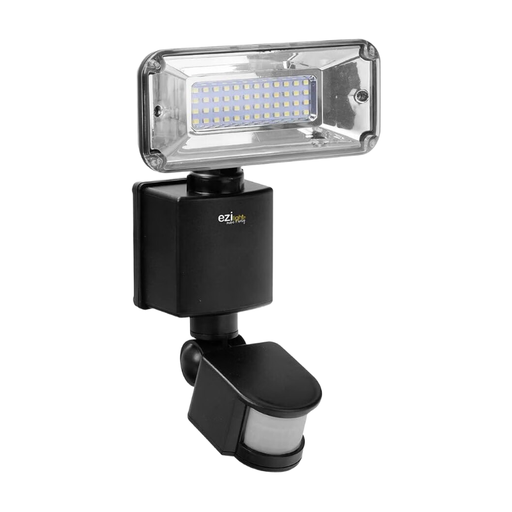
Why we love it : Essential for anyone needing a solar spotlight with a motion sensor to secure an entrance, a driveway, or a dark corner of the garden. It only turns on when needed.
Its smart motion sensor optimises battery life, ensuring reliable operation even in the dead of winter. Its robust design is built to last, avoiding the flimsy materials trap.
Its adjustable head allows you to direct the light beam with great precision to the area you want to illuminate, for maximum efficiency and security.
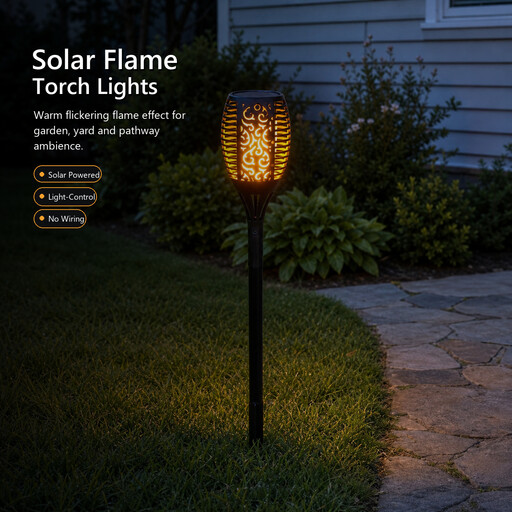
Why we love them : For anyone who dreams of a flame-effect solar torch to line a pathway, define a patio area, or simply add an exotic touch to their garden.
IP65 certified, this model is not afraid of bad weather. Its purpose is purely decorative: the visual effect takes precedence over brightness, which prevents any disappointment regarding luminosity. It delivers on its promise.
The dancing flame effect, produced by 96 LEDs, is strikingly realistic. It creates a welcoming and soothing atmosphere without the risks or constraints of a real flame.
Discover our full selection of products that meet our quality criteria and current safety standards.
The lifespan of a solar light depends on two key components: the battery and the LEDs. The LEDs have a very long life, often exceeding 25,000 hours. The rechargeable battery is the component that will wear out the fastest. As a general rule, a quality battery will provide satisfactory performance for two to three years. After this period, its ability to hold a charge will diminish.
Before assuming it's broken, check a few simple things?:
Yes, but with a logically reduced battery life. Modern solar panels can capture ambient light, but charging is much less efficient than in direct sunlight. Therefore, you should expect a shorter runtime during the winter months or after several overcast days. This is why models with motion sensors, which only light up when needed, are particularly well-suited for this season.