
Livraison le jour même ou le lendemain

Qualité garantie

Débloquez vos offres de bienvenue: Livraison GRATUITE | Jusqu'à -80 % | 30 jours d'essai gratuits à JoyPlus
Téléchargez l'application
The idea of installing a solar garden light is appealing: no cables to run, no soaring electricity bills, and an eco-friendly choice. Yet, this beautiful promise often ends in disappointment. Who hasn't cursed at a dim light, laughable battery life after just a few weeks, or a lamp that gives up the ghost at the first heavy downpour?
As the Head of Product Selection at Joybuy, my role is to help you separate fact from fiction. Let's forget the marketing jargon and get practical. Here are the two classic mistakes that lead to buyer's remorse, and more importantly, how to avoid them.
To ensure you make the right choice, you just need to check a few key technical points. They aren't complicated and they make all the difference between a short-lived gadget and a worthwhile investment.
The IP rating is an international standard that classifies a device's level of protection against solids (dust) and liquids (water). For outdoor use in the UK, where the weather can be unpredictable, an IP65 rating is an excellent benchmark.
Simply put, a certified IP65 or higher waterproof solar light will fear neither heavy downpours nor your automatic sprinkler system. It's the hallmark of much better longevity.
A solar light's runtime depends on two inseparable factors: its battery capacity (expressed in milliampere-hours, or mAh) and the efficiency of its solar panel in recharging it.
Don't be fooled by the promised lighting duration on the packaging. The real number to look at is the battery capacity (in mAh); it will give you a concrete idea of the actual performance.
Solar lighting comes in various forms to meet every need:
Rather than an endless list, here are a few gems that meet specific needs and tick all the boxes of our durability and performance criteria.
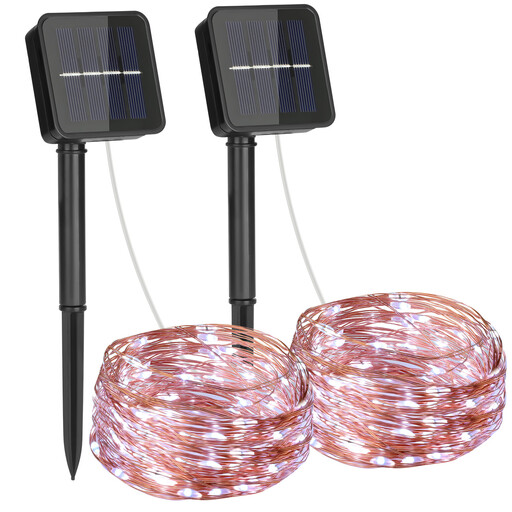
Why we chose it: The must-have for decorating a balcony, pergola, or garden for a party or for the summer. The copper wire is easy to shape, and the multi-colour LEDs instantly create a joyful atmosphere.
Its IP65 rating effectively protects it from rain, avoiding the fate of string lights that die after one downpour. The solar panel is designed for efficient charging and ensures a runtime of 8 to 14 hours.
8 lighting modes with a memory function. Comes in a pack of two 12-metre strings, enough to cover a large area.
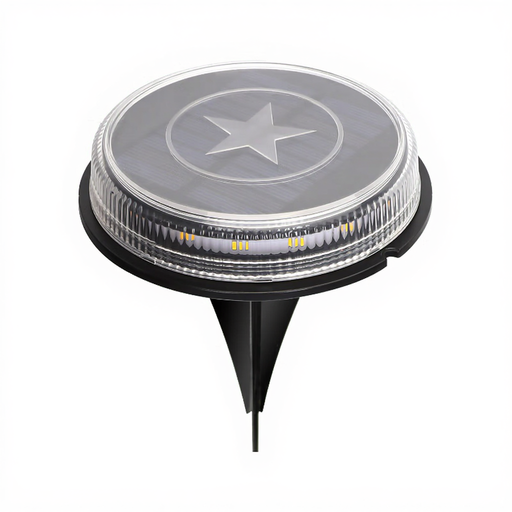
Why we chose it: Perfect for those who need robust ground lighting for a driveway, garage entrance, or patio edge. Its flat, discreet design integrates easily without creating an obstacle.
With an IP66 rating, it offers superior protection against dust and powerful water jets. Its design even allows it to withstand the weight of a car: goodbye to fragile lights that break at the slightest impact.
Ultra-simple wireless installation. Warm light (3200K) for a welcoming ambiance. A 500 mAh lithium battery ensures good runtime.
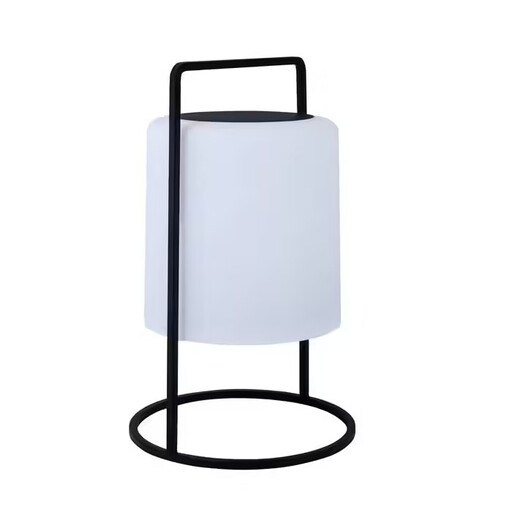
Why we chose it: For those who prioritise design and are looking for an elegant **solar lantern** to place on a patio table or a low wall. Its minimalist style and warm light create a sophisticated atmosphere.
Its construction from durable materials and its metal base ensure stability and longevity far superior to cheap, entry-level plastic models. The solar panel is discreetly integrated for a flawless aesthetic.
Portable thanks to its handle. Automatic operation at dusk. Emits a soft, warm LED light, ideal for a relaxing ambiance.
We have selected a complete range of products for you that tick all the boxes of our performance and safety requirements.
The lifespan mainly depends on two components: the rechargeable battery and the LEDs. The LEDs have a very long life, often exceeding 20,000 hours. The battery is the component that will wear out the fastest. Generally, a good quality battery (Ni-MH or Lithium-ion) can operate optimally for 2 to 4 years before its runtime begins to drop significantly.
Yes, but with reduced performance. A solar panel continues to charge even in overcast weather, but it will logically accumulate less energy than on a sunny day. In winter, with shorter days and weaker sunlight, the light's runtime will therefore be shorter. To optimise charging, place the solar panel in a clear, unobstructed location, ideally facing south.
Maintenance is minimal but essential. It mainly involves regularly cleaning the surface of the solar panel with a soft, damp cloth. Dust, pollen, or leaves can reduce its efficiency and thus decrease your light's runtime. In winter, simply ensure that snow does not cover the panel.