
Livraison le jour même ou le lendemain

Qualité garantie

Débloquez vos offres de bienvenue: Livraison GRATUITE | Jusqu'à -80 % | 30 jours d'essai gratuits à JoyPlus
Téléchargez l'application
The idea of a solar garden light is certainly appealing: no wires to run, no increase in your electricity bill, and an installation process anyone can handle. However, the market is flooded with products whose promises fizzle out after the first downpour or as soon as the days get shorter. Too many buyers end up with lights that last no more than two hours or are eaten away by rust in record time.
As a Product Specialist at Joybuy, my mission is to help you cut through the noise. Let's forget the marketing jargon and get down to the facts. Here are the three most common pitfalls and, more importantly, how to avoid them to make a smart purchase.
To ensure you don't regret your purchase, there are a few technical points to check. These are the true guarantors of a cordless garden light's quality and performance.
The IP rating is an international standard that classifies a device's level of protection against the intrusion of solid objects (like dust) and liquids (like water).
Your light's autonomy depends on an inseparable duo: the battery's capacity to store energy (measured in milliampere-hours, or mAh) and the solar panel's efficiency in converting it.
The performance of LED outdoor lighting can't be judged by a photo alone.
Every outdoor space has different needs. Here are some options that cater to distinct use cases, all meeting the durability criteria we've just discussed.
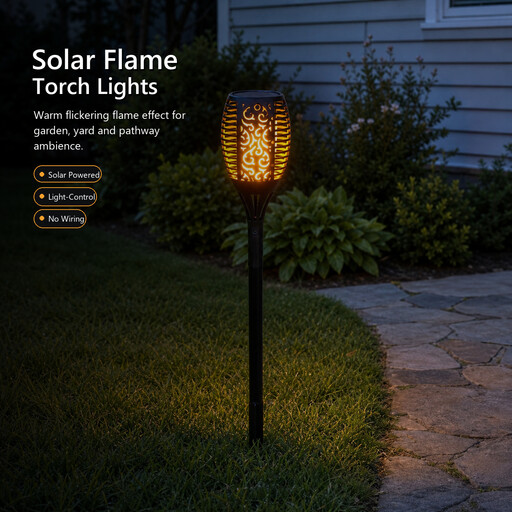
Our take: Perfect for creating a warm atmosphere on a patio or along a flowerbed. The dancing flame effect is stunningly realistic and adds a touch of originality without the hazards of a real torch.
With its IP65 rating, this torch is built to withstand the elements long-term, setting it apart from gadgets with questionable waterproofing.
The flickering flame effect is exceptionally well-done and creates a unique ambience. Installation is as simple as staking it into the ground—a real breeze.
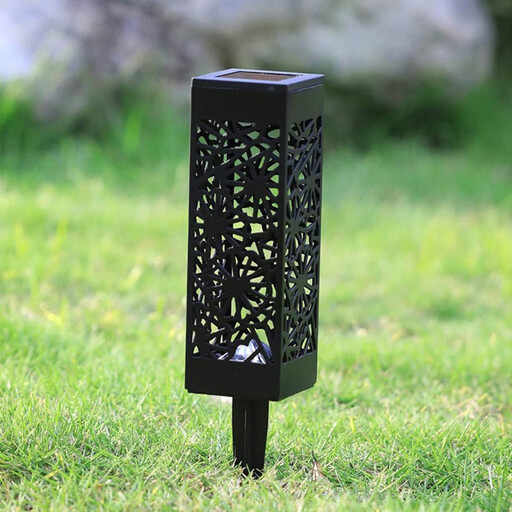
Our take: Perfect for marking a driveway, path, or flowerbed. Sold as a 6-pack, it allows you to cover a good distance uniformly, combining safety with aesthetics.
The manufacturer states a runtime of 5 to 8 hours after a 4 to 6-hour charge—an honest estimate that avoids the disappointment of unrealistic promises. Its IP65 rating is a guarantee of longevity.
The cut-out design casts elegant patterns on the ground, turning simple pathway lighting into a true decorative feature. The ABS material is corrosion-resistant.
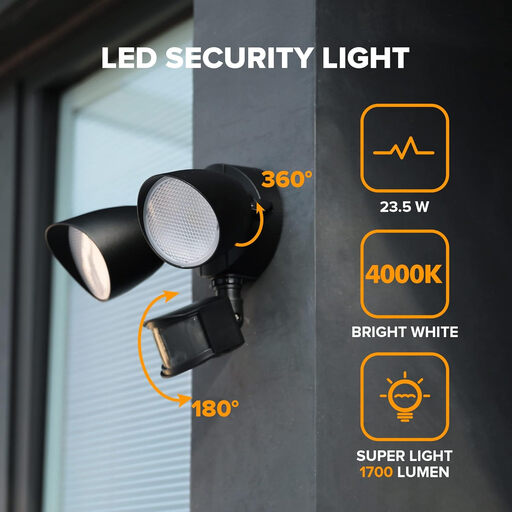
Our take: For those whose number one priority is security. This wired floodlight is designed to powerfully illuminate sensitive areas (entrances, garages, walkways) as soon as motion is detected. Its deterrent effect is immediate.
There's no gimmicky brightness here: with its 1250 lumens and 5000K white light, it's designed to see and be seen, not just to look pretty.
The two adjustable heads allow you to precisely cover the desired area. Its die-cast aluminium body ensures excellent heat dissipation and unbeatable durability.
Explore our full selection of garden lights that meet our standards for quality and durability.
The lifespan primarily depends on the quality of its components. While the LED itself can last for tens of thousands of hours, the weakest link is usually the rechargeable battery. Generally, expect it to lose capacity after 2 to 3 years. Wiping the solar panel with a damp cloth from time to time will help maintain its performance.
Yes, but their performance will naturally be reduced. A modern solar panel can capture light even on an overcast day, but the charging process is much slower. The nightly runtime will therefore be shorter than after a bright summer day. This is why it's crucial to choose a model with a high-capacity battery and place it in the sunniest spot possible.
Even on a sheltered balcony, humidity, condensation, or wind-driven rain can damage a poorly protected device. An IP44 rating is the absolute bare minimum. Opting for IP65 gives you complete peace of mind and ensures your light will hold up over the long term. It's a small extra cost that secures your investment.