
Livraison le jour même ou le lendemain

Qualité garantie

Débloquez vos offres de bienvenue: Livraison GRATUITE | Jusqu'à -80 % | 30 jours d'essai gratuits à JoyPlus
Téléchargez l'application
A dead battery: every driver's nightmare. A freezing winter morning, headlights left on all night… and that dreadful silence when you turn the key. Good old jumper cables can help, provided you have another vehicle handy and don't mix up the connections. While lithium jump starters have already been a game-changer, a new technology is about to raise the bar even higher in terms of safety and reliability?: the sodium-ion jump starter.
We're breaking down this innovation for you and guiding you to choose the model that will finally give you true peace of mind. As a product expert at Joybuy, my mission is simple?: to give you all the information you need to make the right choice, with full confidence.
Before diving into our selection, let's review the essential criteria for a smart, long-lasting purchase.
The heart of a jump starter is its battery. While lithium models are the most common, sodium-ion (Na-ion) technology stands out with a much safer chemistry. Unlike lithium, sodium-ion does not release oxygen when overheated or punctured. In practical terms, this almost completely eliminates the risk of fire or explosion. That's a major selling point for a device that will spend its life in your trunk.
The longevity of a jump starter is also measured in charge/discharge cycles. On this point, sodium-ion models outperform their lithium counterparts with several thousand cycles on the clock, guaranteeing rock-solid reliability for years to come.
If you live in a region with harsh winters and scorching summers, the operating temperature range is a non-negotiable criterion. A cold-weather jump starter must be able to deliver its full power, even in sub-zero temperatures. Sodium-ion batteries excel in this area, with operating ranges often extending from -40?°C to +80?°C. This means you can leave it in your trunk all year round without any fear of it failing you due to the weather.
One of the biggest advantages of a modern jump starter is being able to forget it in a corner until you really need it. The secret?? The lowest possible self-discharge rate. A good maintenance-free car starter can hold its charge for months, or even years. With a self-discharge rate of about 1% per month, sodium-ion models are particularly impressive on this front. They stand out as a true alternative to jumper cables, always ready to go. Not to mention the portable car battery charger function, which is very handy for bringing a smartphone or tablet back to life in a pinch.
Here is our selection, designed for different user profiles, always with a focus on safety, performance, and durability.
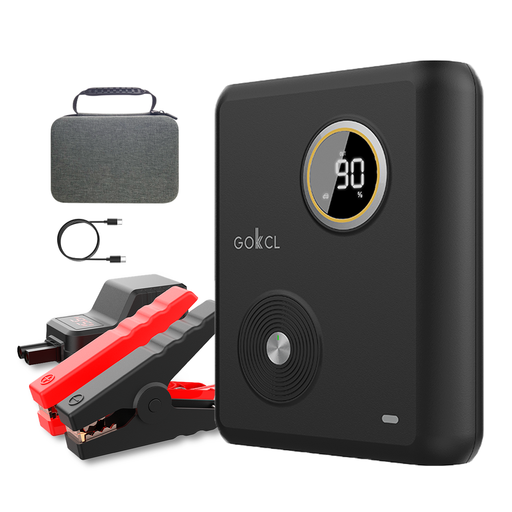
Why it stands out?: This is the embodiment of the next generation of jump starters. Its sodium-ion technology emphasizes maximum safety and outstanding durability. It's an investment in long-term peace of mind.
Benefits?:
Who is it for? For the forward-thinking driver looking for the safest and most durable solution on the market. Ideal for those who live in extreme climates and want a device they can leave in their SUV or 4x4 for years without a second thought.
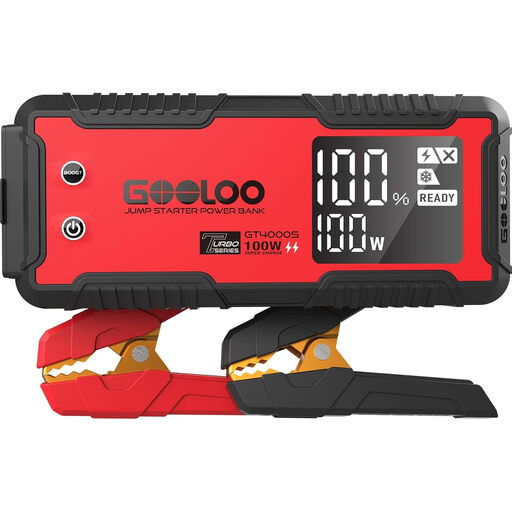
Why it stands out?: This lithium model is all about raw power and charging speed. With its 4000?A peak current and 100?W two-way fast charging, it's built for the most demanding situations.
Benefits?:
Who is it for? For owners of large vehicles (trucks, RVs, large SUVs) who need maximum starting power. It's also an excellent choice for professionals and tech enthusiasts who will appreciate its fast-charging capability for their other devices.
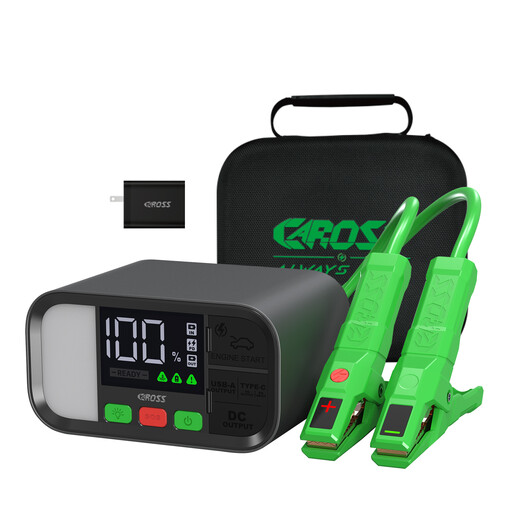
Why it stands out?: The focus is on simplicity and user safety. Its Smart Connect technology with non-polarized clamps eliminates any risk of connection errors, making it accessible to everyone.
Benefits?:
Smart Connect Technology?: The clamps can be connected to either battery terminal; the system automatically detects the polarity. No more stress about connecting red to positive and black to negative!Who is it for? For the everyday user looking for a simple, elegant, and foolproof starting solution. If the thought of handling battery clamps intimidates you, this model is for you.
Jump starter technology is evolving rapidly. If these models don't check all your boxes, or if you're looking for different power levels and features, feel free to explore our full catalog.
Explore our full range of jump starters
The fundamental difference lies in the battery chemistry. Sodium-ion is known for its superior thermal stability, which makes it non-flammable and safer to store in a car exposed to high heat. It also offers a much longer lifespan (in cycles) and better performance in extreme cold. Lithium, on the other hand, often provides greater energy density, which can result in more compact devices for the same power, and very high peak currents.
Yes, as long as you choose a model designed for it. A cold-weather jump starter with a wide operating temperature range, like the GOKKCL GK03 sodium-ion model (-40?°C to +80?°C), is specifically designed to be safely kept in a vehicle, regardless of weather conditions. Always check the manufacturer's specifications.
It all depends on your engine's displacement. For most gasoline cars up to 6.0?L and diesel engines up to 3.0?L, a jump starter with a peak current of 1500?A to 2000?A is generally sufficient. For large SUVs, trucks, or larger displacement diesel engines, it is safer to opt for 3000?A or 4000?A models to ensure an effective start under all circumstances.