
Livraison le jour même ou le lendemain

Qualité garantie

Débloquez vos offres de bienvenue: Livraison GRATUITE | Jusqu'à -80 % | 30 jours d'essai gratuits à JoyPlus
Téléchargez l'application
Buying a socket and ratchet set seems straightforward… until you encounter that first inaccessible nut, the socket that slips, or the moment you realise the stated sizes don't match what you actually need. Whether you're a mechanic, a motorist, a biker, or a weekend DIY enthusiast, the number of pieces alone isn't enough to judge the quality of a set.
Here are the key factors to consider before buying, along with a selection of models suited to different uses.
A 108 or 123-piece set might include bits, hex keys, screwdrivers, and plenty of handy accessories. But its contents deserve a closer look. Some manufacturers count each individual bit separately to inflate the total, while the most commonly needed socket sizes may be missing.
For car maintenance, make sure the set includes sockets from 8 to 22 mm, extension bars, a universal joint, and at least one ratchet in 1/4, 3/8 or 1/2 inch.
In the UK, European vehicles mainly use metric sizes. However, a set of metric and SAE sockets can come in handy for motorbikes, American vehicles, certain machinery, or older equipment.
A set that's only SAE will likely prove impractical on a British car. Conversely, a combined metric and SAE set takes up more space. The right choice depends on the vehicles you maintain and the jobs you do most often.
A reversible ratchet is designed for fast work, but it shouldn't be used as a breaker bar. Adding a long extension to a small ratchet can damage its mechanism.
For wheel nuts or seized fixings, a 1/2 inch breaker bar is far more suitable. For precise tightening, a digital torque wrench lets you control the displayed torque, provided you stay within its operating range and follow the vehicle manufacturer's recommendations.
The three sizes serve different needs:
A set that includes all three sizes saves you from buying separate kits. However, do check the adaptors supplied and the availability of compatible extension bars.
A 72-tooth ratchet generally requires a shorter handle movement than a model with fewer teeth. Product listings often state a 5-degree ratcheting angle, while some 90-tooth models go down to 4 degrees.
This feature makes a real difference in an engine bay or near a wheel, where the handle can't make a full rotation. However, it says nothing about the ratchet's mechanical strength: the maximum torque stated by the manufacturer is the limit you must respect.
The markings Cr-V — for chrome-vanadium steel — and Cr-Mo — for chrome-molybdenum steel — indicate the material used for the tools. A chrome or matte finish makes cleaning easier and helps limit oxidation, but it doesn't mean you can skip wiping the tools down after use, especially in a damp garage.
Storage matters too. A case with moulded slots, clear markings, and secure clips reduces the risk of losing pieces and helps you find the right socket faster.
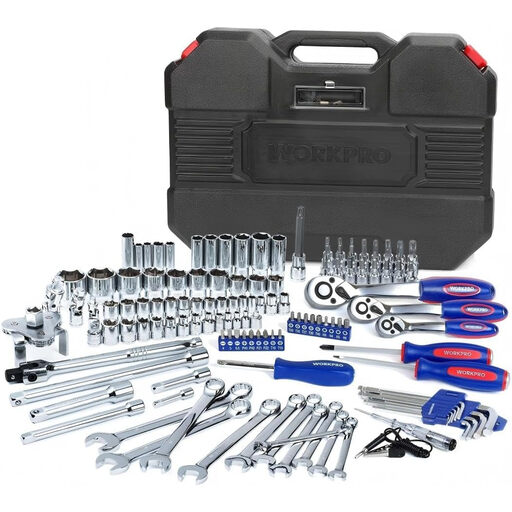
Why this suits the profile: a versatile set for small household repairs, routine car maintenance, and DIY projects.
The listing mentions metric and SAE sockets, plus 1/4, 3/8 and 1/2 inch drives. The moulded case makes it easy to spot missing pieces.
123 pieces stated, triple chrome finish, and accessories including screwdrivers, keys and bits.
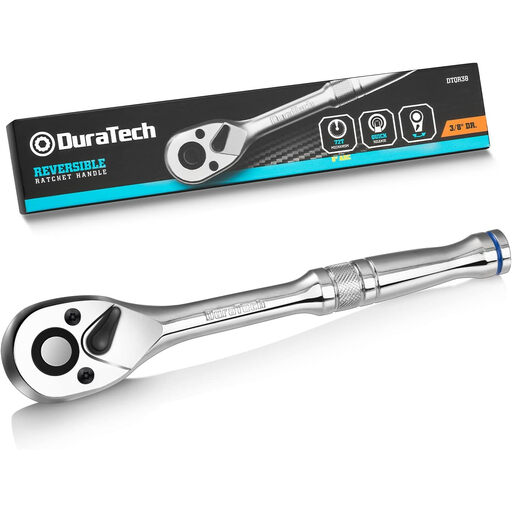
Why this suits the profile: a single handle with three drive sizes for cars, motorbikes, household appliances, and furniture assembly.
All three sizes are built into the same handle, so you don't need to buy duplicate tools. However, you must still respect the maximum torque for each size.
Stated 72-tooth mechanism, 5-degree ratcheting angle, and reversible head with release button.
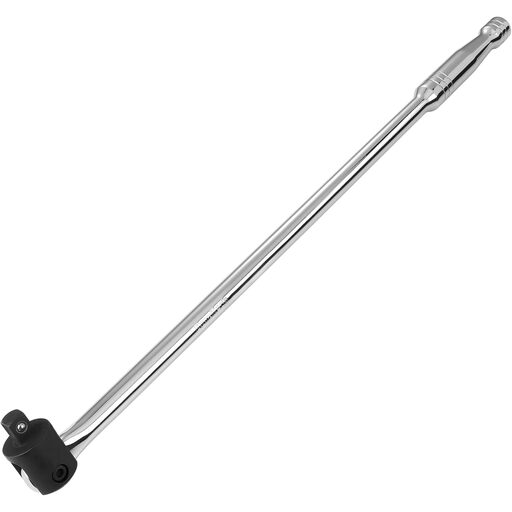
Why this suits the profile: ideal for wheel nuts and stubborn fixings, whether in a workshop or your home garage.
It's designed as a breaker bar, not a ratchet with a makeshift extension added.
1/2 inch drive, 600 mm handle, and a head that rotates up to 240 degrees according to the product listing.
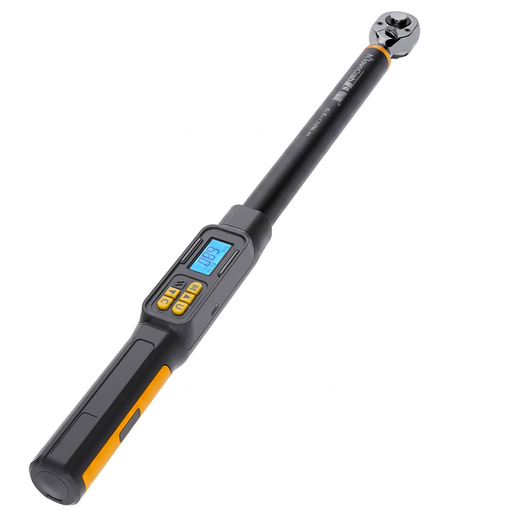
Why this suits the profile: for jobs that require setting and checking the tightening torque, especially on a car, motorbike, or bicycle.
The stated range of 6.8 to 135 Nm lets you check whether the tool covers the required value. It must not be used beyond its capacity.
Display in Nm, lb-ft and lb-in, vibration alert, audible tone and indicator light, with a stated accuracy of ±2%.
We've put together an updated selection of products that meet these criteria for automotive work, home repairs, and DIY projects.
A model that includes metric sockets, 1/4, 3/8 and 1/2 inch drives, extension bars, and a universal joint makes a versatile foundation. For the wheels, add a breaker bar or suitable impact sockets. Always check the sizes recommended by the manufacturer.
It can work perfectly well if its ratcheting angle is small, for example 5 degrees. Accessibility also depends on the handle length, socket depth, and whether you have an extension bar. In a particularly cramped space, a 90-tooth model can reduce the movement even further.
Wipe the tools down after each use, remove grease and moisture, then store them in their case. Don't use a torque wrench as a breaker bar, and never exceed the torque stated in its specifications. Keeping them dry and regularly checking the reversible mechanism reduces the risk of jamming and corrosion.