
Livraison le jour même ou le lendemain

Qualité garantie

Débloquez vos offres de bienvenue: Livraison GRATUITE | Jusqu'à -80 % | 30 jours d'essai gratuits à JoyPlus
Téléchargez l'application
Whether you're renovating, setting up a home office, or simply plugging in a new appliance, choosing an electrical socket or a power strip often seems trivial. However, a hasty decision can quickly turn into a nasty surprise: a product that overheats, a so-called "waterproof" socket that rusts in a few months, or a power strip that offers no protection for your expensive devices.
As a Product Expert at Joybuy, my mission is to guide you through the jungle of options to make an informed choice, focusing on safety and your real needs. Let's cut through the marketing jargon and focus on what's essential. Here are the most common pitfalls and, more importantly, how to avoid them.
Pitfall #1: The 'too good to be true' deal. Low-cost power strips that lack NF (French Standard) certification often hide critical design flaws. The absence of child safety features, poor-quality plastics, or undersized wiring are all risk factors for overheating and even fire.
Pitfall #2: Superficial waterproofing. A simple mention of "for outdoor use" does not guarantee any real protection. Without a clearly specified Ingress Protection (IP) rating suitable for the environment (rain, splashes, dust), you risk rapid deterioration and dangerous short circuits.
To ensure you make the right choice, three technical criteria are non-negotiable. They are the true guarantors of your installation's quality and safety.
The presence of the NF logo on a socket or power strip is not a minor detail; it's a requirement. It certifies that the product meets strict safety standards, including the presence of an earth connection and safety shutters to protect children.
This safety at the socket level must be complemented by protections in your electrical panel:
The Ingress Protection (IP) rating is an international standard that classifies a device's level of protection against the intrusion of solid objects (like dust) and liquids (like water). It is a non-negotiable criterion for any installation outdoors, in a kitchen, or in a bathroom.
Power surges, often caused by lightning or fluctuations in the electrical grid, can irreparably damage your electronic devices (TV, computer, internet router). A surge protector power strip integrates components that absorb these voltage spikes, acting as a shield for your sensitive equipment. It's a small investment to protect high-value hardware.
Rather than an endless list, here are products that meet specific needs, all selected according to our safety and practicality criteria.
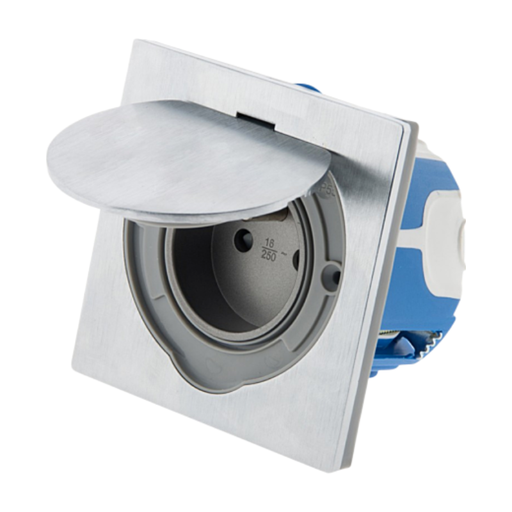
Why we chose it: Ideal for anyone seeking a discreet and elegant power solution for a kitchen island, office, or terrace. This type of worktop or floor outlet block integrates perfectly without compromising your decor.
Unlike products with vague waterproofing claims, this one features a clear and verifiable IP55 rating. It guarantees real protection against dust and water jets, making it perfectly suited for kitchen or outdoor use.
Its brushed aluminium finish and magnetic protective flap offer superior durability and aesthetics compared to plastic solutions.
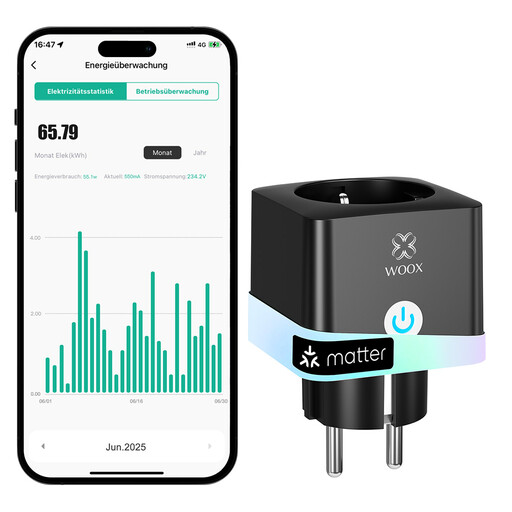
Why we chose it: Perfect for turning any traditional appliance into a smart device. This Wi-Fi smart plug allows you to control power remotely, schedule operating times, and monitor energy consumption.
More than just a gadget, this plug offers a genuinely useful feature: consumption monitoring. Its integration with reliable ecosystems (Tuya, Alexa, Google Home) ensures a smooth and seamless user experience.
The energy monitoring function helps identify the most power-hungry devices and achieve savings, in addition to the convenience of voice and remote control.
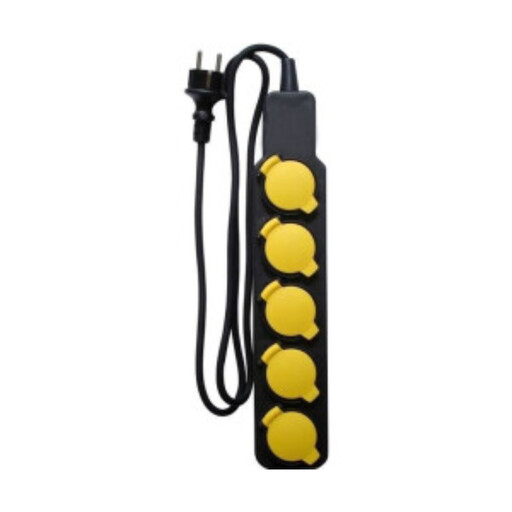
Why we chose it: Built for demanding environments like garages, workshops, or sheltered construction sites. This robust power strip allows you to safely power multiple tools, even in damp conditions.
Its IP44 rating guarantees effective protection against water splashes. Each socket has its own spring-loaded cover, a much more reliable design than a simple removable rubber cap.
The rugged design with 5 individually protected sockets and a rubber-sheathed cable provides a reliable and durable power solution for demanding jobs.
Explore our full selection of products that meet our quality criteria and French safety regulations.
These two devices in the electrical panel have complementary roles. The circuit breaker protects equipment from overloads and short circuits (for example, if you plug too many devices into the same circuit). The residual current device (RCD), on the other hand, protects people by detecting current leaks to the ground, which can cause electric shock.
No, this is a practice to be strictly avoided. Plugging power strips into one another, or "daisy-chaining," creates a high risk of overloading the first power strip and the wall socket. The combined power draw of the devices can then exceed the circuit's maximum capacity (typically 3,680?W for 16?A), leading to overheating cables and a risk of fire.
The choice depends on the number of sockets and the wire's cross-section, in accordance with the NF C 15-100 standard.