What should you compare?
For a snack spread on toast, first check which ingredients you need to avoid, then compare recipes using the criteria that matter to you. A box of chocolates for a gift serves a different purpose, so the criteria for choosing one aren’t the same as those for a jar of spread.
| What matters to you |
What to check |
Who it matters to |
| Sugar and nutritional values |
Compare the sugar and energy content per 100 g, then consider the portion you plan to serve. The DGCCRF says that showing values per 100 g makes comparisons easier. |
For a mid-morning snack on toast, I want to know how much sugar the recipe contains rather than relying on the front of the pack alone. Around 40% of consumers prioritise this comparison. |
| Dietary requirements and allergens |
Read the ingredients, highlighted allergens and any ‘may contain’ statements on the jar, even if the recipe is labelled plant-based or suitable for a dietary exclusion. |
If I need to avoid a specific ingredient, whether the product is suitable comes before its taste or packaging. Around 30% of consumers are thought to prioritise this. |
| Ingredients and commitments |
Check the ingredients and, where shown on the product, any organic, fair trade or palm oil claims. |
I may prefer a particular recipe or production method, while checking its nutritional information separately. Around 20% of consumers are thought to make ingredients and these commitments their top priority. |
| Jar size |
Check the net weight and storage instructions after opening to choose a quantity that suits how you’ll use it. |
If I only have this snack occasionally, I prefer a jar that matches how quickly I’ll use it. Jar size is thought to be the priority for around 10% of consumers. |
Spreads available on Joybuy
This selection includes hazelnut and cocoa spreads, a praline spread and a Banania recipe. For your snack, first choose a recipe that suits the ingredients you’re looking for or need to avoid, then check the information on each jar.
 Image unavailable
FUNKIE organic praline spread, 200 g
Worth considering if you’re looking for praline spread for a snack. Check whether it contains hazelnuts if you need to avoid them, and read the storage instructions for after opening.
View on Joybuy
 Image unavailable
FUNKIE organic hazelnut and cocoa spread, 200 g
A hazelnut and cocoa recipe to consider for toast. If you need to avoid hazelnuts, milk or soya, check the ingredients and allergen information on the jar.
View on Joybuy
Image unavailable
RIGONI DI ASIAGO Nocciolata organic cocoa and hazelnut spread, 250 g
For cocoa and hazelnut spread on toast, compare this product with others using the values per 100 g. Check the information about hazelnuts, milk and soya if these ingredients matter to you.
View on Joybuy
 Image unavailable
LUCIEN GEORGELIN organic hazelnut and cocoa spread, 400 g
The 400 g size may be worth considering if you use spread regularly. Before choosing, check the nutritional values, information about nuts and milk, and the storage instructions for after opening.
View on Joybuy
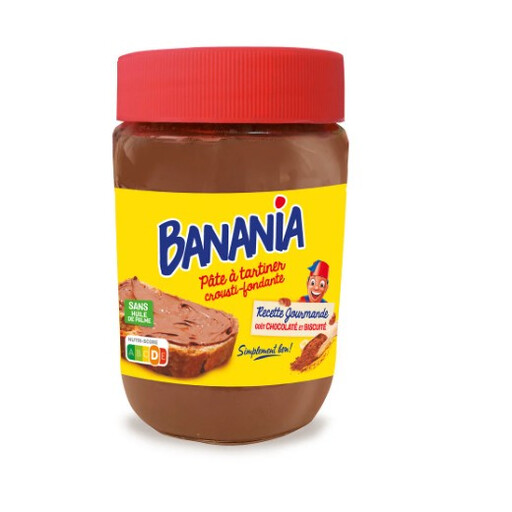 Image unavailable
Banania spread without palm oil, 400 g
Worth considering if avoiding palm oil is one of your criteria. Also compare the nutritional values and check the information about milk, gluten and possible traces of soya.
View on Joybuy
Frequently asked questions
Is Nutri-Score mandatory on spread in France?
No. The DGCCRF describes Nutri-Score as a voluntary label in France. A nutritional declaration is compulsory in most cases for prepacked foods, so the absence of a Nutri-Score doesn’t mean there’s no nutritional information to compare.
What should I compare if a jar doesn’t show a Nutri-Score?
Compare the nutritional values per 100 g, particularly energy, fat, sugars and salt, then read the ingredients. According to the DGCCRF, presenting values per 100 g makes it easier to compare products, even when the jars aren’t the same weight.
Is plant-based spread suitable if I avoid hazelnuts or soya?
Not necessarily. The Nutella Plant-Based product listed by Carrefour contains hazelnuts and soya lecithins. Check the allergens for the exact product rather than assuming they’re absent because it’s labelled plant-based.
Can a lactose-free and gluten-free recipe still carry a ‘may contain’ warning?
Yes. The Auchan product page for a Jardin Bio étic product labelled this way warns that it may contain traces of milk proteins, soya and other nuts. If you need to avoid any of these allergens, read the information on the jar you buy.
How should I store spread after opening?
Follow the instructions on the jar you buy. For the Jardin Bio étic product reviewed, Auchan says not to refrigerate it and recommends consuming it within a month of opening. This guidance doesn’t automatically apply to other recipes.


