Shopping on your own for the first time
You want a spread, but don’t want to buy a large jar straight away. Carrefour lists a 220 g jar among its Nutella products, for example; check whether that quantity suits the way you’ll use it.


For your first food shop on your own, start by thinking about how you’ll use the product. Choose a jar or single portion if you want a spread, or a snack bar if you’re after something ready to eat. Then check the quantity, ingredients and allergens for the product you’re considering. In France, Nutri-Score is optional, according to the DGCCRF.
You want a spread, but don’t want to buy a large jar straight away. Carrefour lists a 220 g jar among its Nutella products, for example; check whether that quantity suits the way you’ll use it.
If by “bar” you mean something you can eat as it is, remember that it’s different from a spread: the packaging and the way you eat each product meet different needs.
You want to compare recipes, allergens and nutritional values. Nutri-Score can be a useful guide when it’s shown, but the DGCCRF explains that displaying it is voluntary in France.
For your first food shop on your own, start by working out what you want to eat and how. Then choose the right quantity and read the label on the product you’re considering.
| What matters | What to check | Who is it for? |
|---|---|---|
| Type of product | Product name and packaging: a jar, a single portion of spread or a snack bar. | I want to eat my snack without bread or cutlery: a spread wouldn’t be right for me. Around 44% of consumers put this distinction in how a product is used first. |
| How much to buy | Net weight and storage instructions. | If I’m buying something for myself, I’d rather choose an amount that suits the way I’ll use it than open a large jar. Around 33% of consumers put the pack size first. |
| Reading the label | Ingredients, allergens and nutritional values per 100 g; Nutri-Score if it’s shown on the product. | Before choosing a recipe, I need to check its ingredients and allergens, rather than relying on a logo alone. Around 23% of consumers put this information first. |
A ready-to-eat bar and a spread aren’t used in the same way; their recipes and allergens may differ too.
Check the product name and packaging before choosing between a bar, a single portion and a jar.
According to the DGCCRF, Nutri-Score is voluntary in France. Its absence isn’t enough to judge a product or determine whether its labelling is compliant.
If it’s shown, read it alongside the nutritional information per 100 g and the ingredients list.
The quantity matters if you’re planning to eat the product on your own. Carrefour lists Nutella jars of 220 g and 825 g, for example, which suit different rates of use.
Compare the net weight, the date shown and the storage instructions with how much you expect to use.
Hazelnut and cocoa spread available in different pack sizes; Carrefour lists 220 g and 825 g jars, for example.
A range of hazelnut and hazelnut-and-cocoa spreads to consider when you’re looking for a jar.
Auchan’s Pasta Cao range includes hazelnut and cocoa spreads in 400 g and 750 g jars.
Lidl France lists a 400 g jar of FAVORINA speculoos spread.
For your first food shop on your own, this option is a single portion of hazelnut and cocoa spread. It’s different from both a small jar and a snack bar.
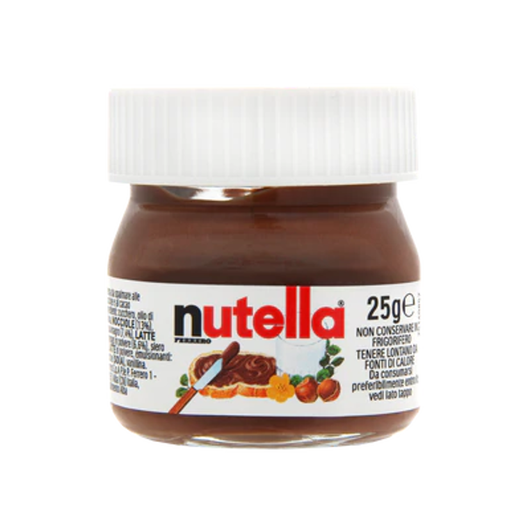 Image unavailable
This single portion is a good choice if you want a small amount of spread rather than a ready-to-eat bar. To compare its ingredients or check for allergens, refer to the ingredients list, allergen information and nutritional details on the packaging for this product.
No. According to the DGCCRF, displaying Nutri-Score in France is voluntary and provides additional information. When comparing pre-packed products, also read their nutrition declaration, which is generally required, subject to applicable exemptions.
Check the ingredients and highlighted allergens on the packaging of the exact product you’re considering. The DGCCRF explains that allergens present in the ingredients list of pre-packed products must be clearly identified. Don’t assume they’re absent just from the product name.
No. It describes the packaging, not a food category. Auchan, for example, lists spreadable cheese in single portions. If you’re looking for a sweet spread, check the product name and ingredients.
This refers to a best-before date, which is different from a use-by date. The DGCCRF explains that a product may lose some of its flavour after its best-before date, provided the packaging is intact. Always follow the storage instructions on the product too.