
Livraison le jour même ou le lendemain

Qualité garantie

Débloquez vos offres de bienvenue: Livraison GRATUITE | Jusqu'à -80 % | 30 jours d'essai gratuits à JoyPlus
Téléchargez l'application
Snack peanuts might seem easy to pick: a bag, a tempting flavour and a fair price. Yet a few details can make all the difference between a successful aperitif and a product that’s too salty, quickly goes soft or isn’t quite right for your needs.
Before you fill your basket, take a close look at the actual peanut content, the type of coating and the allergens. These criteria matter just as much for a casual get-together with friends as they do for a snack on the go, an event or regular consumption at home.
Coated peanuts often contain flour, starch, sugar, oil and various seasonings. The total weight of the bag doesn’t necessarily reflect the quantity of peanuts. A recipe made with 60% peanuts, like some KOH-KAE or HOT CHIP products, gives you a better idea of the size you’re buying.
To compare two bags, check the ingredients list, which is presented in descending order. The earlier peanuts appear, the more prominent they are in the recipe.
‘Spicy’, ‘barbecue’, ‘wasabi’ or ‘Thai’ don’t all guarantee the same intensity. The mere presence of a spice in the ingredients list isn’t enough to judge the flavour strength either. Golden Turtle wasabi peanuts, for example, list 0.3% wasabi powder, while other products combine wasabi, nori seaweed and chilli.
The nutritional information and ingredients list are therefore often more revealing than the brightly coloured packaging. A chilli peanut can be nicely hot without being particularly salty, whereas a coated peanut may have a higher sugar or starch content.
Moisture quickly makes peanuts lose their crunch, especially when they’re coated or sold salted in large bags. A resealable bag is handy, but it doesn’t replace a perfectly airtight seal. Sizes of 70 to 110 g are generally suitable for quick consumption. Bags of 220 g, 300 g, 500 g or 1 kg require a bit more care.
Store them in a cool, dry place, away from light and heat. Depending on the product, the label may recommend eating them soon after opening or keeping them in the fridge.
Plain roasted peanuts often have a short ingredients list: peanuts, oil and salt, or even just peanuts. Coated versions usually contain wheat flour, starch, sugar, vegetable oil and flavourings.
Check the allergens highlighted on the label. Depending on the product, the items shown here may contain or indicate the presence of peanuts, wheat, gluten, soya, sesame, mustard or crustaceans. If you have an allergy, always rely on the labelling of the packet you receive rather than just the online description.
To compare different products, base your assessment on the values per 100 g. As a guide, BENENUTS Salted Dry Roasted Peanuts have 1 g of salt per 100 g, while some Thai-style coated peanuts reach around 2 to 2.4 g. Sweet and spicy recipes may also contain more sugar.
Peanuts are naturally high in calories. A sensible portion depends on your usage, the rest of your diet and the occasion. For a buffet, it’s better to put out several small bowls than one large bag left open for hours.
Peanuts in their shells require a bit more handling, but they fit perfectly into a sociable aperitif. Roasted, shelled peanuts are easier to serve and to incorporate into recipes.
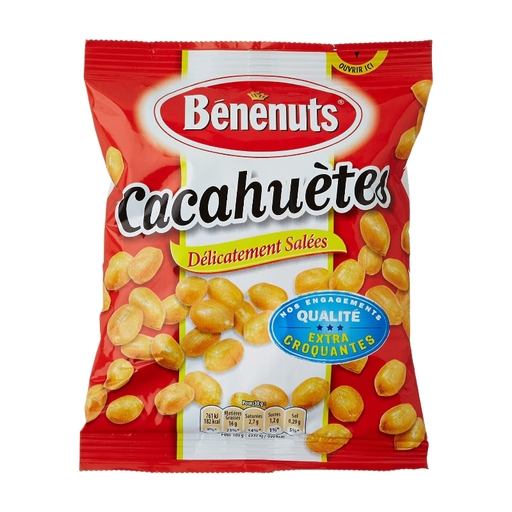
Why this choice suits this profile: A short ingredients list of peanuts, sunflower oil and salt, in a 220 g size that’s well judged for aperitifs at home.
The stated ingredients are clear, so you won’t mistake a thick coating for the actual amount of peanuts.
220 g, dry roasted peanuts, 1 g of salt per 100 g according to the product information.
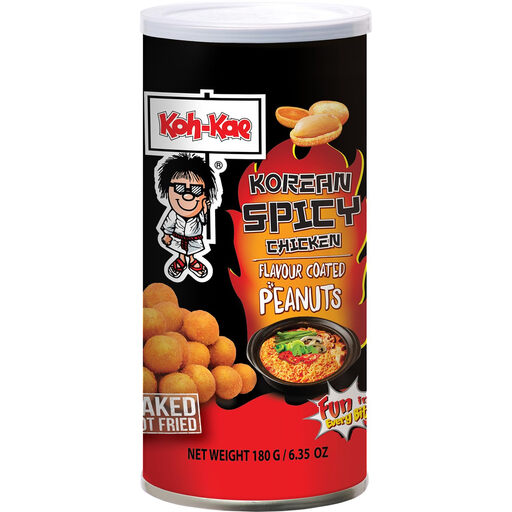
Why this choice suits this profile: This product offers a punchy Korean-inspired flavour, a satisfyingly crunchy texture and a 180 g size perfect for sharing.
The product information states it contains 60% peanuts and details the allergens, including wheat, soya and sesame.
Korean Spicy Chicken flavour, 180 g, 21 g of protein and 2.3 g of salt per 100 g according to the product information.
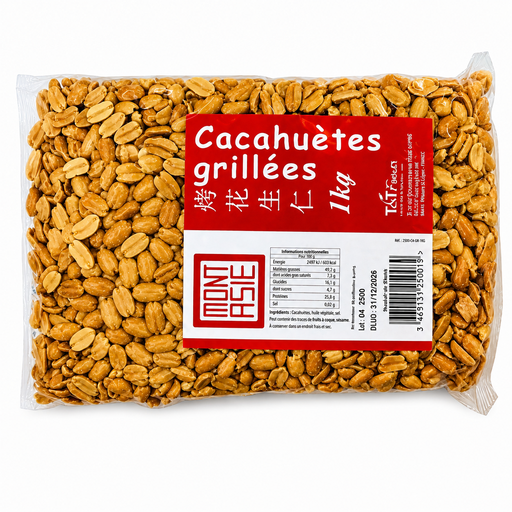
Why this choice suits this profile: This large pack is ideal for events, shared spaces and anyone who also uses peanuts in cooking.
The stated ingredients are simply peanuts, with no salt listed. This means you can use them in cooking or season them to your own taste.
1 kg size, 0 g of salt listed per 100 g, suitable for both aperitifs and cooking.
We’ve put together a comprehensive, real-time selection of products that meet these exacting standards and comply with European food safety regulations.
Roasted peanuts are heated to develop their texture and flavour. Salted peanuts simply have salt added, while coated peanuts are covered in a preparation that often contains flour, starch, sugar and spices. Their texture and nutritional profile can therefore vary significantly.
Seal the packet carefully or transfer the contents to an airtight container. Store it in a dry cupboard, away from any heat source. Follow the instructions on the packaging; for some products, it’s best to eat them within a few days of opening.
For two to four people, a 100 to 230 g bag should be fine, depending on what other snacks you’re serving. For an event or regular consumption, a 300 g to 1 kg pack reduces the need for restocking, but requires careful storage. Smaller 36 to 80 g bags are more practical for on-the-go snacking and make portion control easier.