People looking for a measurable protein intake
For a short break at work, you want to know how much protein is in the portion you’ll actually take with you, rather than relying on the ingredient names alone.


For a quick lunch at work, compare the protein content per 100 g and per portion you’ll take with you. The presence of chickpeas or peanuts alone doesn’t tell you how much protein you’ll get. Check the salt, saturated fat and allergens too. Nutri-Score can provide an additional point of reference when it appears on the product, but Santé publique France says that displaying it is voluntary.
For a short break at work, you want to know how much protein is in the portion you’ll actually take with you, rather than relying on the ingredient names alone.
You compare salt, saturated fat and ingredients, using Nutri-Score as an additional guide when it’s shown.
Before taking a snack with you, check the ingredients and any ‘may contain’ warnings for the exact product, especially if peanuts, tree nuts, milk or wheat are a concern for you.
Start with how much you plan to eat, then compare the nutritional information for similar products and check the allergens for each one.
| Criteria | What to check | Who is it for? |
|---|---|---|
| Protein | The amount per 100 g and the amount in the portion you’ll take with you. | If my lunch break is short, I want to know how much protein is in the packet or portion I’ll eat. Around 42% of consumers prioritise a measurable protein intake above all else. |
| Nutritional composition | Salt and saturated fat per 100 g; Nutri-Score, if shown. | A snack marketed as high in protein isn’t enough for me if I also want to check its nutritional composition. Around 33% of consumers are primarily looking to reduce the trade-offs associated with salt and saturated fat. |
| Portability and allergens | The format for taking it with you, the ingredients and the allergen information for the exact product. | I need to be able to prepare a portion for work without choosing a product that conflicts with my allergen requirements. This practical compatibility comes first for around 25% of consumers. |
The fact that a savoury biscuit contains a legume doesn’t tell you how much protein is in the portion you eat.
Compare the protein content per 100 g, then work out how much that means for the portion you plan to eat. Check the salt and saturated fat too.
According to Santé publique France, displaying Nutri-Score is voluntary. Whether or not it appears on a product, it doesn’t replace checking the nutritional information that matters to your choice.
Use it as an additional guide when it appears on the product, but don’t rely on it alone to determine the protein content.
Ingredients and ‘may contain’ warnings vary from one product to another. For example, Vico says its Natur’&Bon peanuts may contain gluten and tree nuts.
Read the label on the product and pack size you’re buying before taking it with you, including any ‘may contain’ warnings.
Vico offers puffed lentil biscuits and a single-ingredient peanut product: two types of snack to assess separately.
Belin savoury biscuits can be a useful comparison if taste and texture are important to your choice.
Auchan’s range includes chickpea flour snacks among its savoury biscuits.
This selection includes two chickpea savoury biscuits and some roasted peanuts. Peanuts are a different type of snack. For work, the 1 kg pack means you’ll need to prepare a portion to take with you.
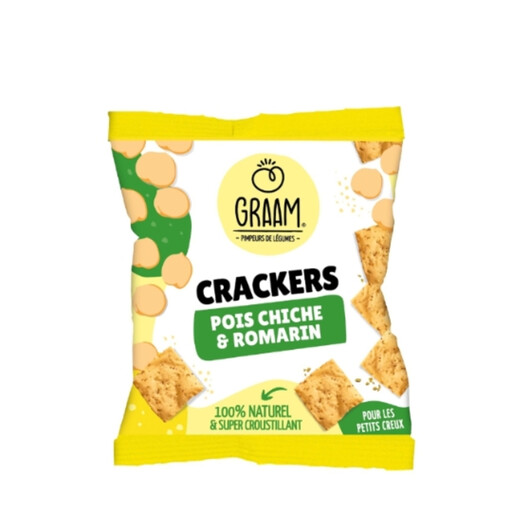 Image unavailable
The 30 g pack is an easy-to-carry portion for a savoury snack break. However, the product listing mentions wheat flour, while another description says ‘gluten-free’. Check the label and allergen information before buying, rather than relying on that claim.
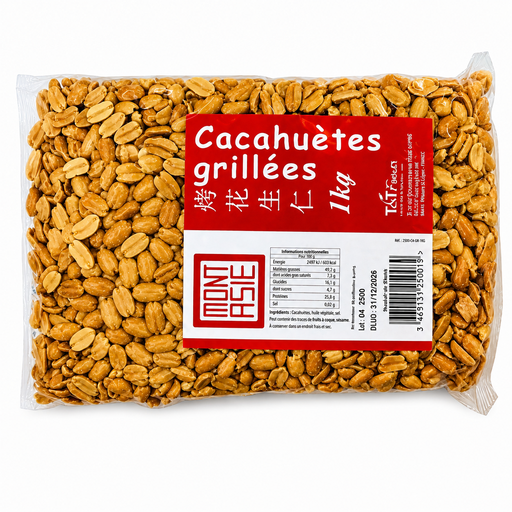 Image unavailable
These roasted peanuts are an alternative to savoury biscuits if you’d like to prepare your own portion for work. The pack contains 1 kg; this product isn’t suitable if you have a peanut allergy. Check the amount in your planned portion rather than comparing figures per 100 g alone.
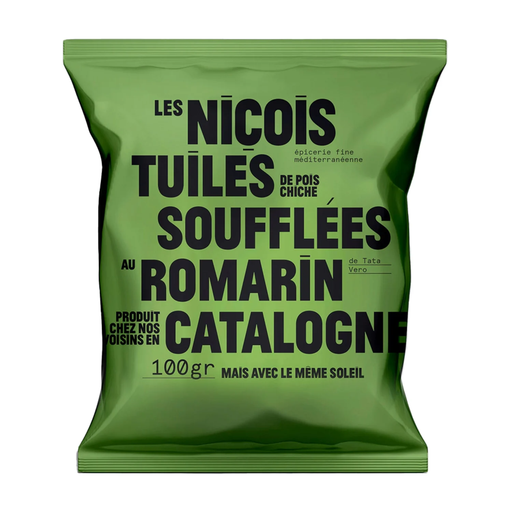 Image unavailable
This 100 g pack is still a savoury biscuit snack. If you’re only taking some of it with you, work out your portion before comparing its protein content. Check the salt on the label for this particular product too.
No. Santé publique France says that producers display it voluntarily. It is separate from the nutritional information generally required on prepacked foods, as the European Commission explains.
First compare the figures per 100 g, then check the amount for the portion you plan to eat. For prepacked foods, EU regulations generally require a nutrition declaration that includes protein, sugars, fat, saturated fat and salt, among other details, according to the European Commission.
No. The featured ingredient alone doesn’t tell you the protein content. Check the nutritional information for the exact product and take the portion you eat into account.
Read the ingredients list and any ‘may contain’ warnings on the packaging of the product you’re buying. For prepacked foods in France, the Ministry of the Economy says that allergenic ingredients must be listed and highlighted.