
Livraison le jour même ou le lendemain

Qualité garantie

Débloquez vos offres de bienvenue: Livraison GRATUITE | Jusqu'à -80 % | 30 jours d'essai gratuits à JoyPlus
Téléchargez l'application
A smoothie blender is not only for making a fruity breakfast drink. It can also blend soup, sauce or purée. However, some purchases quickly lead to disappointment: a motor that is not powerful enough for frozen fruit, a container that is awkward to clean or a capacity that is unsuitable for the number of portions.
Before you go for a powerful, personal or portable blender, it is therefore better to examine the features that really matter rather than relying solely on the wattage displayed.
A powerful motor alone does not guarantee a perfectly smooth texture. The result also depends on the shape of the jug, the arrangement of the blades, the quantity being prepared and whether there is a Pulse function. If you plan to blend frozen fruit or ice, check that the manufacturer clearly states that the appliance is suitable for this.
A 120 W model designed for an individual portion will obviously not be used in the same way as a 1 200 or 1 500 W blender fitted with a large jug. Comparing figures alone could therefore lead you to spend more than necessary — or choose an appliance that is not right for you.
Banana residue, nut butter and plant fibres tend to collect around the blades. To make cleaning less of a chore, choose a blender with removable parts, a sufficiently wide container and, where specified by the manufacturer, dishwasher-safe components.
The self-cleaning function can speed up maintenance, but it does not always replace rinsing by hand, particularly after making a thick paste or purée.
Not every blender can blend boiling-hot soup. Steam can increase the pressure beneath the lid and cause splashing. Always consult the instructions and observe the maximum temperature stated.
Some appliances require you to allow the preparation to cool before blending it. Others are specifically designed for both hot and cold preparations.
The stated capacity does not always correspond to the volume that can actually be used. For one person, a 475 to 700 ml jug may be sufficient. Families will generally be better off looking at 1.5 to 2-litre models, without forgetting to observe the maximum filling limit.
A blender with a glass jug generally resists odours and staining well, but it is heavier to handle. Plastic and Tritan are lighter and make transport easier. In all cases, check the composition of materials that come into contact with food, including whether they are BPA-free where the manufacturer states this.
For making simple smoothies, a moderately powered motor may be perfectly adequate. Ice cubes, seeds and frozen fruit, on the other hand, require more torque as well as suitable blades. An ice-crushing blender should offer a dedicated function, a Pulse mode or an explicit indication in its technical specifications.
Automatic programmes simplify preparation, while several speeds allow you to adjust the blending of sauces, purées and emulsions. A multifunction blender is worthwhile if you genuinely plan to vary your recipes. Its accessories should, however, match your habits; otherwise, they will probably end up at the back of a cupboard.
A USB rechargeable blender is useful at the office, at the gym or while travelling. Check the stated battery life, charging time, cup capacity and the foods it can handle. Some portable models are not designed for ice cubes or hard ingredients.
For everyday use at home, a corded appliance is generally more practical, especially if you prepare several portions or regularly blend dense ingredients.
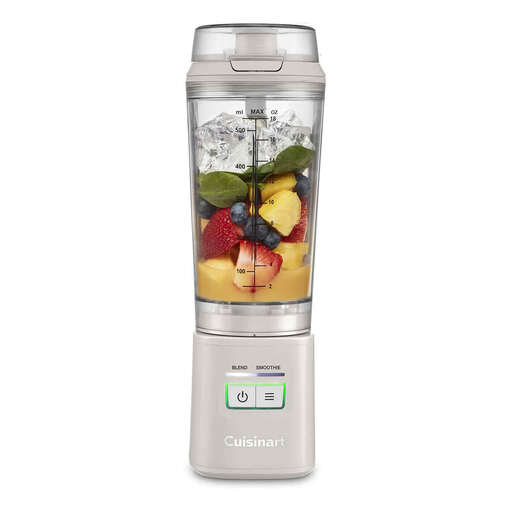
Why this choice suits this profile : With its 500 ml format and 120 W motor, this model is suitable for individual smoothies and drinks. Its mains-powered operation is straightforward for everyday use.
Its capacity discourages overly ambitious preparations, while the removable container makes rinsing easy after each drink.
500 ml cup, stainless steel blades and controls designed for individual drinks.
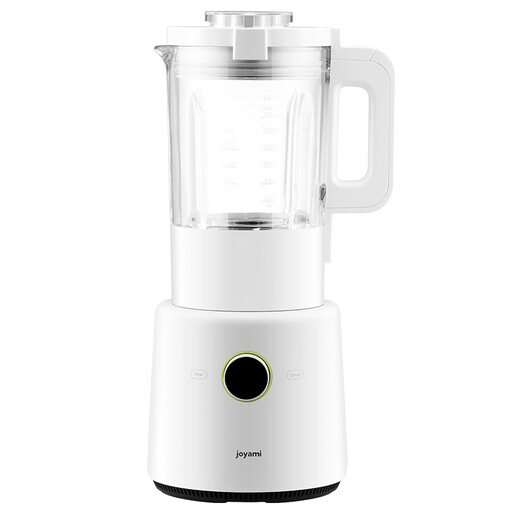
Why this choice suits this profile : This countertop blender combines a 1.6-litre glass jug, functions for hot and cold preparations, app control and Wi-Fi connectivity.
Its capacity and glass jug are suitable for family-sized preparations. The advertised self-cleaning function also reduces day-to-day handling.
1.6-litre glass container, hot and cold preparations, app control and Wi-Fi connectivity.
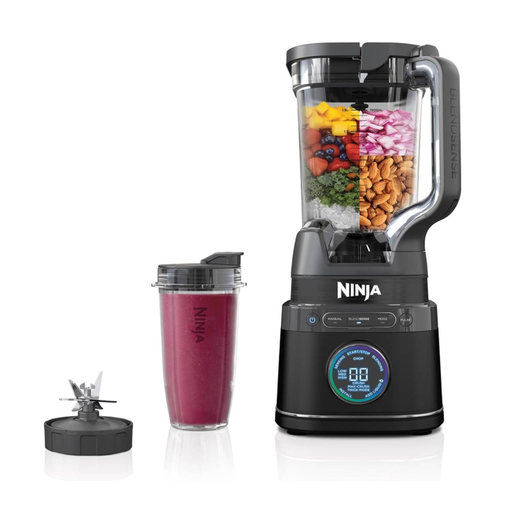
Why this choice suits this profile : Its 2-litre jug and two 680 ml individual cups make it easy to switch from family recipes to sauces and smoothies to take away.
The different formats mean you do not have to use a large container for every quantity. The removable parts are advertised as dishwasher-safe on the top rack.
1 200 W motor, 10 speeds, 15 advertised modes and BlendSense technology capable of detecting ingredients.
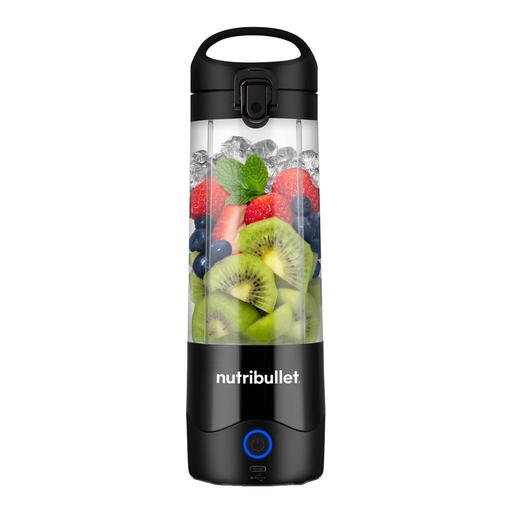
Why this choice suits this profile : Its 475 ml Tritan cup and USB-C charging are well suited to an individual drink at the office, at the gym or while travelling.
Its compact format means you do not have to carry a bulky kitchen appliance. However, you must observe the 20-second cycles and allow the motor to cool between uses.
USB-C charging advertised at 90 minutes, more than 15 20-second cycles and a stated weight of 0.86 kg.
We have put together a comprehensive selection, updated in real time, of products that meet these demanding criteria and European safety regulations.
Look for a sufficiently powerful motor, stainless steel blades and a Pulse or « Ice Crush » function that is explicitly mentioned. A small portable blender may be suitable for small quantities, but a countertop appliance will generally cope better with larger volumes.
A 475 to 700 ml container is generally sufficient for one portion. For two people or a family, choose a jug of at least 1.2 litres. Above all, remember to distinguish between the total capacity and the maximum volume actually intended for preparation.
Consumption depends on the motor power and operating time. A 1 200 W appliance used for one minute consumes approximately 0.02 kWh. The exact cost then varies according to your electricity tariff.
USB rechargeable models use little energy per cycle, but their capacity and battery life are more limited.