
Livraison le jour même ou le lendemain

Qualité garantie

Débloquez vos offres de bienvenue: Livraison GRATUITE | Jusqu'à -80 % | 30 jours d'essai gratuits à JoyPlus
Téléchargez l'application
By the Editors, July 10, 2026
Since the Morange Law was passed, installing at least one smoke detector per household has been mandatory in France. But this device is more than just a legal formality; it's an indispensable ally for your home's safety. Faced with a crowded market, it's easy to get lost in the options: battery-powered models, 10-year smoke detectors, smart smoke detectors, or interconnected detector kits...
This guide is here to help you make sense of it all and choose wisely, presenting the essential criteria and a selection of reliable products suited for every need and budget.
Before diving into our selection, let's review the key criteria that will help you find the perfect model for your home and lifestyle.
The choice of power source is a key factor for convenience and budget that shouldn't be overlooked.
The traditional fire alarm has evolved significantly with the rise of smart devices.
For large houses, multi-story homes, or simply for enhanced security, the interconnection feature is a major plus.
Crucial point: All detectors sold in Europe must be certified EN 14604. This is the guarantee of their reliability. Be sure to check for this marking on the packaging and the product itself.
We have selected three models that meet specific needs, from the most basic to the most comprehensive.
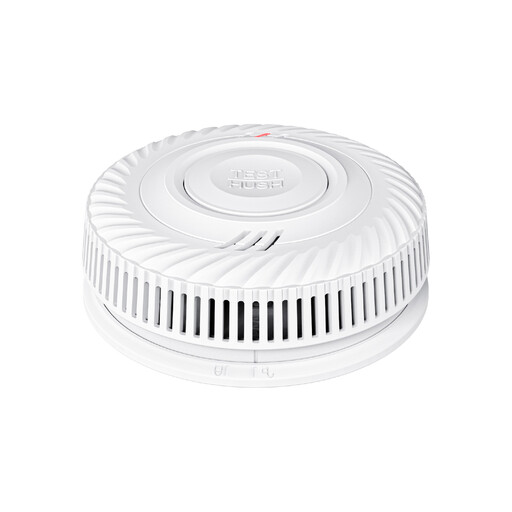
Why it stands out: This model checks all the boxes for modern convenience. It combines the two most sought-after features: a long-life sealed battery and Wi-Fi connectivity. It's the "install it and forget it" solution, with the added bonus of remote monitoring.
Pros:
Who is it for? Ideal for those who want absolute peace of mind, owners of second homes, or anyone who wants to be alerted to a fire even when they are far from home.
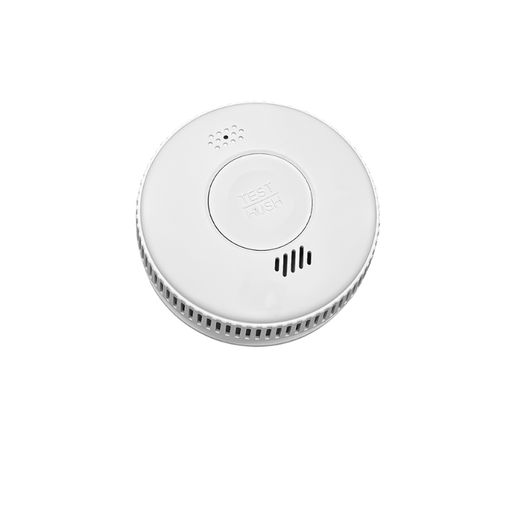
Why it stands out: This detector gets straight to the point: reliable detection, an attractive price, and quick installation. Its use of replaceable batteries makes it a very economical option for complying with the law without any hassle.
Pros:
Who is it for? Perfect for renters, studios, and small apartments, or for anyone looking for a reliable and inexpensive solution to meet legal requirements.
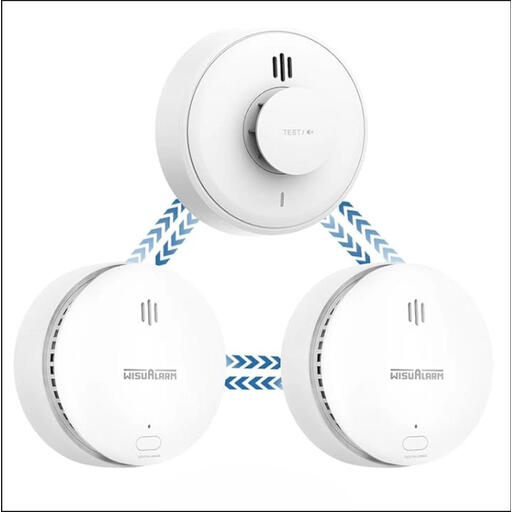
Why it stands out: This detector kit offers comprehensive protection thanks to its interconnected system. Cleverly, it includes not only smoke detectors but also a heat detector, which is ideal for the kitchen where steam can cause false alarms.
Pros:
Who is it for? The ideal solution for families, multi-story houses, and large homes that require a complete and coordinated fire safety system.
Our selection covers the most common scenarios, but every home is different. If none of these models perfectly match your needs or if you want to explore other technologies, know that a much wider range of products is available.
To discover more models, multi-detector packs, or accessories, feel free to browse our complete category dedicated to smoke detectors.
1. Where should I install a smoke detector? The golden rule: at least one detector per floor. The ideal location is on the ceiling, preferably in the centre of a hallway or landing that serves the bedrooms. Avoid the kitchen and bathroom at all costs, where cooking fumes and steam can cause false alarms. Also, remember to mount it more than 30?cm (12 inches) from walls and corners.
2. What is the lifespan of a smoke detector? Nearly all smoke detectors, whether they use replaceable batteries or a sealed battery, have a lifespan of 10 years. Beyond this period, their detection sensor becomes less reliable. It is therefore imperative to replace the entire unit. The replacement date is always printed on the product's label.
3. Are smoke detectors really mandatory in France? Yes, without exception. The 2010 Morange Law requires the installation of at least one Standalone Smoke Alarm (DAAF) in every dwelling (primary residences, second homes, and rental properties...). The property owner is responsible for providing and installing the initial device, but the occupant (tenant or owner) is responsible for its maintenance and replacement.