
Livraison le jour même ou le lendemain

Qualité garantie

Débloquez vos offres de bienvenue: Livraison GRATUITE | Jusqu'à -80 % | 30 jours d'essai gratuits à JoyPlus
Téléchargez l'application
Navigating the crowded smartwatch market is a daunting task. Between the marketing jargon and indigestible spec sheets, it's easy to make a mistake you'll bitterly regret. To keep you from throwing your money away, we've broken down the three most common traps to sidestep before pulling out your credit card.
To avoid unpleasant surprises, focus on the few points that will make all the difference in your daily life.
Don't be blinded by the maximum figure advertised. Look for the battery life in "smartwatch mode" (normal use) and, if you're an athlete, in active smartwatch GPS mode. A watch that promises 10 days can plummet to under 20 hours with the GPS constantly on. Ask yourself the right question: do you need it to last one full-on day, or several days in a more relaxed mode?
All smartwatches display notifications. The real differentiator is call management. A watch with Bluetooth calling includes a microphone and speaker, allowing you to answer calls directly from your wrist. This is a real game-changer in daily use, whether you're driving, in the middle of a workout, or have your hands full.
For a sports smartwatch, a built-in GPS is almost essential for tracking your outings without carrying your smartphone. More advanced models offer a multi-system GPS (GPS, GLONASS, Galileo) for better accuracy, whether you're between city buildings or deep in the woods. Also, take a look at the sports profiles: whether you're a fan of running or yoga, make sure your favourite activity is included.
To help you make your choice, here are a few models that tick the right boxes for different uses and budgets.
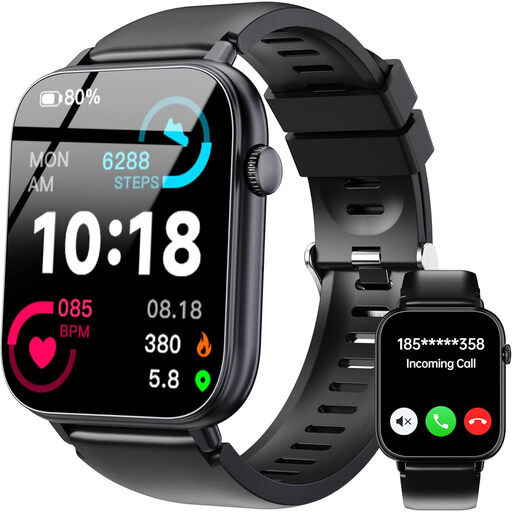
Why we recommend it: This watch, available for men and women, offers an excellent feature-to-price ratio. It does the essentials, and it does them well: notifications, over 100 sports profiles, and most importantly, Bluetooth calling.
Its spec sheet is honest about the IP68 water resistance: it's made for daily life, not for diving. The battery life is listed as 7 days with normal use and 30 days on standby, a clear distinction that prevents a rude awakening.
The Bluetooth calling function with a built-in mic and speaker is a true luxury at this price point.
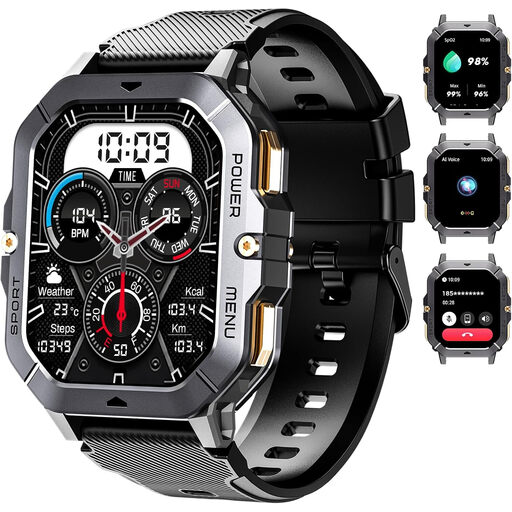
Why we recommend it: Built for adventure, this military-style men's smartwatch is designed for those who don't baby their gear. Its large screen and rugged construction make it the perfect ally for outdoor activities.
It bets everything on its ruggedness and its 410 mAh battery, which is built to last. The brand clearly states that the health tracking is an indicator, not a medical tool, which is commendably clear.
Its reinforced frame and XXL battery make it a reliable partner for long hikes and intense workdays alike.
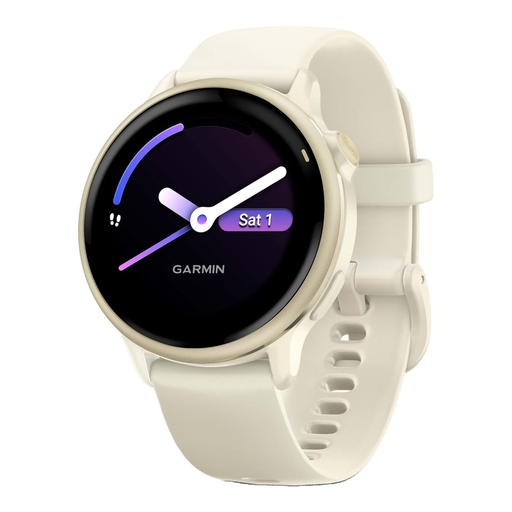
Why we recommend it: Here, we're getting into serious territory. For athletes who leave nothing to chance, the Vivoactive 6 deploys an arsenal of advanced tracking, an ultra-precise GPS, and premium features like Garmin Pay and music storage.
Garmin is transparent about battery life: up to 11 days in smartwatch mode, but a maximum of 24 hours with GPS. This transparency helps avoid unpleasant surprises. The brand also reiterates that its sensors are not medical devices.
The Multi-GNSS GPS (GPS, GLONASS, Galileo) ensures incredibly precise location tracking, a must-have for analyzing your running or cycling performance.
If you believe a watch should, above all, tell the time and hold a charge without any frills, take a look at our selection of models that get straight to the point.
Generally, expect a lifespan of 2 to 5 years. The weak link is almost always the battery, which loses capacity over charge cycles. The lifespan also depends on software update support and the durability of the case and strap.
Rest assured, for the vast majority of watches, including those in our selection, the answer is no. Essential functions (notifications, sports tracking, syncing) are handled through a free app from the manufacturer (Da Fit, GloryFit, Garmin Connect, etc.). Only a few advanced options, like 4G via an eSIM, might require a dedicated mobile plan.
It depends on what you want to do. A smartwatch GPS can track your running route completely autonomously. If it has internal storage, you can also load your music onto it. However, to receive notifications, weather updates, or make Bluetooth calls, your smartphone must remain within range (about 10 meters or 33 feet).