
Livraison le jour même ou le lendemain

Qualité garantie

Débloquez vos offres de bienvenue: Livraison GRATUITE | Jusqu'à -80 % | 30 jours d'essai gratuits à JoyPlus
Téléchargez l'application
The smartwatch market is flooded with models making enticing promises: health tracking, notifications, sports coaching, and more. But behind the marketing claims, it's easy to fall into a trap and regret your purchase. As a product expert at Joybuy, my mission is to help you decode the spec sheets to find the watch that's truly right for you.
Before you even start comparing models, let's identify the three traps that separate a good investment from a quickly forgotten gadget.
To ensure your future watch doesn't disappoint, focus on these three technical criteria.
Never trust the maximum advertised battery life. Look for the "typical use" or "daily use" battery life on the spec sheet. A good benchmark is between 5 and 14 days for standard use. For more power-hungry models (always-on display, intensive GPS), lasting 24 to 48 hours is already a great achievement. Think about your habits: if the idea of charging your watch every night puts you off, opt for models designed for endurance.
Here, it all depends on what you do:
Make sure the watch is compatible with your phone's operating system (iOS or Android). Also, consider connectivity. A smartwatch with Bluetooth calling lets you take calls from your wrist, as long as your smartphone is nearby. For complete independence, cellular models (4G/5G via eSIM) are the solution, but be mindful of the extra subscription cost from your carrier.
Because every user is unique, here is our selection for three typical profiles.
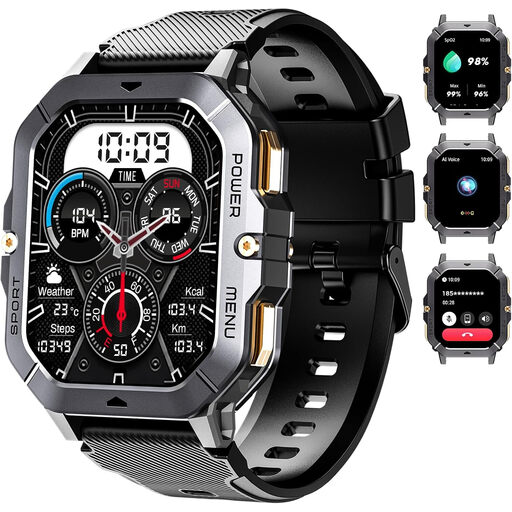
Why it's a great choice: Perfect for entering the world of smartwatches without breaking the bank. It covers the essentials: notifications, step, sleep, and heart rate tracking, plus the very practical Bluetooth calling feature for daily use.
The manufacturer is transparent: the IP68 water resistance is clearly specified for daily use (not swimming), and a disclaimer notes that health data is for reference only.
Its unbeatable value for its features, Bluetooth calling function, and wide range of sports modes (100+).
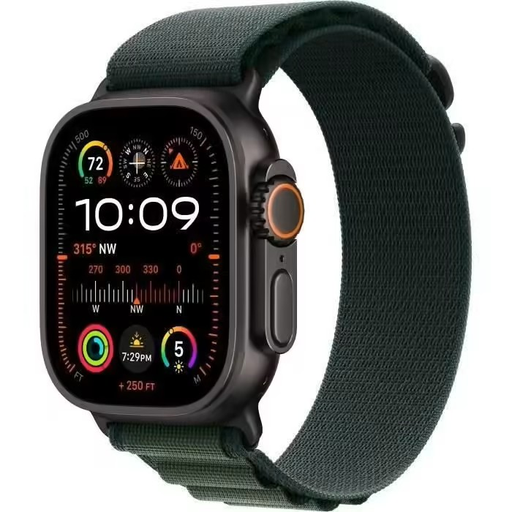
Why it's a great choice: Built for extreme conditions. With a titanium case, sapphire crystal, ultra-precise dual-frequency GPS, and dive certification (EN13319), it's the ultimate tool for hiking, trail running, water sports, and the most demanding outdoor adventures.
Here, there are no grey areas: 100m water resistance, dive certification, and clearly detailed battery life (36h in normal use, 72h in low power mode). No false promises, just the facts.
Its rock-solid durability, pinpoint accurate dual-frequency GPS, and advanced safety features (Siren, Fall Detection).
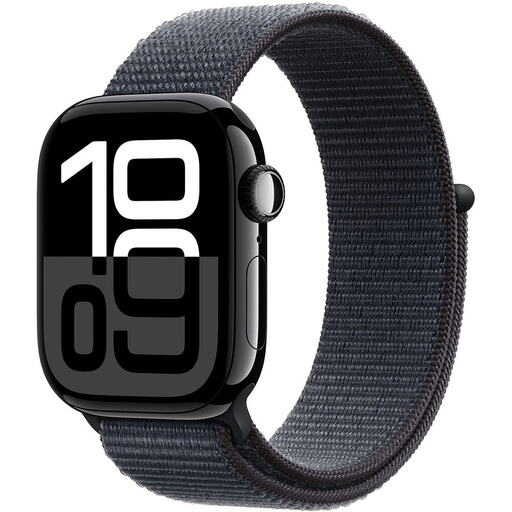
Why it's a great choice: The perfect blend of design and technology. This model combines a slim, elegant silhouette with cutting-edge health sensors. It's ideal for anyone seeking seamless integration with the iPhone ecosystem and advanced wellness tracking (ECG, sleep, temperature) in a package that is as discreet as it is modern.
Apple is very clear: the health features are not medical devices. The 50-metre water resistance is correctly indicated for surface swimming, which removes any ambiguity.
Its slim design and large, bright screen, its advanced health sensors (ECG, temperature), and its seamless integration with the Apple ecosystem.
We have selected a full range of products that meet our standards for quality and transparency.
The lifespan of a smartwatch depends on two main factors: the battery and software support. Like a smartphone, the lithium-ion battery will lose capacity after 3 to 5 years. At the same time, software support eventually ends, depriving the watch of new features and security patches.
Currently, most watches that measure blood pressure use optical sensors (PPG), a technology that is far less accurate than a medical-grade cuff-based blood pressure monitor. This data should therefore be seen as a simple estimate for your wellness tracking and should never be used for self-diagnosis or to adjust medical treatment.
Yes. To use a watch in cellular mode (often called "GPS + Cellular"), you need to subscribe to a dedicated mobile plan (via an eSIM option) from a compatible carrier. This option allows you to make calls, send messages, and use internet data without having your phone nearby. "GPS only" models do not incur any additional fees, but they must remain connected to your phone via Bluetooth to receive notifications and access the internet.