
Livraison le jour même ou le lendemain

Qualité garantie

Débloquez vos offres de bienvenue: Livraison GRATUITE | Jusqu'à -80 % | 30 jours d'essai gratuits à JoyPlus
Téléchargez l'application
The smartwatch market is a jungle. Between models built for sports, health tracking, or simply staying connected, it can be difficult to navigate. To avoid buyer's remorse, it's crucial to read between the lines of spec sheets and see through overly optimistic marketing claims. Our mission: to help you see things more clearly.
The excitement of a new purchase can sometimes make you forget the essentials. Here are two key points to watch out for to avoid disappointment:
To make an informed choice, focus on the features that truly matter in your daily life.
Instead of trusting the maximum advertised number, look for the "typical use" figure and, most importantly, the battery life in "GPS mode." If you're a fan of sports smartwatches for running or hiking, a battery life of at least 20 hours with GPS is a non-negotiable feature to avoid finishing your outing with a dead screen on your wrist.
Not all GPS chips are created equal. Entry-level models often struggle to provide a precise track in cities, between buildings, or in forests. For reliable tracking of your speed and route, opt for a GPS watch equipped with dual-band GNSS (or multi-system). This technology communicates with multiple satellite constellations (GPS, GLONASS, Galileo) on different frequencies, which drastically reduces tracking errors.
It's fundamental, but worth repeating: your watch must be perfectly compatible with your smartphone. An iPhone smartwatch like the Apple Watch will offer seamless integration with an iPhone, something an Android smartwatch can never match, and vice versa. Double-check the required operating system version (e.g., Android 9.0+ or iOS 13.0+) and take a look at reviews for the companion app. It is the true control center for your health tracking and activities.
Every user has specific needs. Here are a few recommended options, each catering to a distinct user profile.
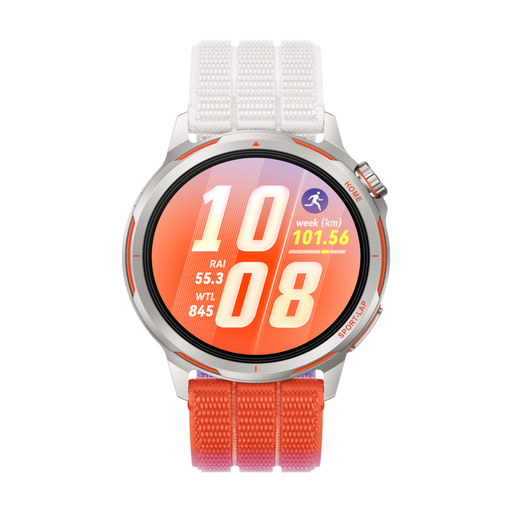
Why it's a perfect match: Built for athletes who demand absolute precision in their running data. Its feather-light weight (34.5g) and ventilated strap make it almost unnoticeable, even over long distances, while its advanced sensors provide pro-level metrics.
It avoids the trap of inaccurate GPS thanks to its dual-band, multi-system GNSS, which ensures rock-solid reliability for distance and pace tracking, even in the most challenging environments.
Its record-breaking battery life in GPS mode (up to 32 hours) and its suite of sensors (ECG, temperature, barometer) for a detailed performance analysis.
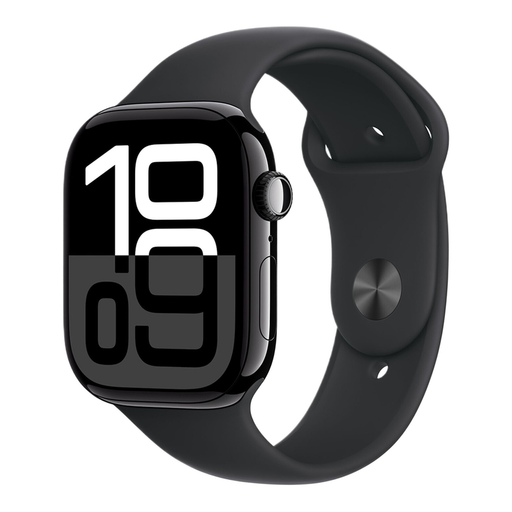
Why it's a perfect match: For the iPhone user looking for a natural extension of their smartphone on their wrist. The app ecosystem is the most mature on the market, and its health features make it a comprehensive daily companion.
It avoids the trap of "gimmicky" health sensors. While their measurements are still for informational purposes, the Apple Watch's ECG and blood oxygen (SpO?) sensors are known to be among the most reliable on the consumer market.
Unparalleled integration into the Apple ecosystem, an ultra-bright and responsive LTPO display, and an arsenal of safety features (fall detection, emergency SOS).
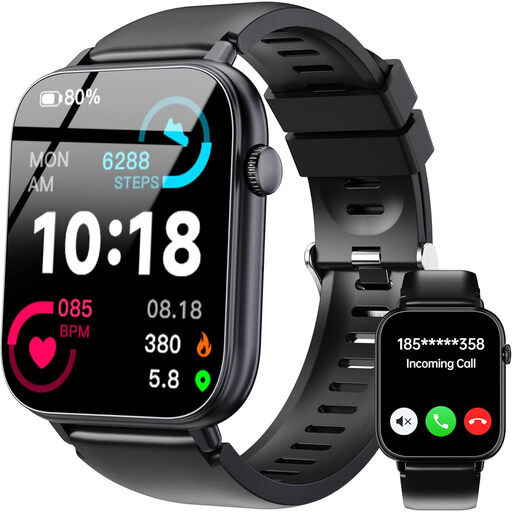
Why it's a perfect match: Perfect for getting started with smartwatches without breaking the bank. It covers the essentials: notifications, Bluetooth calls, basic activity and heart rate tracking, all on a large, comfortable screen.
It avoids the trap of feature overload. There's no need to pay for advanced sensors if you won't use them. It focuses on a core set of reliable and useful daily functions, offering unbeatable value for money.
Its large 1.83-inch touchscreen, its compatibility with both Android and iOS, and especially the Bluetooth calling feature, which is often missing from entry-level models.
We have curated a complete range of products that meet our rigorous selection criteria and current standards.
Yes, to some extent. Most watches with built-in GPS can track your route and sports performance without a phone. Some models also allow you to store music locally for listening with Bluetooth headphones. Features like contactless payments (NFC) can also work independently once set up. However, a connection to the smartphone remains essential for receiving notifications, syncing data, and using most apps.
These two standards do not measure the same thing. IP68 certifies protection against dust (the "6") and prolonged immersion in fresh water at a depth specified by the manufacturer (usually 1.5 meters for 30 minutes). 5 ATM certifies resistance to static pressure equivalent to a depth of 50 meters. In short: a 5 ATM watch is suitable for surface swimming, while an IP68 watch will withstand accidental exposure (rain, washing dishes). For swimming, always look for an ATM certification.
Health tracking sensors (heart rate, SpO?, sleep) have made enormous progress. They provide useful estimates for tracking general trends and encouraging a healthier lifestyle. However, it is crucial to remember that a men's smartwatch or women's smartwatch is not a medical device. The data provided is for informational purposes only and should never replace a diagnosis or the advice of a healthcare professional.