
Livraison le jour même ou le lendemain

Qualité garantie

Débloquez vos offres de bienvenue: Livraison GRATUITE | Jusqu'à -80 % | 30 jours d'essai gratuits à JoyPlus
Téléchargez l'application
Navigating the dense world of smartwatches can be a daunting task. Between enticing marketing promises and technical reality, it's easy to make a choice you'll regret just a few months later. As the Head of Product Recommendations at Joybuy, my mission is to help you decode spec sheets to identify the criteria that truly matter. This guide gives you the keys to avoid common pitfalls and make an informed purchase.
Before you even start comparing models, it's crucial to be aware of the most common traps. Disappointment often stems from a disconnect between brand promises and the reality of your daily use.
To make a lasting choice, focus on a few objective technical specifications. They are the true barometer of a smartwatch's performance.
Don't be blinded by the maximum figure advertised by the manufacturer. Instead, look for two key pieces of information:
long-battery-life smartwatch worthy of the name should last at least 5 to 7 days with heart rate monitoring and notifications enabled.A water-resistant smartwatch is a prerequisite for handling daily life and sports. The IP68 rating is a reliable standard for resisting rain, sweat, and brief accidental immersion. However, if you're a swimmer, aim higher: a supplementary certification like 5 ATM is essential, as it indicates resistance to pressure equivalent to a depth of 50 metres. For everything else, consider hot water, steam, and saltwater its sworn enemies.
A good smartwatch must, above all, be a reliable extension of your smartphone.
Bluetooth call smartwatch feature.Android iOS smartwatch). The best practice is to read reviews to check if other users are experiencing bugs with your specific phone model.activity tracker, a heart rate sensor and a pulse oximeter (SpO2) have become standard. The reliability of your health and sports smartwatch tracking will depend on the quality of these sensors and the algorithms that drive them.Rather than an endless catalogue, we've selected three models that check all the right boxes, each tailored to a specific user profile.
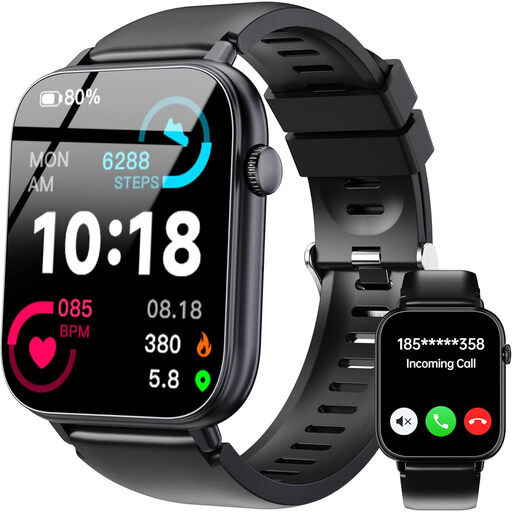
Why it's right for you: The perfect balance of features, style, and value. It handles the essentials (calls, notifications, health tracking) brilliantly, all on a large, highly readable screen.
The manufacturer is transparent, distinguishing between 7 days of battery life in daily use and 30 days in standby. The IP68 water resistance is presented for what it is: protection for daily life, without making false promises.
Its large, ultra-readable 1.83-inch HD screen. It also handles Bluetooth calls and notifications from essential apps (WhatsApp, Facebook, etc.).
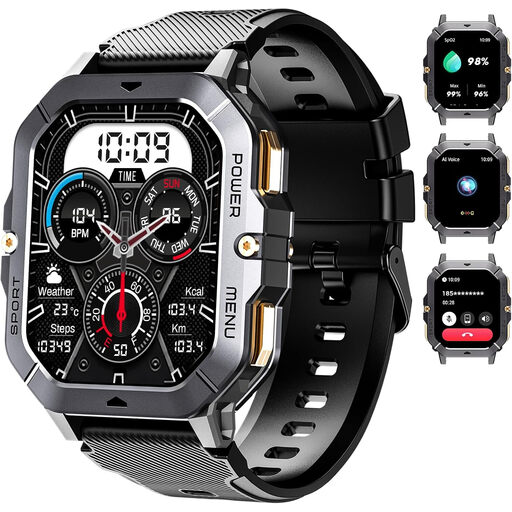
Why it's right for you: Built for action, this rugged, military-style `men's smartwatch` is for athletes who make no compromises. Its giant 2.02-inch screen and heavy-duty 410 mAh battery make it a powerful ally for intensive training.
The spec sheet is very clear about the limits of its IP68 water resistance: "avoid saunas, hot water swimming, and diving". This honesty prevents unpleasant surprises and failures due to improper use.
Its high-capacity battery (410 mAh) ensures comfortable battery life. It also includes over 100 sports modes for ultra-detailed tracking of numerous activities.
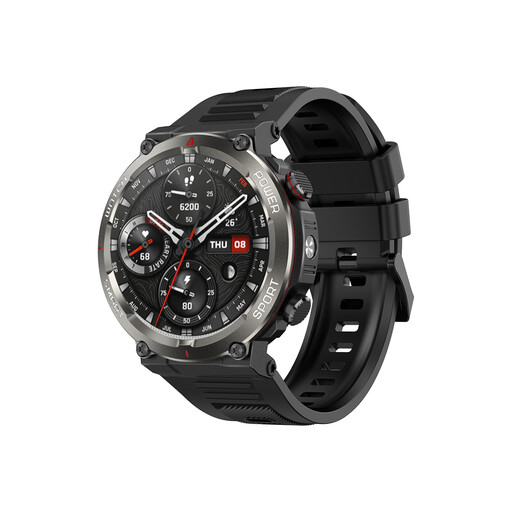
Why it's right for you: For anyone who constantly forgets their charger. This model stands out from the crowd with its massive 960 mAh battery, offering absolute peace of mind when travelling or trekking.
No bluffing here: the watch shatters the battery life trap with a raw figure (960 mAh) and a promise it keeps: around 30 days of real-world use, far exceeding the market average.
Record-breaking battery life thanks to its 960 mAh battery. As a bonus, practical features like an LED flashlight and a compass complement the standard toolkit (calls, health tracking).
Discover our full selection of models that meet our quality charter and current standards.
A smartwatch's lifespan depends on two main factors: the battery and software support. Like smartphone batteries, the lithium-ion battery wears down and loses capacity after a few years (typically 3 to 5). At the same time, the manufacturer may discontinue software support, limiting access to new features or security patches. A model with a large-capacity battery from a brand with a good track record for updates will therefore have a longer lifespan.
Health data (heart rate, SpO2, sleep analysis) should be considered as indicators of general wellness and fitness. As all manufacturers specify, these products are not medical devices and should under no circumstances be used to diagnose or treat medical conditions. They can help identify trends, but they are no substitute for a diagnosis or the advice of a healthcare professional.
No, for the vast majority of watches that offer a "Bluetooth calling" feature, a SIM card is not necessary. The watch uses your smartphone's Bluetooth connection to relay calls. It simply acts as a remote hands-free kit on your wrist. The feature will be active as long as your phone remains within Bluetooth range (usually about 10 metres).