
Livraison le jour même ou le lendemain

Qualité garantie

Débloquez vos offres de bienvenue: Livraison GRATUITE | Jusqu'à -80 % | 30 jours d'essai gratuits à JoyPlus
Téléchargez l'application
Filming while walking, shooting a travel vlog, or going live on TikTok with a handheld phone is enough to produce shaky footage. A smartphone stabilizer reduces these movements and simplifies framing, but not all models are equal depending on your use case.
Before comparing different smartphone gimbals, it's best to avoid three common mistakes: choosing a device whose maximum load doesn't suit your phone, confusing a simple handle with true motorized stabilization, and neglecting the constraints related to the mobile app.
Face tracking, AI-powered smart tracking, or 360° rotation look appealing on paper. However, these functions may depend on the app, the operating system, or the phone model. Always check compatibility with iPhone and Android, the minimum system version, and any app limitations.
The DJI Osmo Mobile 7P spec sheet, for example, states that the DJI Mimo app must be downloaded from the official DJI website. It is not available on Google Play due to a compatibility issue reported by the manufacturer.
Battery life depends on tracking, motor demand, brightness, Bluetooth, and any smartphone charging. A battery advertised as "up to 8, 10, or 11 hours" gives a general idea, not a guaranteed duration in all situations.
For a travel day or an extended shoot, also check the charging time, the type of port used, and the possibility of powering the phone from the stabilizer.
A foldable gimbal can easily fit in a bag. However, its actual footprint depends on the magnetic clamp, tripod, remote control, and included cable. If you travel by metro, bike, or on foot, compare the dimensions when folded and the total weight, rather than just the handle size.
A three-axis phone stabilizer typically corrects tilt, roll, and pan. This design is suitable for walking, panning shots, and scenes where the smartphone needs to stay oriented toward a subject.
A Bluetooth handle or a tripod adapter can make the grip more comfortable, but doesn't necessarily replace a motorized stabilization system. To benefit from a true anti-shake effect, look for an explicit mention of electronic or motorized three-axis stabilization.
A thick case, an additional lens, or a magnetic ring can unbalance the smartphone. The motor must be able to hold it without unusual noise or vibrations. Always center the phone in the clamp and respect the maximum load specified by the manufacturer.
Before first use, also ensure the phone is securely attached. A fall can damage the screen, the clamp, or the gimbal mechanism.
Face tracking is practical for presentations, filmed lessons, recipes, or face-camera videos. Person or animal tracking can also be useful for travel and outdoor activities. However, no system guarantees perfect framing in all circumstances, especially in low light, with obstacles, or with a very fast-moving subject.
A Bluetooth remote control, gesture triggering, and an integrated selfie stick-tripod make it easier to film alone. These features will particularly interest content creators on TikTok and YouTube, students, and travelers.
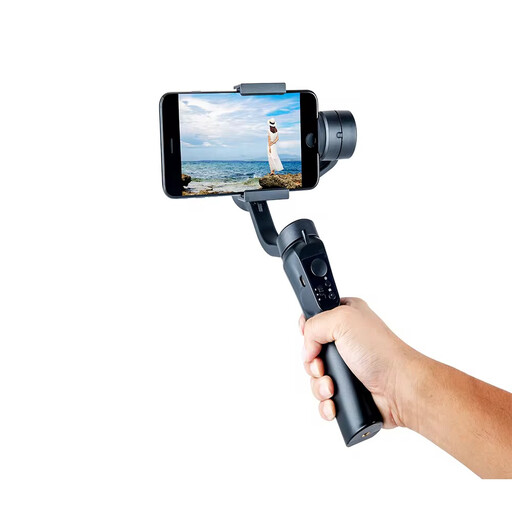
Why this choice fits the profile: Its foldable design and announced compatibility with Android and iPhone make it a model suitable for first videos, selfies, and occasional live streams.
The spec sheet mentions face and object tracking, as well as Bluetooth or app connection. Still, check compatibility with your phone before ordering.
Compact format, face and object tracking, announced compatibility with Android and iPhone smartphones.
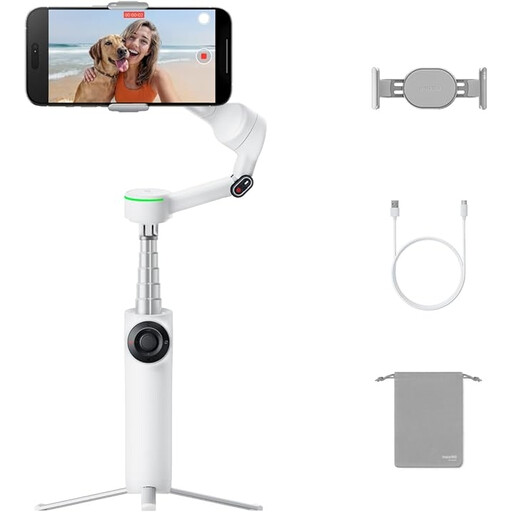
Why this choice fits the profile: This gimbal is aimed at creators who film alone, travelers, and those who want to combine stabilization, framing, and tracking in a single accessory.
The spec sheet announces tracking in over 200 apps, DockKit compatibility, 360° tracking, as well as an integrated tripod and selfie stick.
Three-axis stabilization, integrated tripod, remote control, and foldable design. Check exact compatibility with your Android or iPhone model.
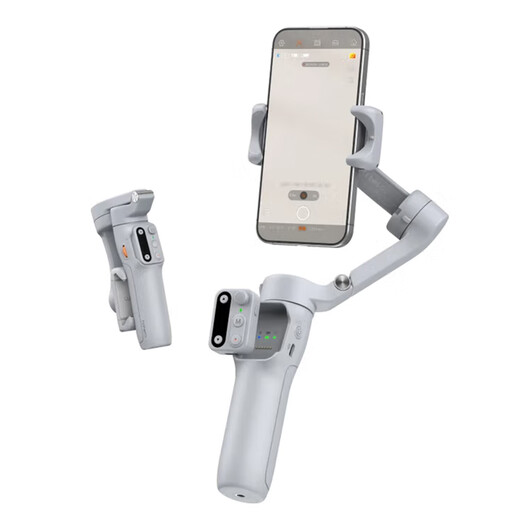
Why this choice fits the profile: It is suitable for vlogs, travel, sports sessions, and creators who want to film for several hours with a foldable device.
The spec sheet announces up to 11 hours of battery life, a removable remote control, and several operating modes. Respect the maximum load supported by the clamp.
Three-axis stabilization, announced battery life up to 11 hours, wireless remote control with a 10-meter range, and portrait or landscape modes.
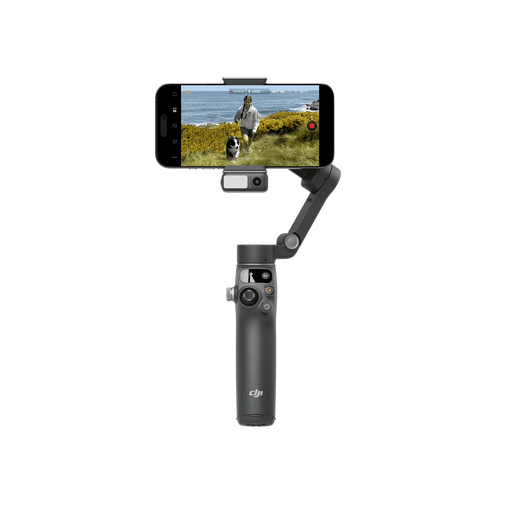
Why this choice fits the profile: Its integrated extension, tripod, and multifunction module meet the needs of creators who switch between vertical videos, vlogs, and solo shots.
The system combines tracking, lighting, and reception for certain microphones. Check the list of compatible devices before relying on each of these functions.
Three-axis stabilization, announced battery life up to 10 hours, integrated extension pole and tripod, tracking via dual camera according to the product sheet.
We have compiled an updated selection of products meeting these selection criteria and applicable safety information in France.
No. Compatibility depends on the phone's width and weight, case thickness, and the system used. Some tracking modes require a dedicated app or a specific version of iOS or Android. Remove heavy accessories if the clamp or motor struggles to hold the smartphone.
A handle improves grip but does not mechanically correct movements. A three-axis smartphone gimbal uses motors to compensate for movements in multiple directions. For walking shots, this design is generally much more effective than a passive mount.
Protect it from water, sand, shocks, and extreme temperatures, unless otherwise stated by the manufacturer. Do not exceed the specified maximum load and store it folded in a case or protected compartment. Also, let the device cool down before charging, and use a suitable cable and adapter.