
Livraison le jour même ou le lendemain

Qualité garantie

Débloquez vos offres de bienvenue: Livraison GRATUITE | Jusqu'à -80 % | 30 jours d'essai gratuits à JoyPlus
Téléchargez l'application
Choosing a new television can be a daunting task. With factors like resolution, screen size, and smart features, it's easy to get lost in the jungle of technical specs. This guide is here to clear things up. We will break down the key features of a Smart TV and offer our selection of the best models currently available. Whether you're looking to equip a studio, entertain the whole family in the living room, or build a gaming fortress, you'll find the television that's right for you here.
Before diving into our top picks, let's review the few criteria that will make all the difference in your daily experience.
Resolution determines the sharpness of the picture. Today, the market is dominated by two standards:?
As for size, it depends directly on your viewing distance. A screen that's too large for a small space can cause eye strain, while a model that's too small in a large living room will lack any real sense of immersion.
The operating system (OS) is the brain of your smart TV. It manages the internet connection (via a Wi-Fi TV or an Ethernet cable) and allows you to switch between your applications. The most common systems, like Google TV, VIDAA, or webOS, come with all the essential streaming services built-in. Don't underestimate the importance of a smooth interface and the convenience of voice control?— these are details that make all the difference in daily use for finding a movie or launching an app without hassle.
Connectivity is a point that should never be overlooked, especially if you have multiple devices (console, soundbar, TV box, etc.). Be sure to check the number of HDMI and USB ports. For a gaming TV, an HDMI 2.1 port is no longer an option—it's practically a requirement. It's the only standard that can handle 4K streams at 120 frames per second and support features like ALLM (Auto Low Latency Mode), which is essential for flawless in-game responsiveness.
Finally, technologies like Dolby Vision and HDR10+ elevate the picture quality. They optimise contrast and the colour palette on a scene-by-scene basis for a more dynamic, realistic rendering that is true to the director's vision.
We have selected a few models that stand out from the crowd, each tailored to a specific use case.
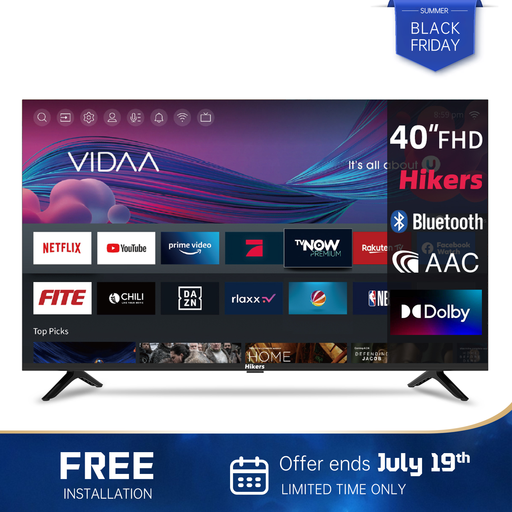
The Pitch: This Hikers model is the very definition of a smart, accessible television. With its 40-inch Full HD screen, it fits in anywhere. Its VIDAA OS gets straight to the point, providing access to major apps, and its connectivity options are surprisingly generous for its price point.
Key Features:
Who is it for? The perfect television for a bedroom, a studio, or as a secondary screen. It checks all the boxes of a modern Smart TV, all in a compact format and at a very competitive price.
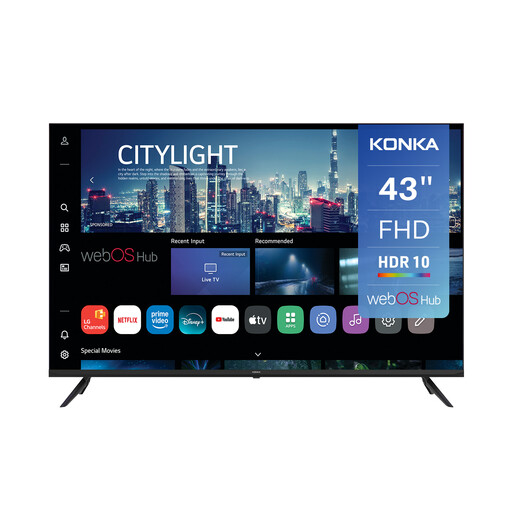
The Pitch: This KONKA television leverages its webOS Hub operating system, renowned for its simple and fluid navigation. The integration of AirPlay 2 makes it an excellent partner for Apple device owners, while HDR10 compatibility enhances the visual quality of supported content.
Key Features:
Who is it for? An excellent choice for anyone looking for a slightly larger Full HD television, featuring a highly-acclaimed user interface and seamless integration with the Apple ecosystem.
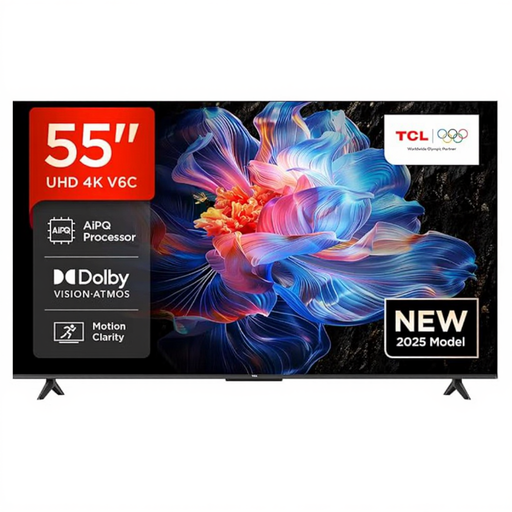
The Pitch: With this model, TCL is clearly targeting a premium entertainment experience. The large 55-inch4K UHD panel, enhanced by the Dolby Vision and HDR10+ duo, delivers stunning picture quality. It's also an excellent candidate for gaming, thanks to its HDMI 2.1 port and dedicated features.
Key Features:
Who is it for? The ideal model for the family living room, delighting demanding cinephiles and gamers alike who are looking for a large, immersive picture, first-rate visual quality, and cutting-edge features.
Our selection is just a taste of what the smart TV market has to offer. To discover a wider range of models, sizes, and technologies, feel free to explore our dedicated category.
? Explore all our smart home devices
To put it simply, a Smart TV (or connected TV) connects to the internet via Wi-Fi or an Ethernet cable. This provides access to a world of applications (Netflix, YouTube, etc.), a web browser, and numerous online services without an external box. A regular TV, on the other hand, simply displays channels received via an antenna, cable, or satellite.
To stream in 4K UHD under optimal conditions, a stable and fast internet connection is indeed recommended. Platforms like Netflix suggest a speed of at least 15 to 25 Mbps to avoid buffering. For simple web browsing or streaming in Full HD, a standard connection (around 5 Mbps) is more than sufficient.
Yes, absolutely. When not connected to the internet, a Smart TV functions like a regular television. You can watch broadcast channels (thanks to its DVB-T2/C/S2 tuner) and connect your game consoles or Blu-ray player to the HDMI ports. Only the smart features and applications will be inaccessible.