
Livraison le jour même ou le lendemain

Qualité garantie

Débloquez vos offres de bienvenue: Livraison GRATUITE | Jusqu'à -80 % | 30 jours d'essai gratuits à JoyPlus
Téléchargez l'application
Since 2015, the law in France has been clear: every home must be equipped with at least one Autonomous Smoke Alarm and Warning Device (DAAF). This is a common-sense measure that saves lives by alerting occupants within the first few seconds of a fire. But since then, technology has taken a leap forward, offering far more intelligent and comprehensive solutions: smart smoke detectors.
With an overwhelming number of options on the market, it can be hard to navigate. Interconnectable models, Wi-Fi connected, photoelectric or heat sensors... how do you make the right choice? This guide is here to demystify the topic, break down the features that truly matter, and help you find the system perfectly suited to your needs—all without unnecessary jargon.
Before diving into our top picks, let's review the essential criteria for making an informed choice that's perfectly tailored to your home.
Connectivity is the major upgrade in these new devices. But be aware, it comes in two main types:
Not all detectors are created equal when it comes to fire.
The ideal setup is often a fire detection kit that combines both technologies for optimal, tailored protection in every area of the home.
Two technical aspects are absolutely crucial for the reliability of your system:
To guide you, we've reviewed three models that meet distinct needs, from a complete installation to the smartest solution.
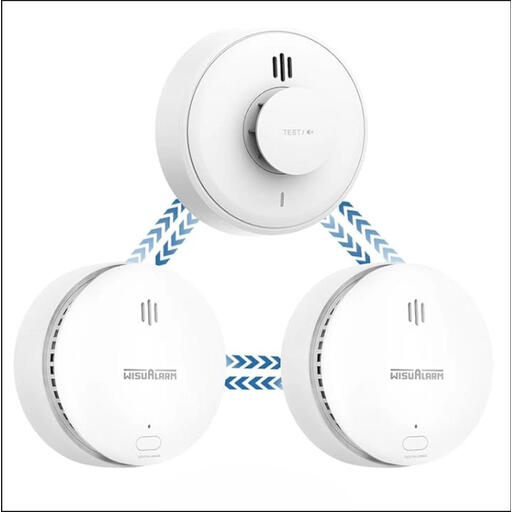
Why it stands out: This kit is the very definition of a "plug-and-play" solution. It includes two smoke detectors and one heat detector, all pre-synchronised at the factory. Installation? Just activate them, mount them to the ceiling, and you're done.
Key features:
Who is it for? The perfect solution for homeowners or landlords looking to equip a full property (house or large apartment) with a reliable, interconnected system that is, above all, incredibly simple to install.

Why it stands out: This model gets straight to the point: safety, period. With no smart frills, it focuses entirely on reliable detection and a 10-year battery life that will make you forget the chore of changing batteries.
Key features:
Who is it for? The ultimate pragmatic choice. Ideal for replacing an old device or equipping a specific room with a compliant, durable, and no-fuss model, simply to be compliant and safe.
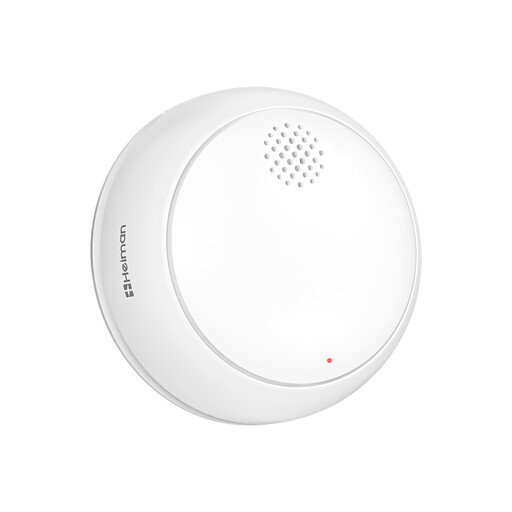
Why it stands out: This detector brings fire safety into your smart home ecosystem. Connected to your Wi-Fi network, it doesn't just sound an alarm: it sends an alert to your smartphone, no matter where you are in the world.
Key features:
Who is it for? For smart home enthusiasts and anyone who wants enhanced monitoring. A must-have for frequent travellers or for keeping an eye on a second home.
This selection is, of course, just a glimpse of the solutions available. Every home is unique, and other models might be a better fit for your layout or budget.
Explore our full range of security alarms to discover other models.
The ideal location is on the ceiling, as close to the centre of the room as possible. The golden rule: at least one per floor, preferably in the hallway or landing that leads to the bedrooms. At all costs, avoid placing it right next to the kitchen or bathroom to prevent false alarms caused by steam or cooking fumes.
The lifespan of a smoke detector is 10 years, and not a day longer. This is the unanimous recommendation from manufacturers. After this period, even if it still seems to be working, its sensor has lost effectiveness and no longer guarantees reliable detection. Models with a 10-year sealed battery are designed to be replaced entirely after this period.
Absolutely not. A heat detector is a supplement, never a substitute. The law in France is formal: it requires a smoke detector (DAAF). A heat detector is an additional safety measure, to be reserved for "at-risk" areas prone to false alarms (like the kitchen) where a standard smoke detector would be impractical.