
Livraison le jour même ou le lendemain

Qualité garantie

Débloquez vos offres de bienvenue: Livraison GRATUITE | Jusqu'à -80 % | 30 jours d'essai gratuits à JoyPlus
Téléchargez l'application
Far more than a simple scale, a body composition scale is a personal health coach. It analyses your body composition in detail to help you clearly visualise the effects of your diet and physical activity. But in an overwhelmingly crowded market, marketing traps are everywhere. As a product expert at Joybuy, I'm here to help you separate fact from fiction and guide you toward a truly informed choice, far from empty promises.
To avoid buyer's remorse, keep an eye out for these three common pitfalls.
Bluetooth scale is only useful if its connection is reliable and its app is well-designed. An app that crashes, is never updated, or ignores basic security rules makes your smart scale as useful as a model from the 1980s. The quality of app-based weight tracking is just as crucial as the quality of the sensors.To make the right choice, focus on these three technical points that make all the difference in a body analysis scale.
At the heart of the device is the Bioelectrical Impedance Analysis (BIA). An imperceptible current is sent through your body to measure the resistance of different tissues (fat, muscle, bone, water).
Instead of drowning in numbers, make sure your body fat scale reliably tracks these essential data points:
A smart scale without a good app is wasted potential. Here are the points to watch for:
To help you see more clearly, here are some devices tailored to specific needs.
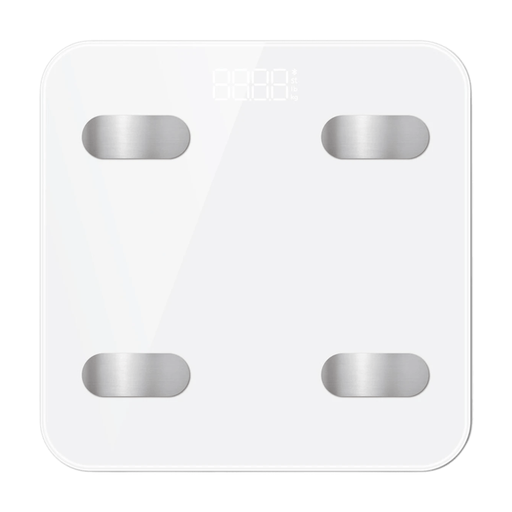
Why we chose it: Perfect for those who love to measure everything. With its 24 indicators, it offers an in-depth body analysis to track your goals (fitness, weight loss, muscle gain) day by day via the app.
It avoids the gimmick trap by relying on four-electrode BIA technology and high-precision E-shaped sensors. The Bluetooth 4.2 connection ensures stable tracking in the app.
Its large 30x30 cm platform guarantees excellent stability. The precision of 0.05 kg and a maximum load of 180 kg make it a reliable and versatile model.
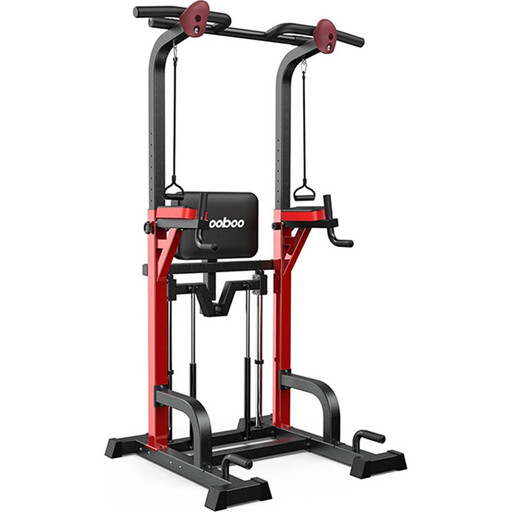
Why we chose it: When the goal is gaining muscle mass, a scale isn't enough. This station is the perfect companion for an effective full-body workout, right at home.
It avoids the "fitness gimmick" trap by focusing on the essentials: robust and versatile equipment for serious training. Its value is in the steel, not in marketing promises.
Its professional-grade steel frame handles heavy loads. The adjustable height and multi-functional design allow for a variety of exercises (pull-ups, dips, etc.).
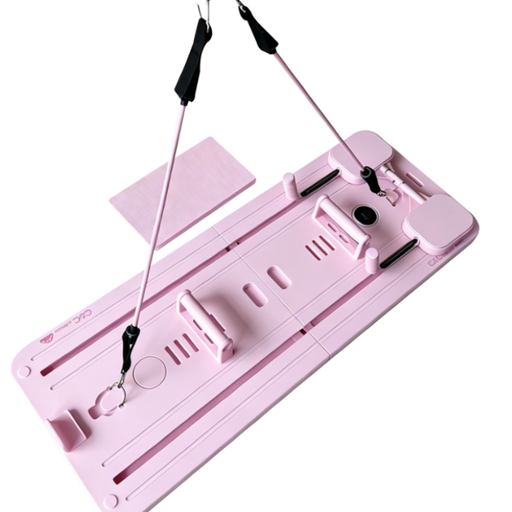
Why we chose it: Ideal for those looking to improve flexibility, strengthen core muscles, and engage in low-impact activity. Its foldable design is a real bonus in modern homes.
It avoids the "tech for tech's sake" trap by relying on a proven training method. Effectiveness comes from movement and resistance, not a sensor.
Incredibly versatile for a full-body workout. Its foldable design makes it very easy to store, a major plus for working out at home without clutter.
Your fitness is more than just a number on a scale. To complement your tracking, discover our selection of fitness equipment that meets the same high standards of quality and reliability.
Body composition scales provide an estimate, not a medical-grade measurement. Their real strength isn't absolute accuracy, but their consistency. For personal tracking, the trend is what matters: seeing your body fat decrease and your muscle mass increase is the most useful information. For consistent measurements, the golden rule is to always weigh yourself under the same conditions (in the morning, on an empty stomach, after using the restroom, on a hard, flat surface).
Most recent models are self-calibrating. Typically, you just need to place it on a flat, stable floor, step on it briefly to activate it, and then wait for the screen to display "0.0" before your first real weigh-in. Checking the user manual is always the best practice to know the exact procedure for your model.
Yes, almost all smart scales are designed for family use. The app allows you to create multiple profiles, and the scale often automatically recognises who is stepping on it based on their last recorded weight. If two users have very similar weights, the app will simply ask you to confirm who to assign the day's measurement to.