
Livraison le jour même ou le lendemain

Qualité garantie

Débloquez vos offres de bienvenue: Livraison GRATUITE | Jusqu'à -80 % | 30 jours d'essai gratuits à JoyPlus
Téléchargez l'application
A smart robot vacuum and mop can save you countless hours of vacuuming and mopping. But only if the advertised features actually deliver in daily use. High suction power won’t make up for clumsy navigation, and a highly automated station can quickly become a chore to maintain if it’s poorly designed.
Before you place an order, check three points that are often overlooked: what the quoted figures really mean, how much space the station takes up, and whether it’s compatible with your flooring. That way, you can compare models on concrete criteria, rather than being swayed by a long list of marketing claims.
A spec sheet boasting 20,000 Pa or more is certainly eye-catching. But this figure alone isn’t enough to judge cleaning quality. The brush design, air-seal integrity, floor type, and how the robot handles hair and pet fur all play a crucial role.
Values expressed in pascals only make sense if they’re measured using a comparable method across different models. In a home with carpets, fine dust and pets, also check for a tangle-free system, how accessible the brush is, and how easy the filter is to clean.
A robot vacuum with a station can empty its dustbin, fill the clean water tank, collect dirty water and wash the mop pads. That doesn’t mean it will run without any intervention. The dustbin, filters, sensors, wheels and water channels all need regular checking.
Hot water mop washing and hot air drying help reduce residual moisture and unpleasant odours. Even so, the station must be installed in a well-ventilated area and cleaned according to the manufacturer’s instructions.
An all-in-one station needs clear space in front and to the sides. Cables, small toys, socks and even reflective objects can disrupt the robot’s movement. AI obstacle detection helps it avoid certain items, but it won’t turn your home into a completely ‘robot-friendly’ environment.
Before installation, measure the available space and note any thresholds, thick rugs, stairs and delicate surfaces.
In a home with a dog or cat, don’t just settle for the phrase robot vacuum for pet hair. Instead, look at the following:
A suction rating of 12,000 Pa, 18,500 Pa, 20,000 Pa, 22,000 Pa or 25,000 Pa reflects each manufacturer’s own test conditions. These figures are not a universal performance ranking.
LiDAR navigation uses a laser sensor to map rooms and plan routes. It can be combined with a camera or AI obstacle detection. These technologies are especially useful in large spaces, multi-room homes and scheduled cleaning routines.
The control app should let you create multiple maps, set no-go zones, select individual rooms and schedule a vacuum cycle followed by a mop cycle. Remember to keep the sensors clean and avoid placing mirrors at floor level, as they can confuse some systems.
For a robot vacuum and mop, examine the type of mop pad, the pressure applied to the floor, automatic lifting on carpets and how well it follows skirting boards. Extendable arms or edge and corner cleaning systems can reduce the strip left along walls, but they won’t completely replace a manual pass in the tightest corners.
On long-pile carpets, use the no-go zones recommended by the manufacturer. Also avoid mopping on incompatible or already damp surfaces.
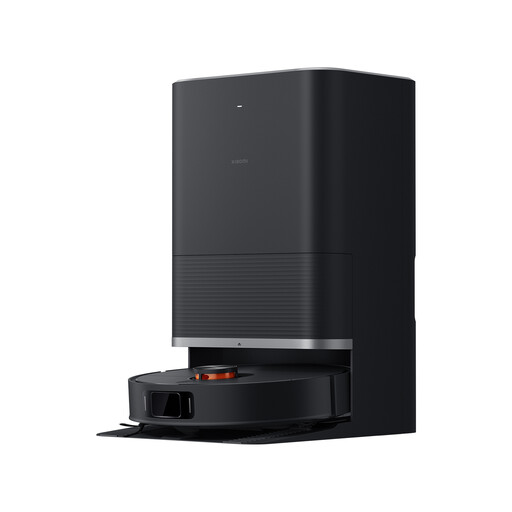
Why this choice suits this profile: Its base with hot water washing and drying, its claimed suction of 8,000 Pa and the Mi Home app offer reassuring ease of use for a first device with a station.
The spec sheet details the station’s functions and carpet detection, rather than relying solely on high suction power.
All-in-one base, anti-tangle brush, carpet detection and control via the Mi Home app.
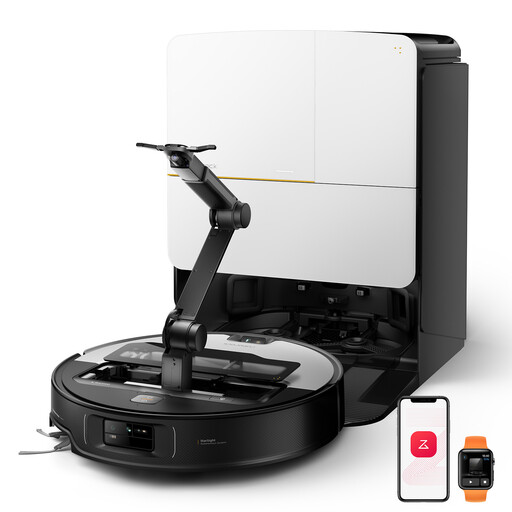
Why this choice suits this profile: It targets users looking for advanced design, a claimed suction of 22,000 Pa and more precise surface and obstacle management.
Its spec sheet highlights several distinct features — adaptable chassis, 7.98 cm height and OmniGrip arm — rather than a single numerical claim.
Claimed height of 7.98 cm, mop function and claimed suction of 22,000 Pa.
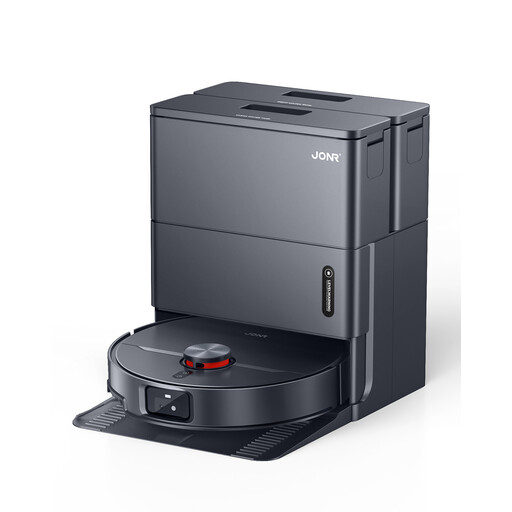
Why this choice suits this profile: Households with pets, large spaces or users who run their robot frequently will appreciate its claimed 20 kPa, extendable arms and automated mopping management.
The spec sheet combines power, hair removal, 75 °C washing and 45 °C drying. This information allows for a more precise comparison of maintenance needs.
Dual extendable arms, anti-tangle system, 75 °C washing and 45 °C hot air drying.
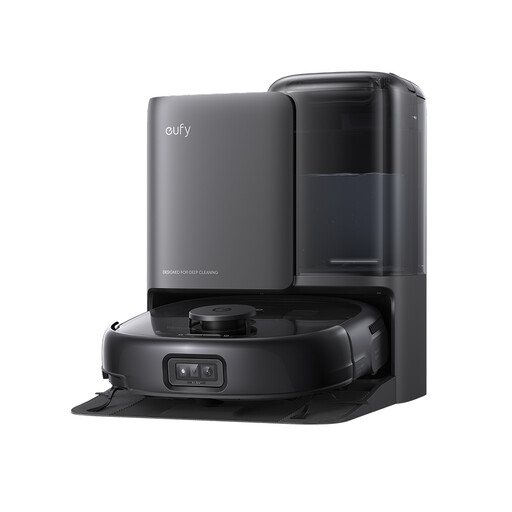
Why this choice suits this profile: Its 3 L dustbin, DuoSpiral brushes and CornerRover arm are well suited to homes dealing with fur and frequent cleaning runs.
The spec sheet details the bin capacity, HydroJet mopping system, self-emptying and detangling function, going beyond the claimed 20,000 Pa suction alone.
3 L dustbin, HEPA filter, anti-tangle brushes, hot air drying and dedicated edge-cleaning arms.
To avoid unpleasant surprises from the very first cycle:
We’ve put together a comprehensive, real-time updated list of products that meet these demanding selection criteria and European safety standards.
The station generally needs to stay plugged in to allow the robot to return automatically, recharge and run maintenance cycles. However, if you’re away for a long period, plan to unplug it as recommended in the manual. Also make sure the area stays dry and clear.
The costs include electricity, water, any emptying bags, filters, brushes and the authorised cleaning solution. Hot washing and drying cycles can increase consumption compared to a robot without a full station. Check the price of consumables before you buy.
It depends on how often you run it, the type of surfaces, whether you have pets and how regularly you maintain it. Periodic checks of the wheels, brushes, seals, sensors and tanks help keep the device running well. The warranty period and availability of spare parts should also factor into your comparison.