
Livraison le jour même ou le lendemain

Qualité garantie

Débloquez vos offres de bienvenue: Livraison GRATUITE | Jusqu'à -80 % | 30 jours d'essai gratuits à JoyPlus
Téléchargez l'application
Do you often forget to turn off the living room light when you go to bed? Dream of starting the coffee maker from your bed or getting a better handle on your electricity bill? The smart plug is the simplest and most accessible solution available. It turns any electrical appliance into a smart device, controllable remotely via an app or with your voice.
With an overwhelming number of options on the market, it can be hard to know where to start. This guide is here to help you see things more clearly, reviewing the essential selection criteria and a curated list of products suited for every need: optimising your home office, securing your home, or simply saving on energy costs.
Before you dive in, here are the key points to check to ensure you make the right choice.
This is the number one criterion. Most models operate on Wi-Fi and connect directly to your internet router, which greatly simplifies setup. If you use voice assistants, be sure to check for compatibility: an Alexa-compatible plug, Google Home, or Apple HomeKit plug will integrate seamlessly into your smart home ecosystem. Other, more basic models rely on radio waves and a dedicated remote control. This is a wise option for areas where Wi-Fi is unreliable.
A smart plug does more than just turn a device on and off. Certain features prove to be very practical in daily life:
The form factor will depend entirely on your needs. A single plug is perfect for controlling a specific device, like a floor lamp or a fan. For a desk or a TV stand, a smart power strip is essential, as it allows you to manage multiple devices at once, or independently of each other. You can also find wall-mounted power tracks, a more permanent and stylish solution for a kitchen or workshop.
We have selected several models that stand out from the crowd, chosen for their reliability, features, and suitability for specific use cases.
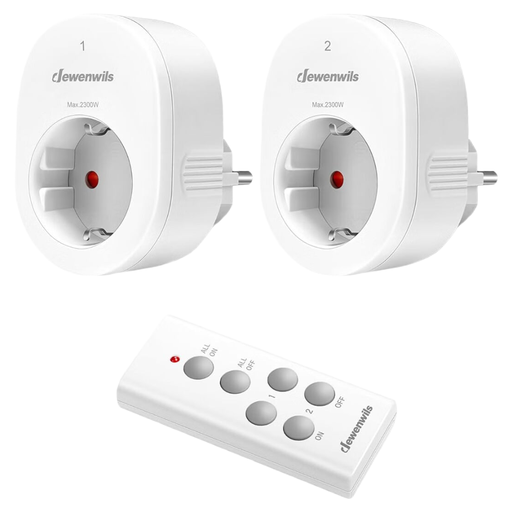
The standout feature: Absolute simplicity. No Wi-Fi, no app: just plug it in and control it instantly with the included remote.
Highlights:
Best for: Anyone who wants a simple and foolproof remote control solution, without depending on Wi-Fi or a smartphone. Perfect for people less comfortable with technology, or for managing garden lights and Christmas decorations.
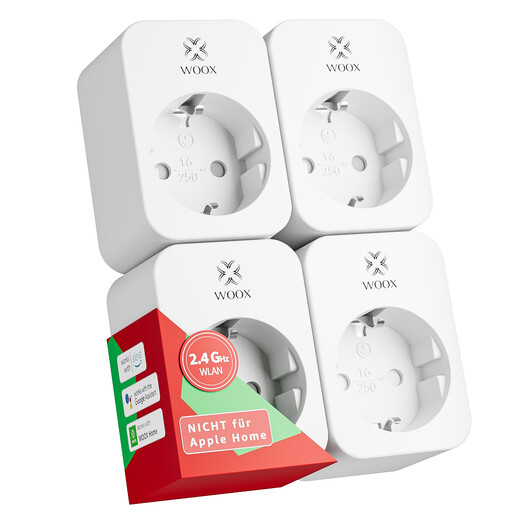
The standout feature: Perfect integration into a connected ecosystem, with precise energy monitoring.
Highlights:
Best for:Smart home enthusiasts who want to optimise their energy consumption and integrate their devices into elaborate scenes.
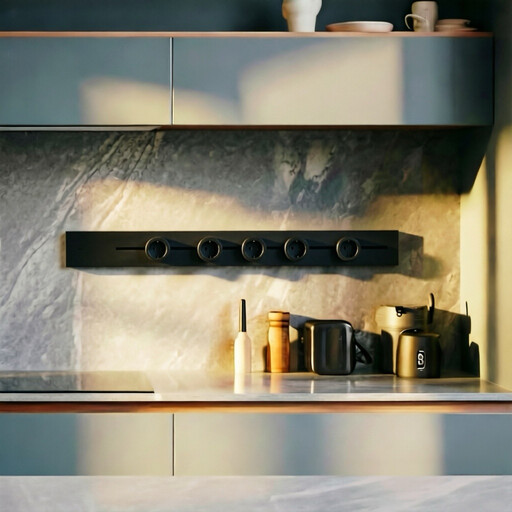
The standout feature: A modular and stylish power solution that integrates into the wall for a clean, modern look.
Highlights:
Best for: Those renovating or setting up a room (kitchen, office, workshop) and looking for a power solution that is aesthetic, practical, and scalable.
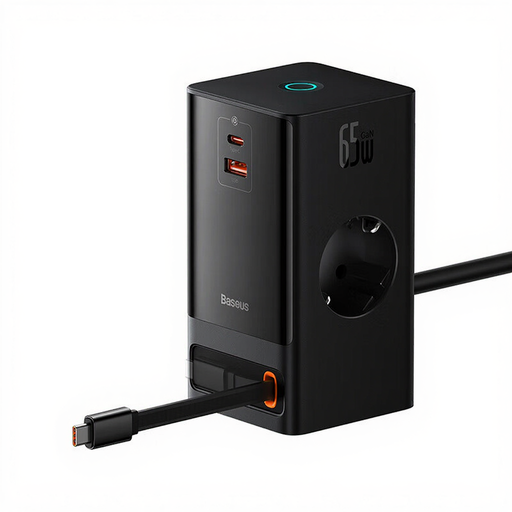
The standout feature: The all-in-one power station for the office, combining a power strip, 65W GaN charger, and a retractable cable.
Highlights:
Best for: Remote workers, students, and anyone looking to declutter their desk with a single solution to power and charge all their devices.
Our selection covers the most common uses, but the world of the smart home is vast. For more specific needs (outdoor plugs, different form factors, etc.), feel free to explore our full range.
? Discover all our electrical plug connectors
No, the standby power consumption of a smart plug is negligible, typically less than 1 watt (some models like the Dewenwils plug use as little as 0.6W). The savings you achieve by completely turning off your devices (instead of leaving them on standby) far outweigh this consumption.
It all depends on the model. The majority of Wi-Fi plugs connect directly to your internet router and require no additional equipment. Other protocols (like Zigbee or Z-Wave) require a connection bridge (or hub) to function. Radio-frequency models, on the other hand, are completely autonomous with their remote control.
Be careful, this is a crucial point. You must check the maximum power supported by the plug, expressed in watts (W) or amps (A). Most models (10A / 2300W) are perfect for lamps, chargers, TVs, or small appliances. However, for very power-hungry appliances like a large electric heater or an oven, you must opt for a heavy-duty plug capable of handling a high load (usually 16A / 3680W).