
Livraison le jour même ou le lendemain

Qualité garantie

Débloquez vos offres de bienvenue: Livraison GRATUITE | Jusqu'à -80 % | 30 jours d'essai gratuits à JoyPlus
Téléchargez l'application
Feeding your cat or small dog with clockwork precision while you're away: that's the promise of a smart pet feeder. While it sounds perfect on paper, the market is now flooded with models whose marketing claims often fall short of reality.
Before you pull out your credit card, it's crucial to know how to spot the design flaws that can turn a convenient purchase into a real headache. Here are the most common pitfalls to avoid.
To make an informed choice, ignore the gimmicks and focus on the features that guarantee reliability and hygiene.
The core of a good automatic cat food dispenser is its dispensing mechanism. Look for models with a flexible rotor or an anti-jam design specifically mentioned by the manufacturer. A fundamental criterion is the accepted maximum kibble size, usually expressed in millimetres (e.g., 5-12 mm). Verify this information to ensure it matches your pet's food. More advanced models integrate infrared sensors to detect a potential jam and attempt to resolve it automatically.
Your pet's health depends on a clean food source. Prioritise devices where the food-contact parts are removable and dishwasher-safe. A 304 stainless steel bowl is a major plus: it's non-porous, resists scratches (unlike plastic, which can harbour bacteria), and helps prevent chin acne in some cats. The inclusion of a desiccant packet in the tank is also a plus for keeping kibble fresh and crunchy.
A programmable cat feeder must remain functional under all circumstances. Opt for a model with dual power options: mains power and backup batteries. This ensures the feeding schedule is maintained even during a power outage.
As for smart features, a kibble dispenser with a camera allows you to feed your cat remotely while keeping an eye on them—a reassuring feature for many owners. Two-way audio is useful for calling them at mealtime. Make sure the companion app is intuitive, stable, and well-rated by users.
Instead of an exhaustive list, here are a few models that meet specific needs, all selected based on the reliability and practicality criteria we've just discussed.
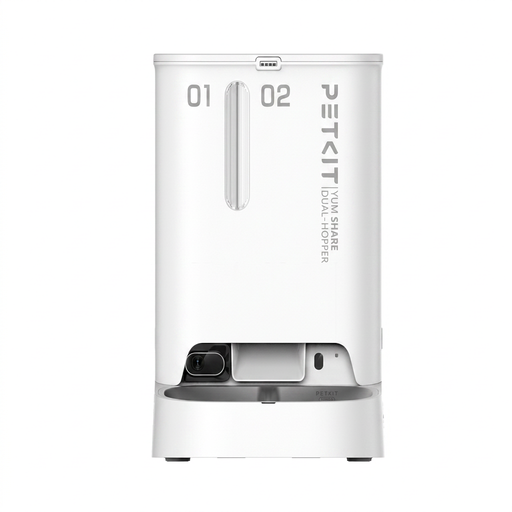
Why it stands out: Perfect for owners who need to juggle two types of kibble (e.g., medicated and standard) or feed two pets with different diets. Its dual-hopper pet feeder function is a formidable all-in-one solution.
AI-powered bowl detection prevents overfeeding, a common problem. The internal rotor system is designed to mix or dispense foods separately without jamming.
Two separate food compartments; 1080p camera with two-way audio; stainless steel bowl.
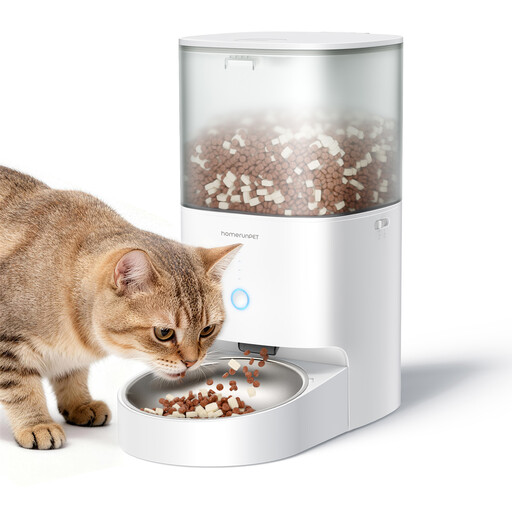
Why it stands out: Perfect for those who travel often or want maximum peace of mind. Its extra-long battery life makes it independent of power outlets and electrical outages.
It directly addresses the problem of mains power dependency. The advertised 6-month battery life eliminates the risk from power cuts, a weak point for many competitors.
Extra-long battery life; triple freshness lock system; anti-jam design.
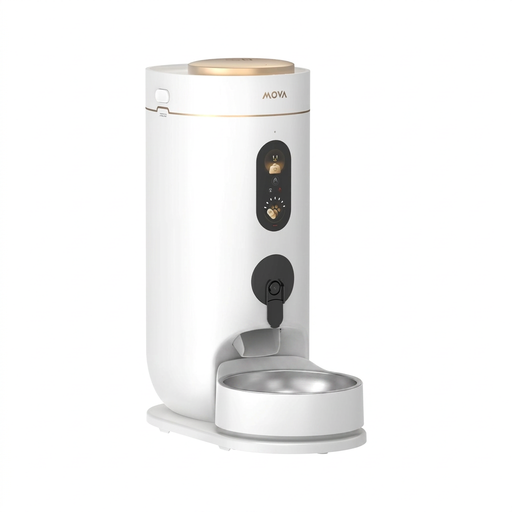
Why it stands out: For the tech-savvy owner who wants total control and maximum interaction. The HD camera, LED screen, and supplement compartment make it a complete nutritional control centre.
It tackles the lack of visibility. The LED screen displays the food level and dispensing status in real-time, preventing nasty surprises. Its anti-jam impeller is designed for kibble up to 12 mm.
Independent 7-day supplement compartment; 1080p wide-angle HD camera; 4.2-inch LED screen.
We've compiled a full list of products that meet our strict selection criteria, including hydration solutions like smart cat water fountains.
Yes, quality models are designed to handle these events. They include a compartment for backup batteries that take over during a power outage. Since the feeding schedule is stored in the device's internal memory, meals are guaranteed even if the Wi-Fi connection is lost. You will simply lose remote control and notifications until service is restored.
This is a critical point. Most feeders are designed for dry kibble with a diameter between 5 and 12 mm. Some high-end models can handle sizes up to 18 mm, including freeze-dried food. It is imperative to check this information on the product's spec sheet before buying to avoid any risk of jamming. Never use wet food in a dry kibble dispenser.
Hygiene is essential for your pet's health. It is recommended to clean the removable bowl every one to two days, just as you would a regular food dish. For the rest of the unit, a full cleaning is advised once a week. This involves emptying the tank, then washing it and all removable mechanism parts with hot, soapy water. Ensure all components are completely dry before reassembling and refilling the device.