
Livraison le jour même ou le lendemain

Qualité garantie

Débloquez vos offres de bienvenue: Livraison GRATUITE | Jusqu'à -80 % | 30 jours d'essai gratuits à JoyPlus
Téléchargez l'application
The cotton swab, long considered a staple of personal hygiene, is now being flagged by ENT specialists. The reason? Its use carries a risk of injury and, paradoxically, it tends to push earwax deeper into the ear canal. In response to this problem, technology offers an ingenious solution: the ear cleaner with a camera. This modern alternative allows you to see inside your ear in real time for a precise, controlled, and finally safe cleaning.
This guide is designed to break down the features of these devices and present a selection of the best current models—without the unnecessary marketing jargon—to help you make the right choice.
Before diving into our selection, here are the essential criteria to consider to find the device that perfectly meets your needs.
For an ear pick with a camera, image clarity is non-negotiable. A high resolution (HD 1080p or higher) is essential to distinguish the finest details of the ear canal. Lighting is just as crucial: multiple integrated LEDs ensure perfect visibility without any shadows, which is an absolute must for operating the device safely.
This is the non-negotiable criterion. Opt for models equipped with soft, hypoallergenic silicone tips. These materials drastically reduce the risk of irritating or injuring the ear canal, a particularly sensitive area. The diameter of the lens and tip should be slim enough to fit various ear shapes, including those of children, under strict adult supervision. Some models even offer safety stoppers to prevent insertion that is too deep.
Most of these devices are Wi-Fi otoscopes, connecting wirelessly to a dedicated app on your smartphone or tablet (iOS and Android). Check the simplicity of the pairing process and the clarity of the app's interface. Good device ergonomics, with a lightweight design and a comfortable grip, will make the user experience both easier and safer.
Here are the models that caught our attention, both for their technical specifications and for user feedback.
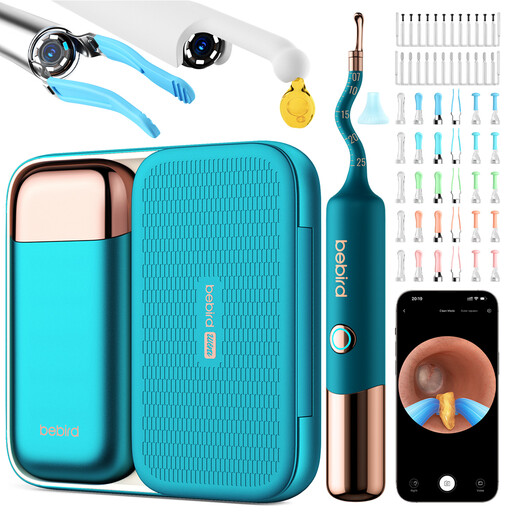
Its standout feature: This model positions itself as an all-in-one solution. Its unique feature? An integrated tweezer that allows you to grip and remove earwax debris, rather than just scraping it. The manufacturer promises a gentler approach for the walls of the ear canal.
Advantages:
Who is it for?: For those looking for an all-in-one ear cleaning kit that offers a tweezer extraction feature in addition to traditional spoons.
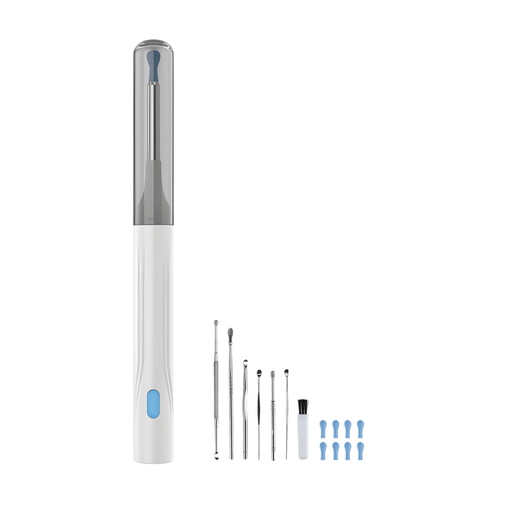
What sets it apart: The Sunluxy H1 focuses on image clarity and simple maintenance. It is equipped with a 10 Megapixel camera and 6 LEDs, providing an impeccably sharp view. Its camera head is waterproof (IPX5 rating), allowing it to be rinsed directly under water for impeccable hygiene.
Advantages:
Who is it for?: For users who prioritize superior image quality and easy cleaning of the device itself.
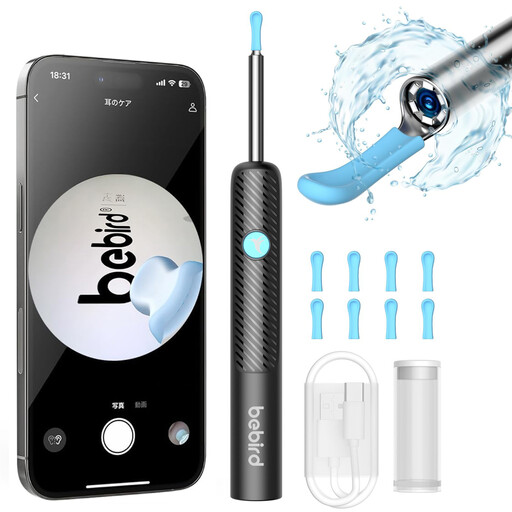
The safety advantage: With the bebird T3, the focus is on safety. It includes a graduated scale and a protective stopper to prevent excessive insertion into the ear canal. Its design also incorporates recycled materials, a plus for consumers conscious of their environmental impact.
Advantages:
Who is it for?: Ideal for particularly cautious individuals or parents looking for a visual earwax remover with enhanced safety features for family use.
Ear care doesn't stop at cleaning. Their comfort, especially during sleep, is just as essential. If you are prone to nighttime pain or discomfort, for example after a cleaning session or due to piercings, a suitable pillow can make all the difference.
To discover models designed to relieve pressure on the outer ear, take a look at our selection of pillows for ears.
When used with caution, it is a much safer alternative to cotton swabs. The key is to follow the instructions to the letter, never force it, and not insert it too deeply. The real-time view and soft silicone tips are there to minimize risks. Of course, in case of pain, infection, or a known eardrum perforation, consulting a doctor is essential before any use.
Hygiene is non-negotiable. Most models have removable tips that should be cleaned after each use, ideally with soap and water or a mild disinfectant solution. As for the camera lens, if the model is waterproof (IPX5 or IP67), a simple rinse under clean water is sufficient. Otherwise, a soft, slightly damp cloth will do the job. Never submerge the entire device if it is not specifically designed for it.
Yes, but it must be done under the direct and careful supervision of an adult. Choose a time when the child is calm, use the thinnest and softest tips, and most importantly, test the device on yourself first to get the hang of it. If in any doubt, the advice of a pediatrician or an ENT specialist remains the best guarantee.