
Livraison le jour même ou le lendemain

Qualité garantie

Débloquez vos offres de bienvenue: Livraison GRATUITE | Jusqu'à -80 % | 30 jours d'essai gratuits à JoyPlus
Téléchargez l'application
The smart LED strip has become the go-to accessory for personalising your home interior. Whether for an immersive gaming setup, to enhance a living room with LED backlighting for your TV, or simply to modernise a room, the promise is tempting. But be warned: the purchase can quickly turn into a headache, or even a disappointment. The gap between marketing promises and real-world performance can be huge.
As the Head of Product Selection at Joybuy, my mission is to guide you. Together, we'll break down the pitfalls to avoid and the essential technical criteria to help you make an informed choice that perfectly suits your desires and your budget.
The market is flooded with options, but they are far from being equal in quality. Here are the most frequent disappointments, which could easily be avoided:
To avoid these letdowns, you just need to check a few technical points. This is what separates a short-lived gadget from a true decorative element that will stand the test of time.
This is THE technical point to understand, especially if you're aiming for spectacular visual effects.
The term "smart" can hide many things. Always check the connection type and compatibilities:
Two 5-metre strips can produce a completely different result.
To illustrate these criteria in practice, here is a selection of products that meet specific needs while sidestepping the pitfalls we've discussed.
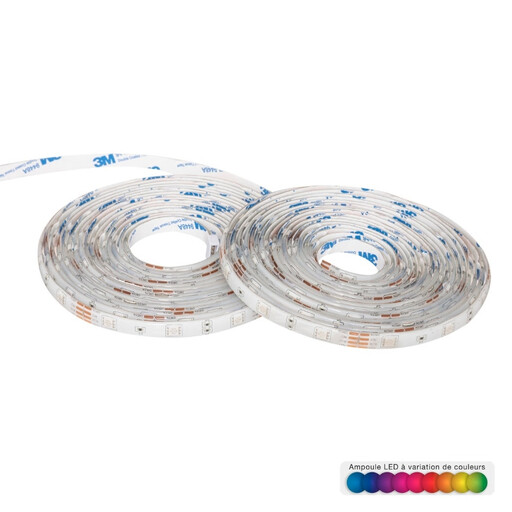
Why we recommend it: Perfect for those who prioritise length and simplicity. At 10 metres, it covers large areas (coving, under cabinets, room perimeters) in one go and at an unbeatable price. It's controlled via a simple and effective infrared remote.
Since this model isn't Wi-Fi connected, it completely bypasses the trap of unstable apps and compatibility issues. It gets straight to the point: reliable, remote-controlled ambient lighting.
Its 10-metre length (2x5m connectable) makes it easy to cover very large areas. Installation is instant and *plug-and-play*.
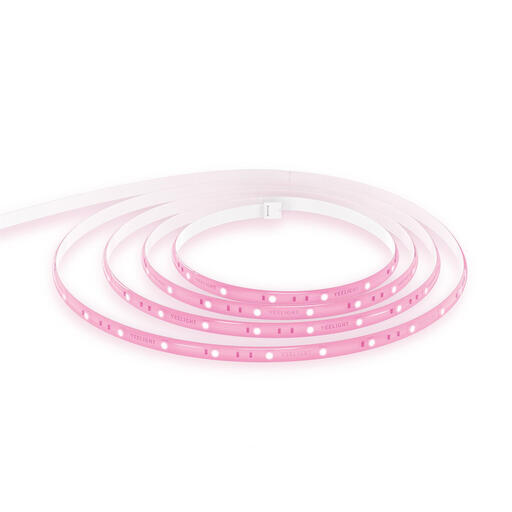
Why we recommend it: This is the benchmark for seamless integration into a smart home ecosystem. It's compatible with almost every platform on the market: Google Home, Amazon Alexa, Apple HomeKit, and even Samsung SmartThings. Perfect for those who want to control everything by voice or from a single app.
It tackles the "limited connectivity" problem by offering extensive, certified compatibility. The Yeelight app is renowned for its stability and rich feature set (scenes, schedules, etc.), ensuring a flawless user experience.
Universal compatibility and a rock-solid connection. The strip is also extendable up to 10 metres for maximum flexibility.
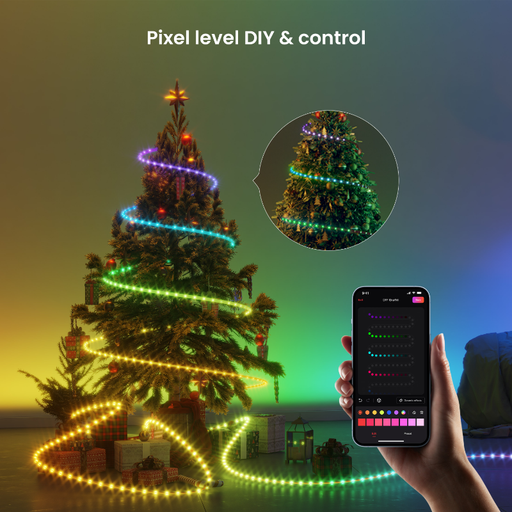
Why we recommend it: Designed for gamers and content creators, this strip features RGBIC technology. It can display dynamic colour gradients and react to on-screen action or ambient sound. The immersion is total, whether for a gaming session or a movie night.
It directly tackles the "dull colours" pitfall. Thanks to RGBIC technology and the quality of Yeelight's chips, it produces vibrant, saturated colours and dynamic transitions that are impossible to achieve with a standard RGB strip.
RGBIC technology for spectacular multi-colour effects and synchronisation with music and games (via compatible platforms like Razer Chroma).
We've put together a complete selection of products that meet our selection criteria and European safety standards.
A quality LED strip has a theoretical lifespan of 25,000 to 50,000 hours. In practical terms, with a few hours of use per day, this translates to several years of peace of mind. In reality, it's often the quality of the adhesive or the power supply that fails before the LEDs themselves.
Yes, most models are designed to be cut. They have clearly visible cutting marks (often a scissor icon) every 5 or 10 cm. Be aware that once cut, the unpowered section is unusable unless you reconnect it with specific connectors. Cutting also voids any water resistance (IP rating).
No, LED technology is known for its low energy consumption. A 5-metre strip, used at full brightness, generally consumes between 15 and 30 watts, which is much less than a traditional incandescent bulb. For simple ambient lighting at reduced brightness, the consumption becomes negligible. This makes it a very cost-effective solution to run.