
Livraison le jour même ou le lendemain

Qualité garantie

Débloquez vos offres de bienvenue: Livraison GRATUITE | Jusqu'à -80 % | 30 jours d'essai gratuits à JoyPlus
Téléchargez l'application
A simple smart LED strip can transform a mundane room into a unique and dynamic living space. Whether you're dreaming of an immersive gamer room setup, smart ambient lighting for your living room, or TV backlighting worthy of a home cinema, the options seem endless. The problem? The market is flooded with products making tempting promises that often hide deal-breaking flaws. As a product expert for the editorial team, my mission is to clear the clutter for you and highlight the criteria that truly make a difference.
Before you pull out your credit card, here are the 3 pitfalls to avoid so you don't regret your purchase:
To avoid falling into these traps, you just need to master a few simple but crucial technical concepts.
Focusing on the right technical criteria is the key to a successful purchase. Here are the three essential points to check for your future Wi-Fi light strip.
The visual effect of your lighting depends directly on the LED layout.
A smart LED strip worthy of the name must integrate seamlessly into your ecosystem.
The CRI (Colour Rendering Index) rates a light source's ability to render colours accurately on a scale of 100, compared to natural daylight. The closer the score is to 100, the more natural the colours will appear. For simple ambient lighting, a CRI of over 80 is sufficient. But to highlight objects, artwork, or simply create a natural and warm atmosphere, you should aim for a CRI of 90 or higher. A poor CRI will make colours look dull and give your interior a washed-out appearance.
Rather than an exhaustive list, here are a few models that tick all the boxes, each tailored to a specific need.
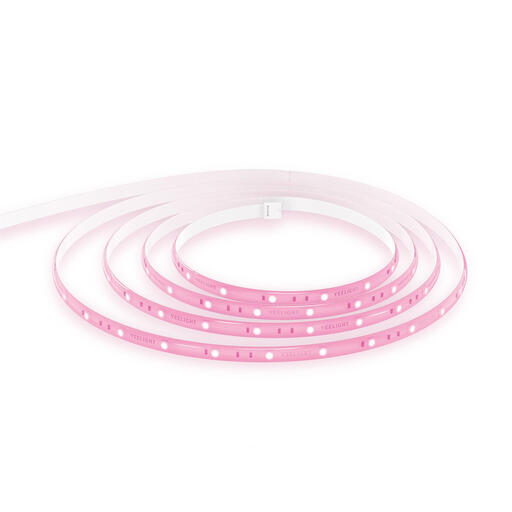
Their profile: They're looking for a solution that integrates flawlessly into their smart home. The goal: control everything by voice, create complex scenes, and switch from a work-focused mood to a movie night in the snap of a finger.
It eliminates the risk of "false connectivity" with its exemplary compatibility with major assistants (Alexa, Google Home, Apple HomeKit) and an app renowned for its reliability.
Full control over colour, intensity, and white temperature. Extendable up to 10 metres to outfit larger spaces.
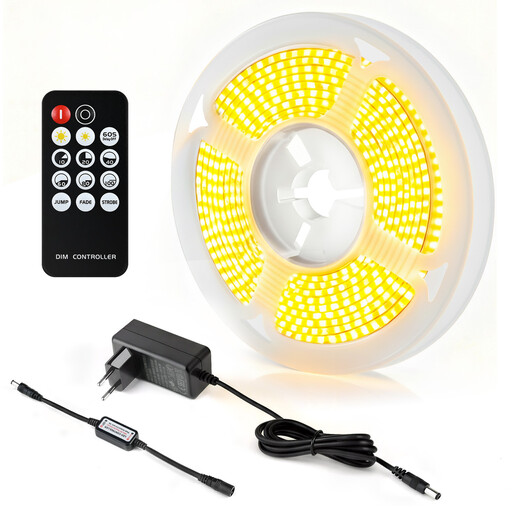
Their profile: For them, light quality is non-negotiable. The idea is to create architectural lighting to highlight a bookshelf or a worktop, with an absolutely perfect finish, free of any imperfections.
Its COB technology obliterates the "Christmas light" effect by delivering a continuous, professional-looking line of light, even when exposed (without a channel).
An excellent CRI of 92 for perfectly accurate colours. Its warm white light (3000K) is ideal for creating a cosy atmosphere in living areas.
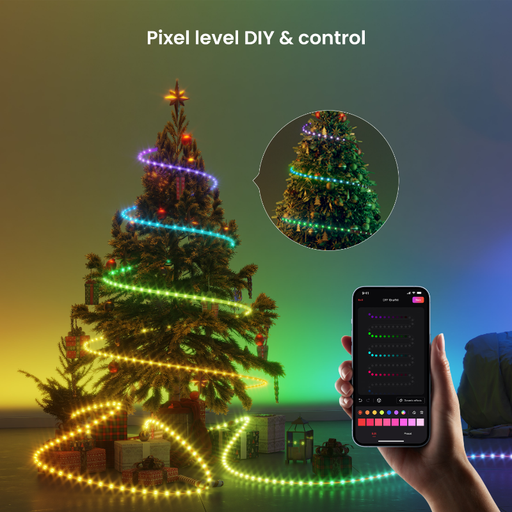
Their profile: The gamer wants a visual environment that pulses with their games and music. Flashy colours, smooth gradients, and synchronised effects are the keys to total immersion.
Much more than a simple RGB strip, its RGBIC technology manages colours by segment. This allows it to display multiple hues at once to create complex, fluid animations that are impossible to achieve with a standard strip.
Built for gaming, with music sync modes and ready-to-use scenes for an immersive atmosphere with a single click.
We have selected other models that meet our strict specifications for quality and safety.
Yes, most LED strips are cuttable. They have cutting marks (often a scissor icon) every 5 or 10 cm. It is crucial to cut only at these designated spots to avoid damaging the circuit. Note that the cut-off section will no longer be powered unless you use specific connectors to reattach it.
A quality LED strip typically has a lifespan of 25,000 to 50,000 hours of use. This translates to several years, even with daily use. This longevity largely depends on the quality of the chips and heat dissipation: a strip that overheats will see its lifespan plummet.
No, LED technology is renowned for its excellent energy efficiency. A 5-metre LED strip consumes, on average, between 15 and 35 watts at full power, which is a fraction of what an old incandescent bulb would use. This makes it a very economical decorative lighting solution.