
Same-day & Next-day Delivery

Quality Guaranteed

Unlock Your Welcome Offers: FREE Delivery | Up to 80% OFF | Free 30-day JoyPlus trial
Download the APP
By Joybuy, our product specialist – Published August 26, 2026
Do you dream of a touch of greenery in your flat or office, but your hectic schedule and frequent absences have spelled doom for all your plants? The smart flower pot promises to finally reconcile a bustling urban life with a love for plants.
However, the market is flooded with gadgets making tempting promises that often lead to disappointment in practice. Before you take the plunge, it's best to know the most common marketing traps to prevent a promising purchase from turning into a costly letdown.
To make the right choice, ignore the marketing speak and focus on the technical specifications that truly make a difference. Here are the three key points to check.
A truly smart pot doesn't just automate; it adapts. The key lies in the quality and diversity of its sensors. A high-performance model must be equipped with at least:
The purpose of a smart pot is to give you peace of mind, making its autonomy a decisive factor. Pay close attention to two elements:
The most innovative models turn plant care into an experience. Beyond simply managing watering, they can become an interactive piece of modern desk decor. These pots communicate the plant's needs (thirst, need for light, well-being) via a screen displaying expressions or light signals. This AI plant robot dimension creates an emotional connection and makes plant care more fun, making it a particularly popular unique high-tech gift.
Rather than a random laundry list, we've decided to match each product to a user profile to help you find the one that's truly right for you.
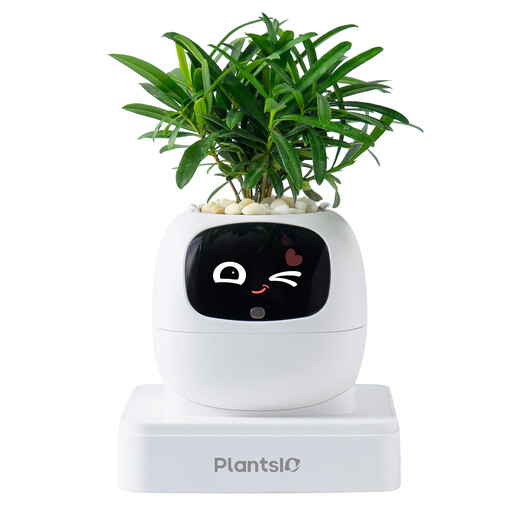
Why we chose it: Ideal for busy people living alone or looking to liven up an office. It turns a simple plant into an interactive companion that expresses its emotions, providing a living, calming presence without the commitment of a pet.
It integrates moisture, water level, and light sensors for adaptive care. With over 80 facial expressions, it provides constant visual feedback, avoiding the "black box" effect.
It combines smart plant care with an emotional interaction similar to a pet, as it reacts to touch and its environment.
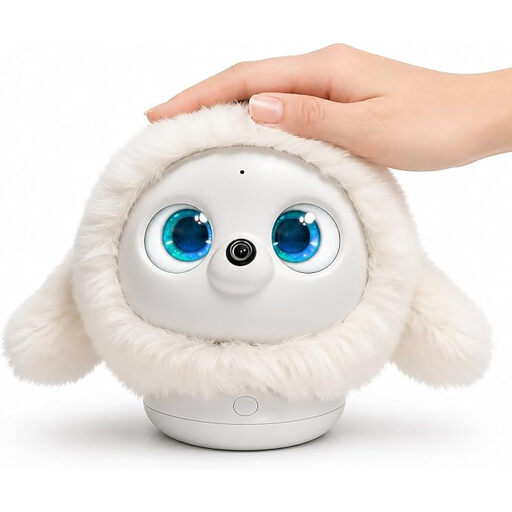
Why we chose it: For those who are more fascinated by artificial intelligence than by gardening. It's a high-tech companion offering rich interaction, facial recognition, and an evolving personality, with zero maintenance required.
This isn't a multi-function gadget. It focuses on a single promise: to be an AI companion. And it delivers on that promise with advanced technologies like a conversational AI and tactile perception.
Its 39°C (102.2°F) biomimetic body temperature and cat-like touch offer a uniquely realistic experience of comfort and presence.
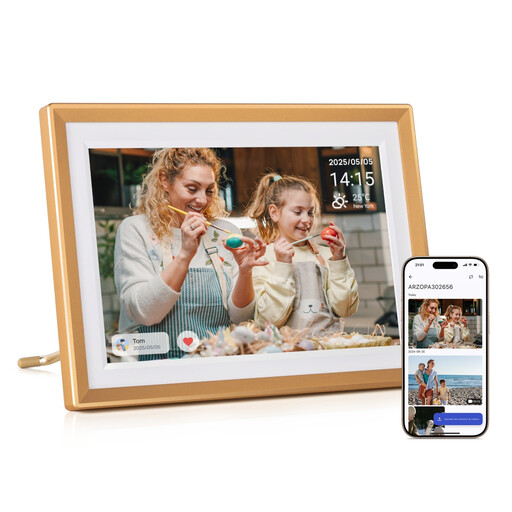
Why we chose it: For those who want to liven up their home with a touch of personalised technology. It's an alternative to a houseplant for bringing life and colour to a desk or living room by displaying shared memories with family and friends.
This isn't a single-function gadget, but a truly dynamic decor piece with well-thought-out features: Wi-Fi sharing via an app, free and unlimited cloud storage, and an HD touchscreen for intuitive use.
It allows for instant, remote sharing of photos and videos from a smartphone, creating a private, interactive space to stay connected with loved ones.
These products are just a glimpse. For more ideas, we've prepared a complete, hand-picked selection of smart devices and unique gifts.
Autonomy varies considerably from one model to another. It depends on the battery capacity (expressed in mAh) and the size of the water reservoir. A model like the Ivy robot, with its 2000 mAh battery, can run for several hours in interactive use. For watering, the autonomy depends on your plant's consumption and the reservoir size, ranging from a few days to several weeks.
Most smart pots are designed for small to medium-sized indoor plants. It's important to check the dimensions of the inner pot (the part that holds the soil and roots). For example, a pot with a 55 mm diameter will be suitable for succulents, herbs, or young shoots, but not for a well-established ficus or monstera.
The interaction goes beyond simple app notifications. These devices use an integrated screen to display animations or facial expressions that convey the plant's "emotions": joy after watering, sadness from lack of light, etc. Some models even react to touch on the leaves or the pot, reinforcing the feeling of having a responsive and endearing plant companion.