
Livraison le jour même ou le lendemain

Qualité garantie

Débloquez vos offres de bienvenue: Livraison GRATUITE | Jusqu'à -80 % | 30 jours d'essai gratuits à JoyPlus
Téléchargez l'application
Choosing small-dog food is about more than comparing prices per kilogram. A Chihuahua, Yorkshire Terrier, or any other dog weighing less than 10 kg has a small jaw, specific energy needs and, in many cases, a limited daily portion. The wrong kibble size, an unsuitable recipe or an incorrectly calculated serving can quickly lead to waste or make dietary changes more difficult.
Here are the key points to review before ordering, along with a selection of products available on Joybuy.
Claims such as “high in protein,” “natural” or “grain-free” may catch your attention, but they are not enough to distinguish between two foods. Instead, review the ingredient list, analytical constituents and food classification: complete or complementary.
A grain-free recipe is not automatically suitable for every dog. It may contain peas, chickpeas, potatoes or pea starch, for example. These ingredients should be assessed as part of the recipe’s overall composition.
Larger bags often reduce the price per kilogram. However, a small dog may eat only 30 to 150 g per day, depending on its weight and activity level. Once opened, a bag stored for too long may lose freshness, particularly if it is not properly sealed.
When trying a new recipe, a 800 g to 2.5 kg bag reduces the risk of being left with several kilograms of food your dog refuses or does not tolerate well. The 7 kg and 10.8 kg sizes are better suited to households that already know their pet’s preferences and tolerance.
Adult small-breed dog food does not meet the same needs as small-breed puppy food. During growth, a puppy should receive food explicitly identified as complete for puppies or for all life stages. A recipe intended for sterilised dogs should likewise be served according to body condition and activity level, rather than offered freely.
Look for labels such as “miniature,” “small breed” or “small size.” Bite size is particularly important for dogs that eat slowly, gulp their food or have small teeth.
The shape of the kibble does not eliminate the need to supervise mealtimes: stay nearby and always provide fresh water.
Chicken, lamb, fish, duck, quail or venison: the animal protein source should be clearly identifiable in the ingredients. Chicken dog food, lamb dog food and fish-based dog food may suit different preferences. However, they are not a treatment for allergies or digestive disorders.
For sensitive-dog food, avoid changing recipes repeatedly. Introduce the new food gradually over approximately 7 to 10 days, following the manufacturer’s recommendations. If symptoms persist, consult a vet.
Compare the bag weight with the recommended serving shown on the packaging. Some product pages indicate approximately 30 to 120 g per day for a dog weighing 1 to 10 kg, depending on its weight, age, activity level and body condition.
After sterilisation, the amount served may need to be reviewed. A dedicated recipe, such as Farmina N&D Quinoa for sterilised adults, contains duck, quinoa, broccoli and asparagus, according to the product listing. This does not replace regular monitoring of your dog’s weight.
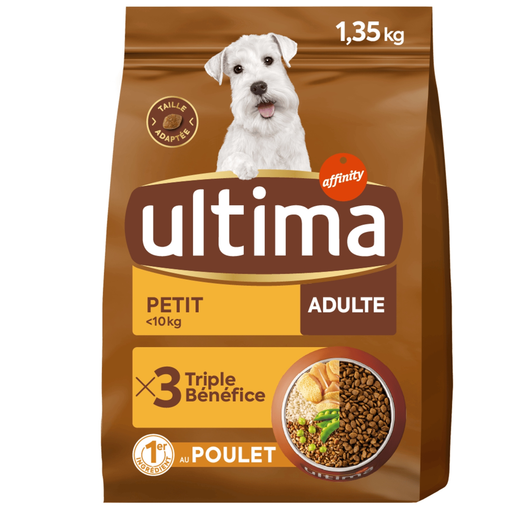
Why it suits this profile: Its mid-sized bag makes it possible to test a recipe for adult small-breed dogs without building up excessive stock.
The product listing describes a complete food for adult small dogs weighing under 10 kg, with a recommended serving of 30 to 120 g per day to be adjusted as needed.
The composition lists 27% crude protein, 16% fat and a chicken content of 17%.
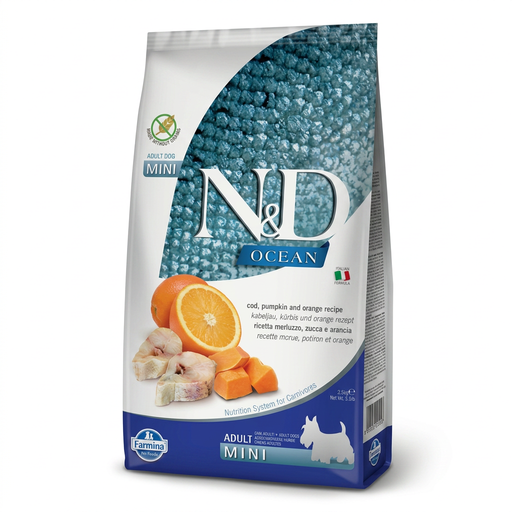
Why it suits this profile: This recipe is aimed at owners looking for Farmina N&D food based on a clearly identified marine protein.
The product listing specifies cod, dehydrated cod and herring oil, rather than relying on the vague description “fish-based.”
The recipe is described as grain-free and contains pumpkin, inulin and fructo-oligosaccharides, according to the product description.
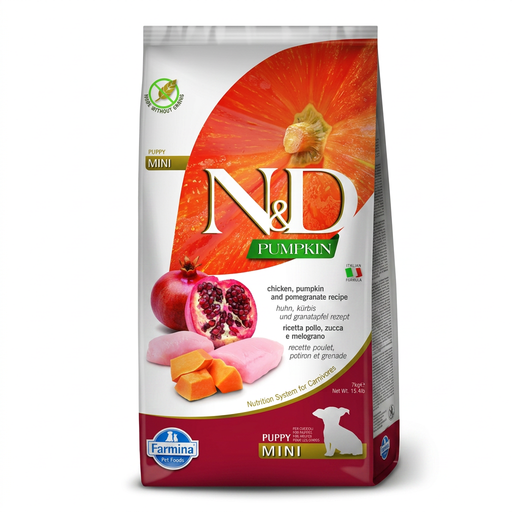
Why it suits this profile: This product is intended for households with a small-breed puppy seeking a recipe specifically formulated for growth.
The product is presented as food for miniature puppies, rather than simply an adult recipe offered in a smaller bag.
The composition lists fresh chicken, dehydrated chicken, herring oil and a kibble size suited to small breeds.
For a lamb-based recipe, the Farmina N&D Pumpkin range offers a formula for miniature adult dogs made with fresh and dehydrated lamb, pumpkin, chickpeas and fish oils. The 800 g, 2.5 kg and 7 kg sizes make it possible to match your purchase to your dog’s actual consumption.
Owners interested in dog food for skin and coat care can also explore Farmina N&D Quinoa recipes with quail or venison. Depending on the product, the listings mention fish, herring oil or flaxseed. These details describe the product’s composition but do not guarantee a particular result.
Wet food for small dogs can be served on its own or incorporated into a mixed diet. Ultima’s product for adults weighing under 10 kg is available in 100 g pouches, with chicken and vegetable or beef and carrot pieces. Once opened, the pouch should be refrigerated and consumed within 48 hours, according to the product listing.
Explore a regularly updated selection of food for small dogs, with multiple sizes, recipes and life stages to compare before placing your order.
The appropriate serving depends on your dog’s weight, age, activity level and the recipe’s energy density. Use the feeding chart on the packaging as a starting point, then adjust gradually if your dog’s weight or body condition changes. Dividing the daily serving into two meals can also make day-to-day feeding easier to manage.
No. Grain-free food is not a general requirement. It may reflect a personal preference or the characteristics of a particular recipe, but the priority is to review the full ingredient list and confirm that the food is complete. If you suspect a food sensitivity, consult a vet before making a long-term change to your dog’s diet.
Both formats can form part of a complete diet, provided the quantities are calculated correctly. Dry food is easy to store, while wet food offers a different texture and may suit dogs that drink little or have difficulty eating. For mixed feeding, reduce the dry-food portion based on the feeding chart provided by the manufacturer.