Which criteria should you consider?
Before replacing a working appliance, see whether you can combine more laundry into each load. If you still need to run half-loads, first choose a capacity that suits your usual washes, then consider the programmes and installation space.
| What matters |
What to check |
Who this matters to |
| Drum capacity |
Compare the capacity in kg with your usual loads and how often you wash bulky items. Leave enough room for the laundry to move around. |
If my usual loads are small, I want to avoid a drum that’s often underfilled, while still being able to wash bulky items occasionally. Around 40% of consumers prioritise a suitable capacity. |
| Unavoidable small loads |
Check which settings are adjusted by load detection and the maximum load allowed by each short programme. |
When I need to wash a small amount of laundry without waiting, I need a cycle that’s genuinely suitable for that load. This adjustment is the top priority for around 30% of consumers. |
| Space and access |
Measure the space and access routes, then allow for the connections and the clearance needed in front of the door or above the lid. |
In a tight space, I need to be able to install and open the appliance without compromising on a capacity that suits my laundry. Available space is the top priority for around 30% of consumers. |
The energy label lets you compare the declared figures for the Eco 40-60 programme, including electricity in kWh per 100 cycles and water in litres per cycle. These figures don’t necessarily reflect the consumption of your quick programme or every small load. ADEME also points out that half-loads use less water but the same amount of electricity. So a manufacturer’s claim about automatic adjustment doesn’t, by itself, make sure the drum is sufficiently full.
Washing machines to explore on Joybuy
These top-loading and front-loading models let you compare different capacities for frequent small washes. Compare their capacity with your usual loads, then check the conditions for short programmes and the space needed for installation.
 Image unavailable
Candy TCA464TM4-S ProWash 500, 6 kg top-loader
Worth considering if you’re looking for a 6 kg capacity and a top-loader for a narrow space. Make sure there’s room to open the lid.
The product name indicates 1,400 rpm, a B energy rating, Wi-Fi and 17 programmes.
For small washes, check the conditions for the Single Item feature and the load allowed for quick cycles before choosing a programme.
View on Joybuy
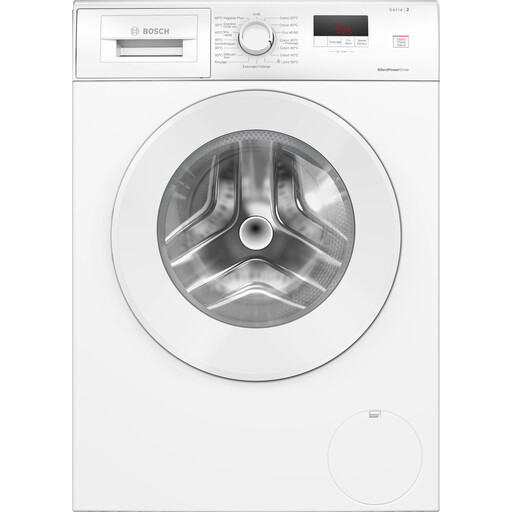 Image unavailable
Bosch WGE02407FR, 7 kg front-loader
Consider this model if your usual loads suit a 7 kg capacity and you have enough clearance in front of the door.
The product name indicates 1,400 rpm and an A energy rating.
Before deciding, check the load allowed for the Express 15/30 programme on this model, as well as the installed depth, including the door.
View on Joybuy
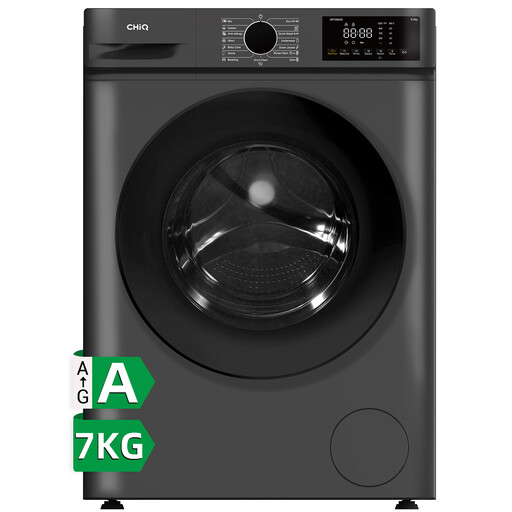 Image unavailable
CHiQ JW75883G, 7 kg front-loader, dark grey
Worth considering if a 7 kg capacity suits your usual washes and the appliance’s depth is an important factor for installation.
The product name indicates an A energy rating, 1,200 rpm and 16 programmes.
Check the dimensions once installed, the maximum load for the quick programme and which settings Smart Wash actually adjusts.
View on Joybuy
 Image unavailable
Electrolux EW7FI259160V SteamCare SmartSelect, 9 kg
Consider this 9 kg capacity if you wash bulky loads often enough to make use of it. It may be more than you need if your usual washes are small.
The product name indicates a front-loader, 1,600 rpm and a connected feature.
Check the conditions for the QuickCare programmes and the space needed in front of the door. Don’t assume that load detection makes up for repeated half-loads.
View on Joybuy
Frequently asked questions
Will a large-capacity washing machine prevent half-loads?
Not if the amount of laundry you usually wash stays the same. ADEME says that 7 kg is usually enough. Choose a larger capacity if you genuinely wash bulky loads often, not in the hope that a bigger drum will fill itself.
Should you fill the drum to the top?
No. Fill it sufficiently, but don’t pack the laundry in tightly. ADEME recommends leaving room for textiles to move around. Also follow the load limit for the programme you choose.
What should you compare on a washing machine’s energy label?
Compare the capacity, energy rating, electricity use in kWh per 100 cycles, water use in litres per cycle and the duration of the Eco 40-60 programme. Under the EU energy labelling scheme described by the European Commission, these figures help you compare models, but they don’t predict the consumption of every short cycle.
Can a quick programme handle any small wash?
No. The maximum load and permitted level of soiling depend on the programme and model. For the WAJ28087FF, Bosch Electroménager France states that Express 15/30 can handle up to 3.5 kg of lightly soiled laundry. Check the manual for the model you’re considering.


