Households that dry laundry regularly
You want to compare the energy consumption shown on the label, drying capacity and programme duration before choosing a heat-pump tumble dryer.


If you’re buying a new tumble dryer placed on the EU market since 1 July 2025, heat-pump technology is the type permitted under European Commission rules. Then choose a model whose dimensions, door opening and maintenance requirements suit your utility room. A washer-dryer is better suited to a home with space for only one appliance, as long as you compare its drying capacity with the size of your laundry loads. An airer avoids using an electrical appliance, but the French Agency for Ecological Transition (ADEME) advises taking into account the moisture released by laundry drying indoors.
You want to compare the energy consumption shown on the label, drying capacity and programme duration before choosing a heat-pump tumble dryer.
You need to be able to open the door, load laundry and reach the tank and filters. The depth with the door open and the direction it opens matter just as much as the appliance’s closed dimensions.
You’re considering a washer-dryer because two separate appliances won’t fit in the room. Check its drying capacity and the figures for the wash-and-dry cycle separately from those for washing alone.
First, work out whether the room can accommodate a separate tumble dryer, a washer-dryer or a suitable space for air-drying laundry.
Consider this if: there’s room for a separate tumble dryer and you’re buying a new appliance covered by the current EU rules.
Bear in mind: programme times and maintenance requirements vary by model; you can’t determine them from the technology alone.
Consider this if: you’re comparing an older or second-hand appliance, without assuming it’s subject to the same rules as a newly placed EU-market tumble dryer.
Compare: its energy consumption and drying time with those of the other appliances you’re considering, using comparable programmes.
Consider this if: your utility room can only fit one appliance for washing and drying.
Bear in mind: check the drying capacity separately from the washing capacity, along with the figures for the full cycle.
Consider this if: you have a suitable place to dry laundry indoors and want to avoid using an electrical appliance.
Plan for: according to ADEME, air-drying laundry releases moisture into your home, so a small utility room isn’t automatically a suitable place to dry it.
| Factor | What to check | Who it matters to |
|---|---|---|
| Energy use and choosing a new appliance | For a tumble dryer covered by EU rules since 1 July 2025, check the A to G label and kWh per 100 cycles. Compare equivalent programmes and appliance types. | If I dry laundry often, I want to know how much energy the programmes I’ll use consume. Around 29% of consumers are said to prioritise this factor. |
| Space and access | Check the exact model’s dimensions, depth with the door open and access to the tank and filters. Consult the manual for required clearances. | In a narrow utility room, I need to be able to open the door and maintain the appliance once it’s installed. Around 21% of consumers are said to prioritise usable space over other factors. |
| Programme time and maintenance | Compare the duration of the programme suited to your loads and the cleaning or emptying tasks specified in the manual. | When I’m doing several loads in a row, I want to know how long drying takes and what extra tasks it involves day to day. Around 21% of consumers are said to prioritise programme time and maintenance. |
| Drying without an electrical appliance | Choose a suitable place to dry laundry. For indoor air-drying, ADEME recommends a large, well-ventilated room or a room with suitable extraction. | If I prefer to use an airer, I need somewhere to dry my laundry without overlooking indoor humidity. Around 29% of consumers are said to prioritise this option. |
A tumble dryer may fit in its space but leave too little room to open the door or remove the tank. For example, LG lists a depth of 1 080 mm with the door open for its RH8N14SL. This measurement applies to that specific model.
Also measure the depth, door swing and access to parts that need maintenance, then compare these measurements with the specifications and manual for the model you’re considering.
Filters, condensers, tanks and alerts vary between appliances. A self-cleaning system advertised on one model doesn’t apply to all heat-pump tumble dryers.
Check the manual to find out what needs cleaning and emptying, even if the appliance is advertised as having an automatic maintenance feature.
According to the European Commission’s definition, rated drying capacity is the load that can be dried in one cycle. Check it separately from the washing capacity.
Compare the drying capacity with your usual laundry loads, then check the energy, water and duration figures for the wash-and-dry cycle.
ADEME notes that laundry drying naturally releases moisture into the indoor air. So, not having a tumble dryer doesn’t mean every space is suitable for drying laundry.
Instead, consider whether you can dry laundry in a large, well-ventilated room or a room with suitable extraction, in line with ADEME’s recommendations.
The WQG2451SFR highlights what to check on a Bosch heat-pump tumble dryer: dimensions, condensate drainage and maintenance.
The EDHF5841EC heat-pump tumble dryer gives you a practical example of tank management and maintenance information on an 8 kg model.
The TEA525WP Active is an 8 kg heat-pump tumble dryer in the T1 range. Check its own specifications rather than relying on general information about the brand.
The RH8N14SL shows why depth with the door open and the direction it opens deserve special attention in a small room.
These appliances represent two options for a small utility room: combining washing and drying in one appliance, or installing a separate heat-pump tumble dryer. For each one, check that its dimensions and operating requirements suit your room before choosing.
 Image unavailable
Worth considering if you have just one space for washing and drying laundry; the rated drying capacity is lower than the washing capacity.
Compare the wash-and-dry cycle figures on the energy label, and check the dimensions and connections in the manual.
 Image unavailable
Consider this when one appliance needs to do both jobs, bearing in mind the difference between its rated washing and drying capacities.
Check the full-cycle duration and energy consumption on the label, as well as the door opening and connections in the manual.
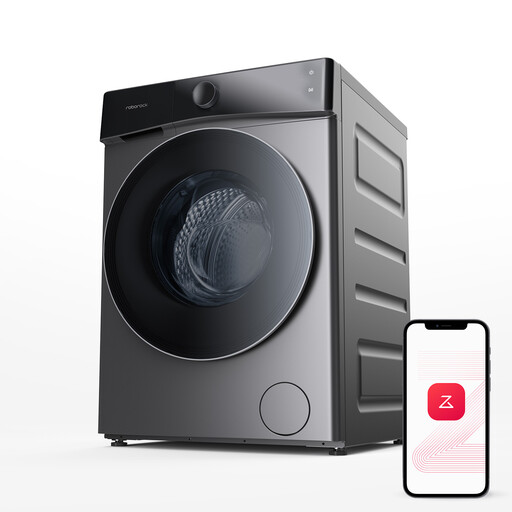 Image unavailable
This washer-dryer is designed for households with space for just one appliance. Check that its drying capacity suits the amount of laundry you need to dry.
Measure the available space and check the specifications for full-cycle figures. The product name mentions LintClear; the manual explains what maintenance is required.
 Image unavailable
Worth considering if your utility room can accommodate a separate tumble dryer and its rated capacity suits your laundry loads.
Check the depth with the door open, energy consumption figures, programme times and condensate management in the specifications and manual.
 Image unavailable
Consider this if you’re looking for a separate tumble dryer rather than a washer-dryer, provided it fits in your utility room.
Check its dimensions and door opening against the space available, then look up the programme times, condensate management and maintenance requirements for this model.
No. An A++ rating on the old label doesn’t correspond directly to a rating on the A to G scale that applies to the tumble dryers concerned since 1 July 2025, according to the European Commission. Compare appliances with the same type of label and check the figures for the programme shown.
Not in the same way as a vented tumble dryer: condensate is collected inside the appliance. However, check how to empty the tank on your chosen model, whether it supports direct drainage and how to access the parts that need maintenance.
Start with the rated drying capacity, which is separate from the washing capacity. The European Commission defines it as the maximum mass of dry textiles that can be dried in one cycle. Also check the energy, water and duration figures for the wash-and-dry cycle.
No. The space also needs to be suitable for the moisture released by drying laundry. For indoor air-drying, ADEME recommends a large, well-ventilated room or one with suitable extraction.