Very narrow alcove
If there’s little width between two units or in a narrow bathroom, a top-loader is worth considering. However, you’ll need enough clearance to open its lid fully.


First, identify the dimension that’s stopping you from installing a washing machine: if width is the issue, consider a slim top-loader; if you’re short on depth, look at a slim front-loader. A standard front-loader may fit under a worktop if the dimensions and access to the door allow it. Choose a compact model only when these formats won’t fit, and bear in mind that it will have a smaller capacity.
If there’s little width between two units or in a narrow bathroom, a top-loader is worth considering. However, you’ll need enough clearance to open its lid fully.
If an appliance that’s too deep would obstruct a door or walkway, you could consider a slim front-loader, provided there’s enough width. You’ll still need space in front of the machine to open the door.
In a studio where neither a top-loader nor a standard front-loader will fit, a compact model may suit smaller loads. Check its capacity and spin performance against your needs before choosing this format.
Top-loaders, standard front-loaders, slim models and compact machines don’t solve the same space constraints. Identify what’s preventing installation before comparing capacities.
Consider it: when width is limited and there’s room above for loading.
The trade-off: the top-opening lid means you can’t place it beneath a fixed worktop that would block it.
Consider it: when the space allows for under-worktop installation and access to the front of the machine.
The trade-off: the door must open without obstructing the walkway or a nearby door.
Consider it: when depth is limited but there’s room for the width of a front-loader.
The trade-off: reduced depth doesn’t remove the need for access to the door or for a capacity that suits your laundry.
Consider it: when a top-loader or standard front-loader won’t fit and your loads are small.
The trade-off: a smaller drum may mean more wash cycles and make it harder to wash bulky items.
| Criteria | What to check | Who it matters to |
|---|---|---|
| Width | Measure the usable width and check for obstacles on either side. Then make sure there’s enough room to open a top-loading lid, if applicable. | If the alcove is narrow, my main priority is finding an appliance that fits without making it difficult to load; around 31% of consumers would put this width constraint first. |
| Depth | Compare the model’s overall depth with the available space, including connections, and check how far the door swings open. | If the machine could stick out into the room, I’m mainly looking to limit how far it projects; around 31% of consumers would put depth at the top of their list. |
| Under-worktop installation and capacity | Check the manual for under-worktop compatibility, exact dimensions and a capacity that suits your laundry loads. | If I have room for a front-loader, I’d prefer to keep a capacity that suits my laundry while fitting the machine under the worktop; around 25% of consumers would prioritise this combination of needs. |
| Space for a compact model | Check its capacity, wash programmes, spin performance and the connections specified for the model. | When no standard format will fit, my first priority is finding a way to wash smaller loads; nearly 13% of consumers would make this their top priority. |
A machine may fit in its space, but its door or lid might not open properly. The connections may also affect how much room you need behind it.
Check the dimensions of your chosen model and consult its manual to confirm the clearance needed for opening and installation.
According to Que Choisir, some mini washing machines have a capacity of 2 to 3 kg, which can make bulky items difficult to wash.
First check whether a top-loader or slim model could fit, then compare the compact machine’s capacity with the amount of laundry you have.
A smaller drum may mean more cycles and more time spent doing laundry.
A slim front-loader mainly reduces depth. It still loads from the front and may not solve a lack of width.
If width is your main constraint, compare slim top-loaders too rather than relying on the word “slim” alone.
The DGCCRF distinguishes between legal guarantees and optional commercial warranties. A commercial warranty does not replace your applicable legal rights.
Before taking out an extended warranty, compare its duration, exclusions and cover with your legal guarantee of conformity.
The TDLR6253BFR top-loader is a specific model to compare when width is limited. Whirlpool France lists this model as 40 cm wide, 60 cm deep and 90 cm high, with a capacity of 6 kg.
Electrolux France lists the EW6T4613HA as a 6 kg PerfectCare 600 top-loader. Consider it if this capacity suits your laundry loads.
Candy France offers slim front-loader ranges and 5 kg washing machines worth comparing for a small space.
These two front-loading washing machines are worth comparing if your space allows access to the door. Their capacity alone won’t tell you whether they’ll fit in an alcove or under a worktop, so check the dimensions and manual for the model you choose.
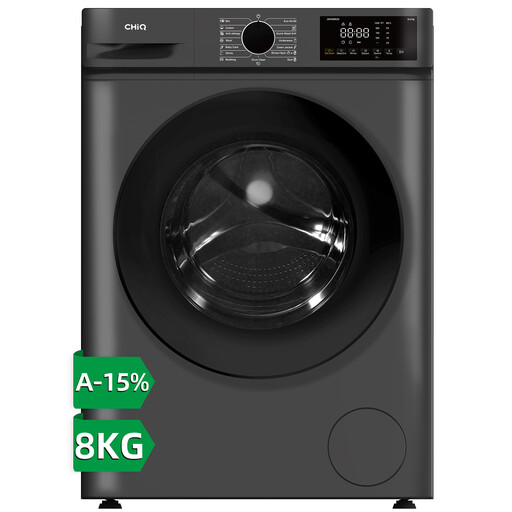 Image unavailable
Worth considering if you’re looking for a front-loader with a capacity of 8 kg for your laundry loads.
The product description lists 1,400 rpm and 16 programmes. Before planning its installation, check its overall dimensions, the space needed in front of the door and the installation requirements in the manual.
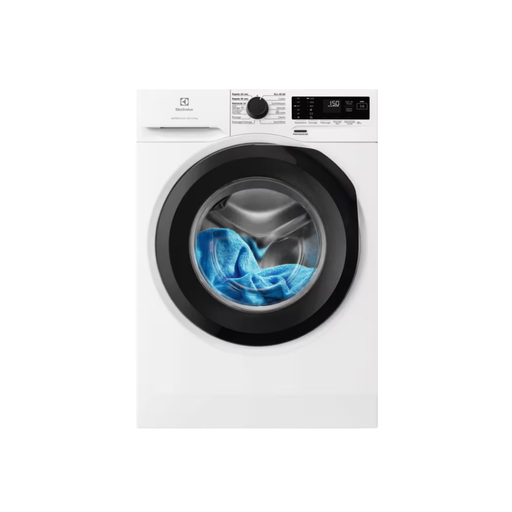 Image unavailable
Consider this model if you need a capacity of 10 kg and have space for a front-loader.
Before choosing it for a small room, check the overall depth, door clearance and requirements for under-worktop installation.
Measure the usable width, depth and height, as well as the space needed to access the loading area. Allow for obstacles, connections and the clearance needed for the door or lid to open, then compare your measurements with the manual for your chosen model.
No. The capacity should suit the amount of laundry you have and how often you wash it. A drum that’s too small may mean more cycles and make bulky items difficult to wash, so check this trade-off before choosing a compact model.
Yes. According to the French Ministry for Ecological Transition, the durability index has applied to washing machines in France since 8 April 2025. You can use it when comparing models, but it doesn’t replace checking the dimensions and installation requirements for your home.
No. The DGCCRF explains that a commercial warranty is optional and supplements, rather than replaces, your legal guarantees. If you buy a washing machine from a professional seller in France, compare the terms of any extended warranty with the rights provided by the legal guarantee of conformity.