Homes with a narrow bathroom or alcove
If width is your main constraint, a top-loader is worth comparing. If you’re short on depth, look at slim front-loaders instead, while allowing enough space in front of the door.


If width is limited, compare top-loading washing machines; if depth is the issue, look at slim front-loaders. If you might want to stack a tumble dryer on top later, choose a front-loader with model numbers and a stacking kit confirmed as compatible. In all cases, measure the space needed to open the door or lid, and choose a capacity that suits the loads you actually wash.
If width is your main constraint, a top-loader is worth comparing. If you’re short on depth, look at slim front-loaders instead, while allowing enough space in front of the door.
Check the appliance’s dimensions, access to the door and the installation requirements for the model you choose. The fact that a washing machine is front-loading doesn’t automatically mean it will fit under your worktop.
Choose a front-loader, tumble dryer and stacking kit whose model numbers the manufacturer confirms are compatible. The available height and the kit’s specific requirements matter just as much as the floor space.
Measure the alcove and access route before comparing formats. Then consider how the machine opens, your usual loads and whether you plan to stack it.
| Criteria | What to check | How it suits my needs |
|---|---|---|
| Dimensions and opening clearance | According to Que Choisir, top-loaders are generally 40 to 46 cm wide; slim front-loaders mainly save on depth, measuring around 33 to 45 cm. Also measure the available height, access route and the clearance needed to open the lid or door. | My alcove is narrow: a top-loader could work if there’s enough room to open the lid. If a front-loader fits the width but there isn’t enough depth, I’ll compare the depths of slim models. |
| Washing capacity | Que Choisir suggests 5 to 7 kg for one or two people and 7 to 8 kg for an average family. Compare these guidelines with your usual loads, especially sheets and towels. | I want a drum that can take my everyday laundry without making me run extra cycles. If I’m considering a compact machine because there’s no room for a standard one, I’ll also check which bulky items I can wash in it. |
| Fitting under a worktop | Compare the exact model’s dimensions with the available space, then check its manual for installation requirements. Electrolux also recommends clearing the installation area before delivery. | In my kitchen, the door needs to remain accessible, and I need to be able to install the washing machine without assuming that any front-loader will fit under the worktop. |
| Stacking | Check the model numbers of the washing machine, tumble dryer and stacking kit together. For example, Bosch specifies that its 00717524 kit is for a standard-size washing machine more than 55 cm deep, and lists exclusions for some Series 2 models. This depth requirement applies to this kit, not to every stacking arrangement. | If I want to save floor space with a separate tumble dryer, I’ll confirm that all three items are compatible and check the available height before buying. |
| Durability | In France, ADEME says that washing machines have been covered by the durability index since April 2025. The score gives equal weight to reliability and repairability, so compare the index for the specific model you’re considering. | I don’t want to choose based on dimensions alone: I’ll also look at durability information and the documentation for the model I’ve selected. |
A front-loader may fit in the space but leave too little room to load your laundry. A top-loader, meanwhile, needs clear space above the lid.
Measure the width, depth and height, as well as the access route, then check the clearance needed to open the door or lid.
If the drum can’t take your usual loads, you’ll have to split them across several cycles.
Start with the size of your household, then consider the bulky items you wash regularly before choosing a compact model or a smaller capacity.
A washing machine’s shallow depth doesn’t prove that it’s compatible with a stacking kit. Bosch, for example, requires a depth of more than 55 cm for its 00717524 kit.
Before planning a stack, check the exact model numbers of the washing machine, tumble dryer and kit in the manufacturer’s documentation.
Dimensions alone don’t tell you about the reliability and repairability considered in the durability index that ADEME describes for applicable washing machines in France.
Compare the index for the exact model and check its documentation alongside its dimensions.
These models illustrate different formats and installation requirements to check on a model-by-model basis; they aren’t the brands of the products featured below.
If width is limited and you’re comparing top-loaders, the TDLR6253BFR is an example with specifications published by Whirlpool.
The 6 kg EW6T4613HA top-loader gives you a specific model to consider, rather than comparing top-loaders by format alone.
In France, Beko offers a selection of washing machines with a depth of 45 cm for spaces with limited clearance.
Bosch provides information on stacking kits to help you plan a washer-dryer stack using specific models.
These two front-loading options are worth comparing if space is at a premium. Measure each dimension and the clearance needed to open the door before choosing a model; being featured here doesn’t confirm that either can be stacked.
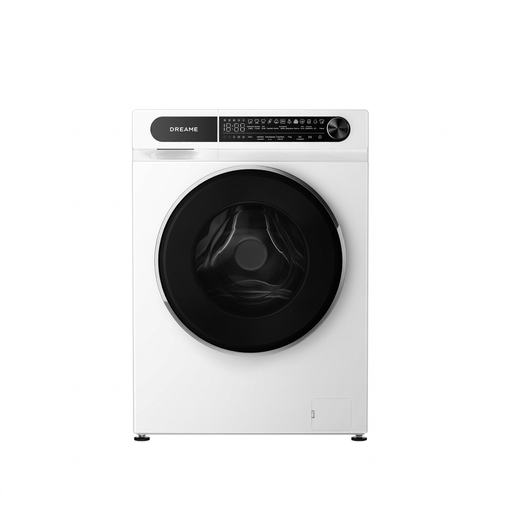 Image unavailable
This 8 kg front-loading washing machine may be worth considering if you need that capacity. If your space is shallow, compare the appliance’s dimensions, installation clearances and door opening with your measurements. If you’re planning a stack, check that the model numbers and kit are compatible.
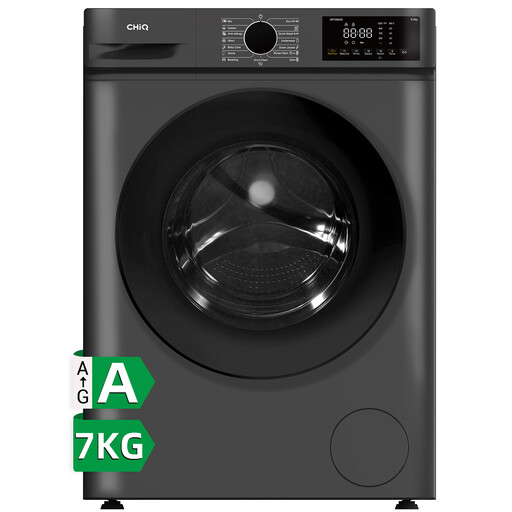 Image unavailable
Its stated capacity of 7 kg falls within Que Choisir’s 5 to 7 kg guideline for one or two people. The product name also lists a spin speed of 1200 tr/min and 16 programmes. For a tight space, check the width, height and depth, as well as the clearance needed for the door; check separately whether it’s compatible with a stacking kit.
No. It’s mainly a solution when width is limited: Que Choisir says top-loaders are generally 40 to 46 cm wide. However, you’ll need enough space above to open the lid. If depth is your main constraint, compare slim front-loaders instead.
Que Choisir suggests 5 to 7 kg for one or two people and 7 to 8 kg for an average family. Match your choice to the loads you actually wash, especially sheets and towels: a drum that’s too small may mean running several cycles.
No. Check that the model numbers of the washing machine and tumble dryer are listed as compatible with the kit you choose. Bosch, for example, says its 00717524 kit requires a standard-size washing machine more than 55 cm deep and excludes some Series 2 models.
In particular, compare the durability index for the model you’re considering. According to ADEME, washing machines have been covered by this index since April 2025, with equal weight given to reliability and repairability. Also check the documentation for your chosen model to find out about its installation requirements.
Yes. Check doorways, stairs or lifts, as well as the available space where the washing machine will go. Electrolux recommends preparing this area before delivery and states that its installers don’t carry out carpentry, plumbing or electrical work.