A narrow space
If the appliance needs to fit between two units or in a small bathroom, start by measuring the available width. UFC-Que Choisir generally puts top-loading washing machines at 40 to 46 cm wide; also check that the lid can open fully.


If width is limited, consider a top-loading washing machine. If you have around 60 cm of width but little depth, compare slim front-loaders. A compact model is best suited to smaller loads when space is especially tight, while a standard front-loader may still work if its dimensions and door clearance allow. Before choosing, measure the space needed for connections and to open the door, then match the capacity to your usual laundry loads.
If the appliance needs to fit between two units or in a small bathroom, start by measuring the available width. UFC-Que Choisir generally puts top-loading washing machines at 40 to 46 cm wide; also check that the lid can open fully.
If you have around 60 cm of width but little clearance behind the machine, a slim front-loader is worth considering. Electrolux describes this category as generally 33 to 45 cm deep. You’ll still need to allow space for connections and access to the door.
If the washing machine needs to fit under a worktop, check the available height and the instructions for the front-loading model you’re considering. If you’re stacking it with a tumble dryer, check that both appliances and the stacking kit are compatible before buying.
Start by measuring the space and access points, then compare the formats that will fit with your laundry needs and the conditions in the room.
| Consideration | What to check | Your needs |
|---|---|---|
| Size and access | Measure the available width, height and depth, then allow for connections and door clearance. UFC-Que Choisir gives a width of 40 to 46 cm for top-loaders; Electrolux describes slim front-loaders as generally 33 to 45 cm deep and around 60 cm wide. | I need to be able to install the machine and open the lid or door without blocking the way. |
| Capacity | Compare the capacity in kg with the size of your household, how often you do laundry and whether you wash bulky items. In its guide to small spaces, UFC-Que Choisir suggests 5 to 7 kg as a guide for one or two people. | My usual loads need to fit in the drum without making me run extra cycles, and I sometimes wash bulkier items too. |
| Spin noise | Compare the stated dB ratings for the same cycle phase and, if possible, look for tests of the specific models. The type of loading alone won’t tell you how noisy a machine is. | The machine will be near a living room or bedroom, so its noise level during the spin cycle matters to me. |
| Durability and maintenance | For relevant washing machines sold in France, compare the durability index for the exact model. According to ADEME, washing machines have also been required to display this index since April 2025. Check the maintenance and repair information for the specific model too. | I don’t want to choose based on size alone: how easy the machine is to maintain and repair matters to me too. |
An appliance might fit between two units but still leave too little depth for the connections, or too little room to open the door or lid.
Measure the space in all three dimensions, allow for the necessary clearance and check the delivery route. Then compare these measurements with the specifications and manual for the exact model.
A drum that’s too small can mean more cycles and make it harder to wash bulky items. UFC-Que Choisir suggests 5 to 7 kg as a starting point for one or two people, which you can adjust to suit your usual loads.
Before choosing a compact model, estimate how much laundry you wash in each cycle, including sheets and other bulky items.
Two washing machines of the same type can differ in how noisy they are, how they spin and how they rinse. A top-loader or slim model isn’t automatically quiet.
Compare the stated spin-cycle noise for each model you’re considering and, where available, look at independent test results for those specific models.
Suitable dimensions alone don’t tell you how easy an appliance is to repair or how reliable it is. According to ADEME, washing machines sold in France have been required to display a durability index since April 2025.
Compare the index for the specific models you’re considering, and check their maintenance and repair information.
These models show how different formats can vary; their dimensions and capacities don’t represent every appliance from each brand.
The TW 621CS SENSE WASH FR is an example of a top-loader to consider when space is limited widthways.
The slim front-loading EW6S3626XA is worth considering when depth is limited but there’s still room for a front-loader widthways.
The WGE03207FR is a front-loader to consider if your space can accommodate a standard-sized appliance.
The BT16022 is another top-loader to consider for a space that’s narrow widthways.
These five models are front-loaders with capacities of 8 or 9 kg. Compare them with the space you have available: some are designed for shallower spaces, while others need a deeper alcove. This selection doesn’t replace comparing top-loaders if width is your main constraint.
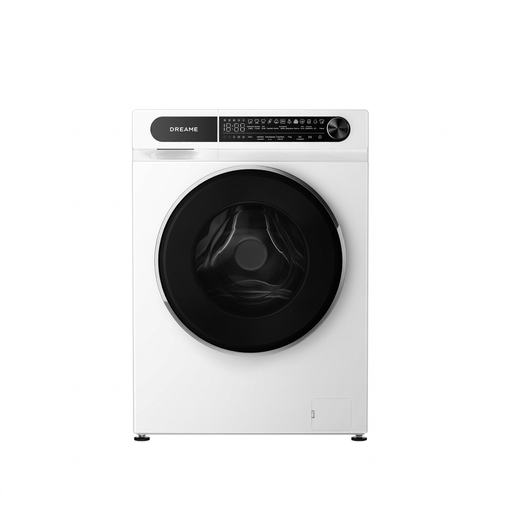 Image unavailable
Worth considering if you’re looking for an 8 kg front-loader for a space with limited depth. Before choosing it, check its installation dimensions, connections and door clearance against your room.
 Image unavailable
This 8 kg front-loader has a stated spin speed of 1 400 tr/min. If depth is limited in your room, check the total space needed for installation and keep the area in front of the door clear.
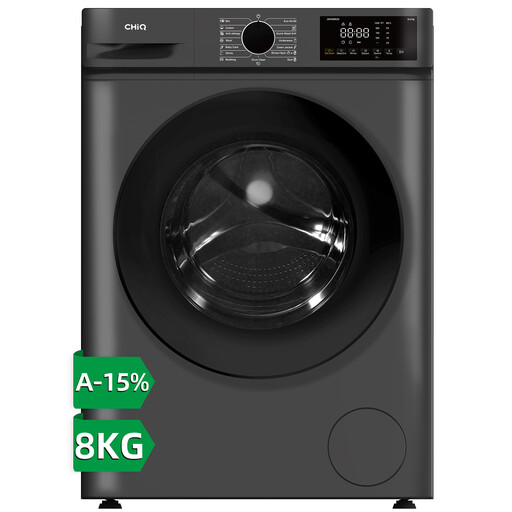 Image unavailable
This 8 kg front-loader has a stated spin speed of 1 400 tr/min and 16 programmes. To see if it will fit in a narrow space, check its full dimensions and allow room for connections and the door.
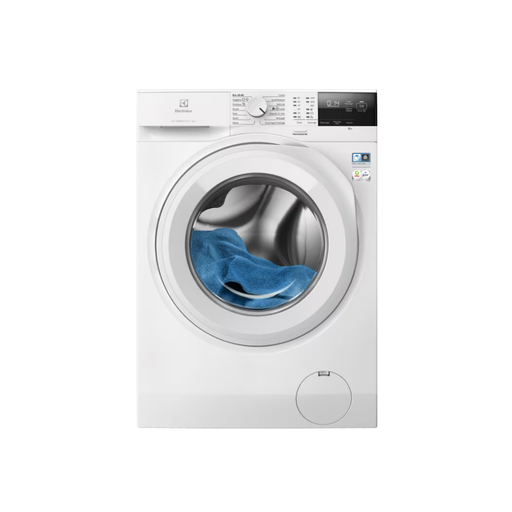 Image unavailable
This 8 kg front-loader has a stated spin speed of 1 400 tr/min. Consider it if your space can accommodate a standard front-loader, while also allowing room for connections and to open the door.
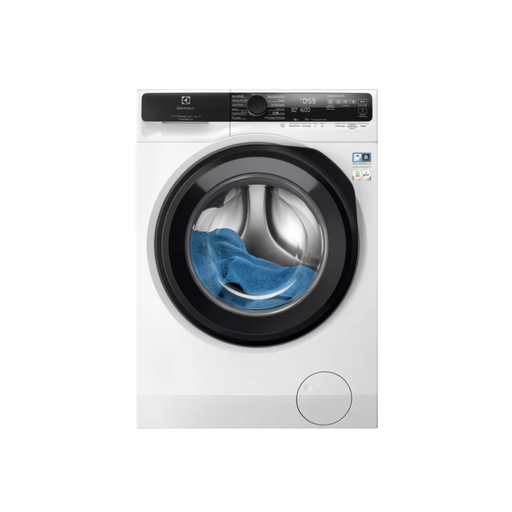 Image unavailable
This 9 kg front-loader has a stated spin speed of 1 600 tr/min. Consider whether its capacity suits your usual loads, and check that the space, connections and access to the door will allow you to install it.
No: it’s mainly a solution when width is limited. UFC-Que Choisir generally puts top-loaders at 40 to 46 cm wide, but you’ll need space above the machine for the lid. If you’re more short of depth than width, compare the dimensions of a slim front-loader and the clearance needed in front of its door.
UFC-Que Choisir suggests 5 to 7 kg as a guide for one or two people in its guide to small spaces. Adjust this to suit how often you do laundry and whether you wash bulky items: a drum that’s too small could mean running more cycles.
Check this for the specific models and layout. For under-worktop installation, compare the available height with the washing machine’s dimensions and installation instructions. For stacking, check that both appliances and the intended stacking kit are compatible.
Compare the durability index for both models, then check their maintenance and repair information. According to ADEME, washing machines sold in France have also been required to display this index since April 2025; a model’s rating doesn’t apply to the whole brand.
Measure the alcove’s width, height and depth, as well as the route the appliance will need to take. Allow space for connections and to open the door or lid, then check the installation requirements in the manual for the model you’ve chosen.