What should you check before choosing?
Top-loading washing machine
Worth considering: when you have around 40 cm of width, a layout for which UFC-Que Choisir recommends a top-loading machine.
Bear in mind: you’ll need clear space above the lid; a top-loader won’t dry your laundry.
Front-loading washing machine
Worth considering: if you have around 60 cm of width and room to open the door; according to UFC-Que Choisir, a slim model reduces the depth instead.
Bear in mind: the machine’s overall depth and the space needed in front of the door, even if the body fits into the alcove.
Washer-dryer
Worth considering: if combining washing and drying in one appliance solves your space constraints.
Bear in mind: the drying load is smaller than the washing load; UFC-Que Choisir also notes that drying cycles take longer and that water consumption is worth checking.
Once you’ve chosen a format, compare spin performance and drying conditions. Even well-spun laundry releases moisture as it dries in the room.
| Priority | What to check | Think about your needs |
|---|
| Space and access |
Measure the overall height, width and depth. Check that the door or lid can open, that there’s enough space to move around, and that the connections match the model’s installation instructions. |
I want to be able to load the machine and move around the room, not just fit it into its space. |
| Spin performance |
Compare the spin efficiency class and, if published, the residual moisture level; don’t rely on rpm alone. ADEME recommends a class A spin rating to help laundry dry indoors. |
I dry laundry on an airer, so I want to reduce the amount of water left in it after washing, while keeping the room well ventilated. |
| Noise and stability |
Check the spin-cycle noise level on the label. Install the machine on a hard, level floor and make sure the load is distributed evenly. |
In a small home, spin-cycle noise matters to me, especially if the machine is near a room that’s in use. |
| Capacity and cycles |
Choose a washing capacity in kilograms that suits your household’s laundry. For a washer-dryer, compare the washing and drying capacities separately. |
I want to know whether a full wash load can be dried in one go or whether I’ll need to split it. |
| Consumption and durability |
Compare consumption figures for the same type of cycle, and check washing-and-drying consumption separately. In France, according to the Ministry of the Economy, the durability index, scored out of 10, has applied to the relevant front-loading and top-loading washing machines since 8 April 2025. |
I want to compare consumption with how I actually use the machine and check the durability information for the model I’m considering. |
Which models from different brands are worth comparing?
These models illustrate different formats and space constraints; their specifications don’t apply to every appliance from each brand.
Bosch
The WGE03207FR is an 8 kg front-loader, while the WNA13400FF is a washer-dryer with an 8 kg washing capacity and a 5 kg drying capacity, according to Bosch France’s product specifications.
- The published dimensions help you compare two uses: 848 × 598 × 588 mm for the WGE03207FR and 848 × 598 × 590 mm for the WNA13400FF.
- With the WNA13400FF, an 8 kg wash load exceeds its 5 kg drying capacity.
AEG
The LTR8C7331A is a freestanding 7 kg top-loader measuring 903 × 397 × 599 mm, according to AEG France’s product specifications.
- Its published width of 397 mm is a useful reference when assessing a narrow space; its product specifications state 45 kWh/100 cycles and 44 litres/cycle.
- You’ll need to keep the space above the lid clear, and this washing machine doesn’t dry laundry automatically.
Electrolux
The EWQ6412B top-loader has a stated capacity of 6 kg and measures 890 × 400 × 600 mm, according to Electrolux France.
- The product specifications list a maximum spin speed of 1,200 rpm, energy class B, 48 kWh/100 cycles and 43 litres/cycle.
- Check whether 6 kg suits your usual laundry load and whether the lid can open fully.
LG
The F852SV52IRS washer-dryer illustrates the importance of depth, with a stated washing capacity of 8.5 kg and drying capacity of 5 kg, according to LG France.
- Its product specifications distinguish between a body depth of 475 mm, 530 mm including protruding parts, and 1,015 mm with the door open to 90°.
- These measurements and capacities apply to the F852SV52IRS; they don’t tell you whether another LG model will fit your space.
Which Joybuy models should you consider?
This selection from Joybuy includes two front-loading washing machines and a washer-dryer. Before choosing, compare the dimensions and installation requirements of the exact model with the space you have.
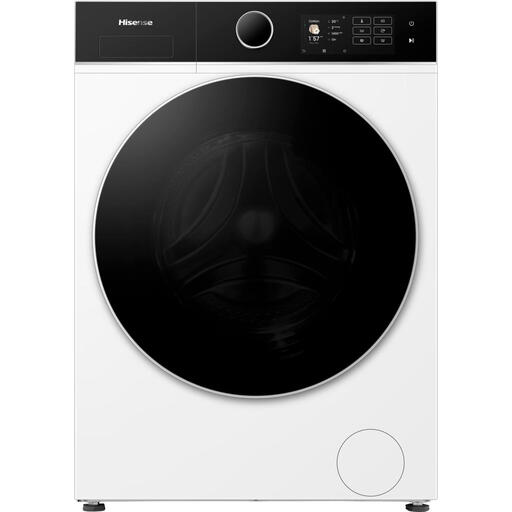 Image unavailable
Hisense WF5I8043BWF, 8 kg front-loading washing machine
If depth is a concern, compare the stated depth of 470 mm and width of 595 mm with your measurements, allowing space for the door to open too. This model has a stated capacity of 8 kg, a maximum spin speed of 1,400 rpm and a spin efficiency class of B. If you dry laundry indoors, also check the residual moisture figure given for this model.
View on Joybuy
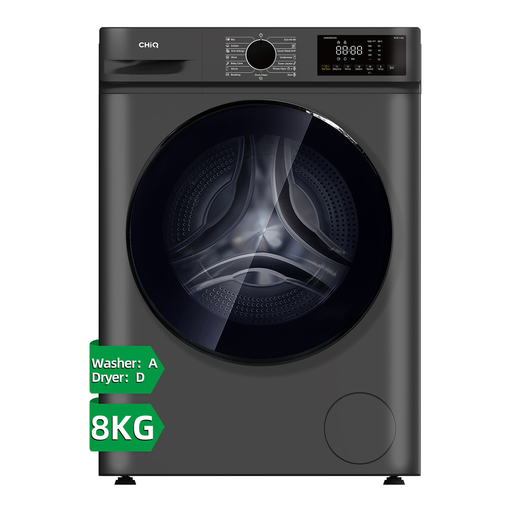 Image unavailable
CHiQ JW85882HG, 8/5 kg washer-dryer
This model combines washing and drying if you don’t want to make space for two appliances. It has a stated washing capacity of 8 kg, a drying capacity of 5 kg and a maximum spin speed of 1,400 rpm, so you’ll need to reduce a full washing load to dry it in one go. The listed dimensions are inconsistent; check the overall dimensions and the space needed with the door open in this model’s product details and manual.
View on Joybuy
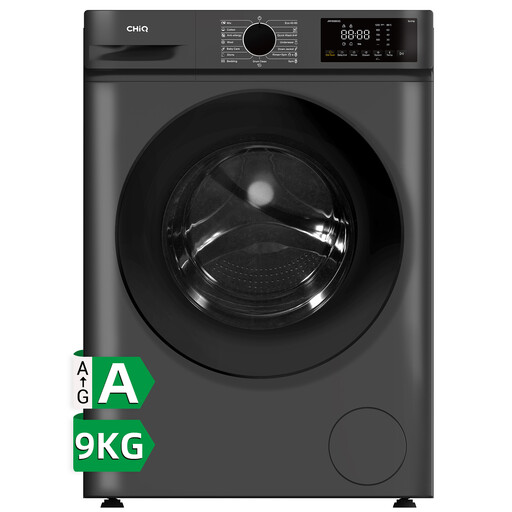 Image unavailable
CHiQ JW95883G, 9 kg front-loading washing machine
Its stated capacity of 9 kg may suit a household with large laundry loads, provided there’s room for the appliance and its door. The model has a stated maximum spin speed of 1,400 rpm, but this figure alone doesn’t tell you how much moisture will remain in the laundry after spinning. The listed width and depth are inconsistent, so confirm the exact dimensions before checking whether it will fit.
View on Joybuy
Frequently asked questions
Is a spin speed of 1,400 rpm enough to help laundry dry faster indoors?
Maximum spin speed alone doesn’t tell you how well the machine will perform. Compare the spin efficiency class and the residual moisture figure, where published. ADEME recommends a class A spin rating to help laundry dry indoors; on some machines, an unbalanced load can reduce the speed reached.
Where should you dry laundry in a small home?
Choose a spacious, well-ventilated room or one with a mechanical ventilation extraction point. The Q-WASH study cited by ADEME highlights how much moisture drying laundry on an airer releases into the air indoors, so even effective spinning doesn’t remove the need to ventilate.
What measurements should you take before ordering?
Measure the available height, width and depth, then check there’s enough access with the door open or the lid raised, as well as space for the connections specified in the manual. LG’s specifications for the F852SV52IRS show how much the measurements can vary: 475 mm for the body, 530 mm including protruding parts, and 1,015 mm with the door open to 90°.
Can a washer-dryer dry the whole load it can wash?
Not necessarily: drying capacity is generally lower than washing capacity, as UFC-Que Choisir points out. For example, the Bosch WNA13400FF has a washing capacity of 8 kg, but its continuous wash-and-dry cycle is limited to 5 kg; larger loads need to be reduced before drying.
Which durability rating should you look for when buying a washing machine in France?
According to the Ministry of the Economy, the durability index, scored out of 10, has applied to the relevant front-loading and top-loading washing machines since 8 April 2025. Check the details of the index for the model you’re considering; the score doesn’t replace checking its dimensions and whether it suits your needs.


