You’re short on width
In a bathroom or a narrow alcove, you need to fit in a washing machine without blocking the way through. The direction the door opens matters just as much as the appliance’s width.


Start by identifying the dimension that’s really limiting your options: a top-loading washing machine is best for tight spaces with limited width, while a slim front-loader is designed for limited depth. To dry clothes at home, a stacked set-up keeps two appliances within the same floor space, provided they’re compatible and can be stacked safely. A washer-dryer takes up just one space, but its drying capacity is lower than its washing capacity.
In a bathroom or a narrow alcove, you need to fit in a washing machine without blocking the way through. The direction the door opens matters just as much as the appliance’s width.
You have enough width for a front-loading appliance, but not enough depth, particularly if it needs to fit under a worktop. You’ll also need room to open the door and access the connections.
If a permanent clothes airer takes up too much space, your choice comes down to two stacked appliances or a washer-dryer. The available height, whether the appliances are compatible and how much laundry you need to dry will all affect your decision.
Measure the available width, depth and height, then check that doors can open and connections are accessible. If drying clothes at home is essential, compare the space needed for a stacked set-up with that needed for a single appliance.
| Consideration | What to check | Who is this for? |
|---|---|---|
| Available width | Appliance width and the space above it needed to open the lid of a top-loader. | When the alcove is very narrow, my main concern is fitting the washing machine in without blocking the way through. Around 25% of consumers would prioritise this width constraint. |
| Depth and capacity | Depth including connections, clearance for the door and a washing capacity suited to your usual laundry load. | Under a worktop, I’m looking for a shallower appliance without having to do more loads. Around 25% of consumers would have this priority. |
| Separate dryer in a stacked set-up | Accessible height, compatibility between the two appliances and a suitable stacking kit. | If I have enough height, I want to keep a separate tumble dryer without using a second spot on the floor. Around 31% of consumers would prioritise having a separate dryer. |
| Washing and drying in one appliance | Separate washing and drying capacities, cycle duration and energy and water consumption for the combined cycle. | I only have room for one appliance and want to wash and dry in one go, even if that means drying a smaller load. Around 19% of consumers would prioritise having a single appliance. |
According to UFC-Que Choisir, top-loading washing machines listed for the French market are 40 to 46 cm wide, while the compact front-loaders featured are still 60 cm wide but have a reduced depth of 33–45 cm. These measurements describe appliance formats, not every model, so check the product specifications for the one you choose. For a stacked set-up, UFC-Que Choisir recommends choosing front-loading appliances of similar dimensions and checking they’re compatible. For a washer-dryer, the organisation notes that drying capacity is lower than washing capacity.
A shallow front-loader still needs space in front of the door, while a top-loader needs room to open its lid upwards. So an appliance may fit in the alcove but still be difficult to use.
Before comparing specifications, measure the available width, depth and height, check how far doors need to swing open and make sure you can access the connections.
An unstable stack can cause an accident or damage. UFC-Que Choisir recommends checking the manuals, using a suitable stacking kit and placing the tumble dryer on top of the washing machine.
Check that the appliance models and kit are compatible, then make sure the washing machine is level on a flat, firm and stable floor.
Remember to allow for a compatible kit and access to the appliances in case they need servicing.
A washer-dryer may be able to wash more laundry than it can dry in the next cycle. UFC-Que Choisir also advises checking cycle duration and energy and water consumption, which can vary by programme.
Compare the washing and drying capacities separately, and check the duration and consumption figures for the wash-and-dry cycle that suits your needs.
If the load is too large for drying, you may need to split it before starting this stage.
When an appliance is near a shower or bath, choosing its location and planning the electrical installation are especially important.
Before buying, ask a qualified professional to check that the proposed location and its power supply are suitable for the appliance.
These models combine washing and drying in a single appliance. If your main constraint is width, depth or the option to stack two appliances, first check which type of set-up will work best for your space.
 Image unavailable
Worth considering if you want to wash and dry with a single appliance. Its stated capacity is 11 kg for washing and 6 kg for drying, so stick to the drying limit when running both stages one after the other. Also check the appliance’s dimensions and the clearance needed in your space.
 Image unavailable
Another option for combining both functions in one space, with a stated washing capacity of 10 kg and a drying capacity of 6 kg. If you plan to run a combined cycle, make sure the load is within the drying capacity and check the duration and consumption figures for your chosen programme.
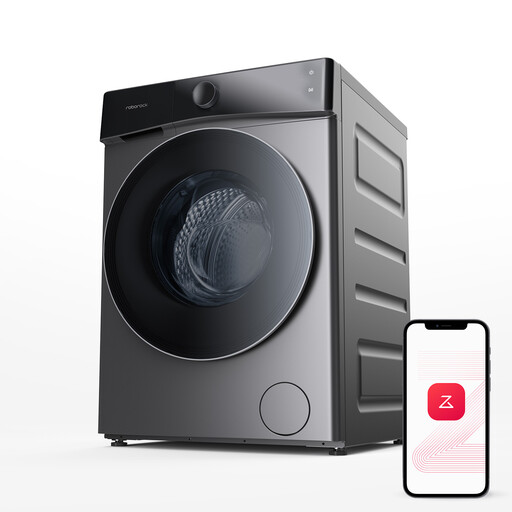 Image unavailable
This model combines washing and drying in one appliance. Its product name lists 27 washing programmes and app control. Before choosing it for a small home, check its dimensions, installation requirements and combined-cycle specifications.
Measure the available width, depth and height, then check how much space you need to open the door or lid. Allow for the connections and, if the appliance will sit under a worktop, check its full dimensions in the product specifications.
No. Check the manuals for both models and make sure they’re compatible with the stacking kit before building a stack. UFC-Que Choisir recommends front-loading appliances of similar dimensions, with the tumble dryer above the washing machine and the whole set-up installed securely.
Not if the load exceeds its drying capacity, which UFC-Que Choisir says is lower than its washing capacity. To run both stages without removing any laundry, keep the load within the stated drying capacity.
A condenser model, including a heat-pump tumble dryer, doesn’t need the external vent required by a vented tumble dryer, according to UFC-Que Choisir. Even so, check the model’s installation requirements and the space available before pairing it with a washing machine.