Anyone with a narrow access route
If width is making installation difficult, a top-loading washing machine is worth considering. Measure the access route to its final position too, and leave enough room above for the lid to open.


Measure the width, the depth including connections, and the space needed to open the appliance before choosing based on your drying needs. A top-loading washing machine is best suited to a width restriction, while a shallow front-loader suits a less deep recess. For mechanical drying, compare a compatible stacked set-up with a washer-dryer, whose drying capacity may be lower than its washing capacity.
If width is making installation difficult, a top-loading washing machine is worth considering. Measure the access route to its final position too, and leave enough room above for the lid to open.
If there’s enough width for a front-loader but it might protrude into the room, compare the depth of different front-loading models and allow space for the connections.
If mechanical drying is part of your routine, you’ll also need to consider how many appliances to have. A stacked set-up requires compatible appliances, while a washer-dryer combines both functions, with the washing and drying capacities needing to be compared separately.
First, work out what’s actually limiting the space: the width, the depth, the room available for two appliances or whether you can only install one. Even a model described as ‘compact’ should be judged on its exact dimensions and capacity.
| Space constraint | What to check | Customers affected |
|---|---|---|
| Limited width | Measure the recess and the delivery access route. For a top-loader, allow room for the lid to open. | When the access route is too narrow for the washing machine I had in mind, I first look for an appliance that can get through and be opened once it’s in place. Around 23% of consumers put this width restriction first. |
| Limited depth | Compare the appliance’s depth with the space needed for hoses, the plug and the door to open. | In a narrow kitchen or bathroom, I don’t want an appliance to encroach on the walkway. Depth is the top priority for around 23% of consumers. |
| Frequent drying | For a stacked set-up, confirm that both appliances and the stacking kit are compatible, and check that the floor is stable and there’s enough height. | If I dry laundry regularly, I want to keep two appliances without having to make room for them side by side. Having two appliances for drying is the top priority for around 31% of consumers. |
| Room for one appliance | For a washer-dryer, compare the washing and drying capacities separately. | When I can only install one appliance, I need to be able to wash and sometimes dry my laundry in it, even if that means splitting a load. Around 23% of consumers prioritise having just one appliance. |
An appliance may fit in the recess but still prevent a door from opening or leave too little room for the connections.
Measure the available width, height and depth, then check how far the door opens and the delivery route into the room.
Compatibility depends on the kit and the appliances in question. For example, Bosch specifies that the WTZ27400 kit is intended, among other things, for a standard washing machine with a depth of more than 55 cm. This threshold does not apply to all kits.
Before planning a stacked set-up, check the exact model numbers of the washing machine, tumble dryer and kit in the manufacturer’s documentation.
An unsuitable kit could mean rethinking your planned installation.
This isn’t the arrangement described by UFC-Que Choisir for a stacked set-up: a washing machine filled with water and subject to spin-cycle vibrations should be on the bottom.
Only place the tumble dryer on top if the appliances and kit are compatible, and the floor is level and stable.
These figures can differ: Electrolux lists a 10 kg washing capacity and a 6 kg drying capacity for the EW9W1166RA.
Choose based on how much laundry you want to dry in each cycle, not just the washing capacity.
If the wash load exceeds the drying capacity, you’ll need to remove some laundry or run more than one drying cycle.
The range includes options to consider, from a narrow top-loading washing machine to stacking accessories, provided you check each model number.
Two models illustrate different options: reducing the depth of a front-loading washing machine or combining washing and drying.
The TDLR 62667 FR top-loader is worth considering if a top-opening appliance suits your space.
These Joybuy appliances include washer-dryers that combine washing and drying in one machine, as well as a front-loading washing machine for when drying can be arranged separately. Compare their full dimensions with your available space before choosing.
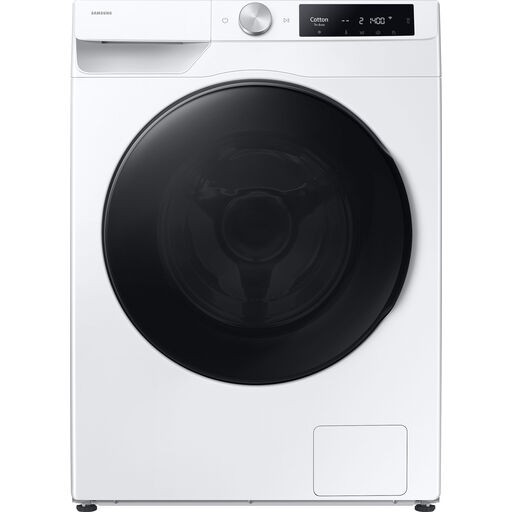 Image unavailable
Worth considering if you need one appliance for both washing and drying. The listed capacities are 11 kg for washing and 6 kg for drying, so you’ll need to reduce a full wash load before drying it. Check the space needed for connections and to open the door.
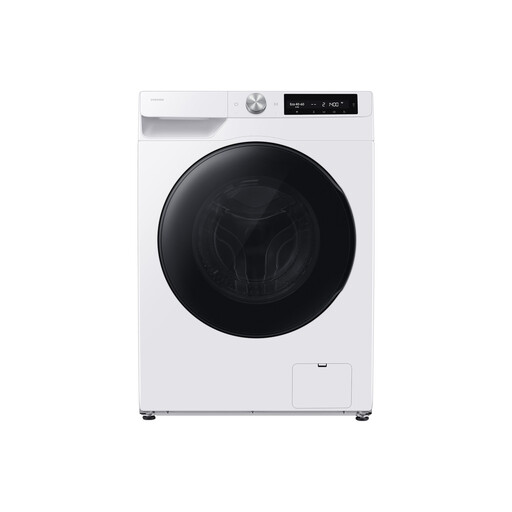 Image unavailable
Another option if you need one appliance for both washing and drying. The listed capacities are 10 kg for washing and 6 kg for drying, so allow for removing some of a full load before drying. Check the clearance needed in your recess.
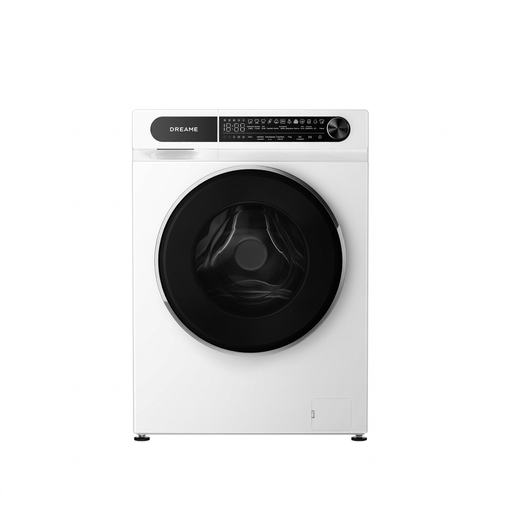 Image unavailable
Worth considering for washing if you can arrange drying separately. The listed capacity is 8 kg. Before choosing it for a shallow recess, compare its full dimensions and the space needed for the hoses with your available space.
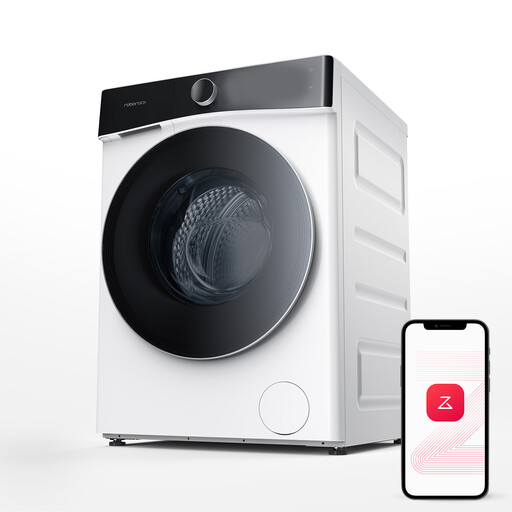 Image unavailable
Combines washing and drying when there’s only room for one appliance. The listed capacities are 10 kg for washing and 6 kg for drying. Check whether your usual loads can be dried without splitting them. Measure the space too, and check the dimensions required for installation.
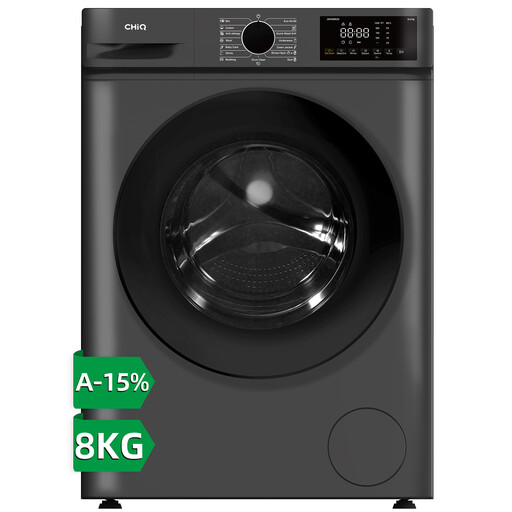 Image unavailable
For washing, with a separate drying solution if needed. The model name indicates an 8 kg capacity and a spin speed of 1 400 tr/min. Check its full dimensions, including the connections, before choosing it for a space with limited room.
Not in the stacked arrangement described by UFC-Que Choisir: this uses a tumble dryer above a front-loading washing machine, with a compatible installation. A top-loader needs to remain accessible from above for loading.
Don’t assume so. Check the model numbers of both appliances in the kit instructions and the manufacturers’ guidance. For example, Bosch instructions rule out certain combinations of appliances from different manufacturers or with different dimensions if the appropriate kit isn’t used. This guidance applies to the models covered by those instructions.
Compare the two capacities for the specific model: they may not be the same. For example, Electrolux lists a 10 kg washing capacity and a 6 kg drying capacity for the EW9W1166RA, so a full wash load will need to be reduced or dried in more than one cycle.
Measure the access route and the space where the appliance will go, including room for the door to open and for the connections. Before planning the installation, also locate the water inlet, waste outlet and power supply needed for your chosen model.
No. Choose a capacity to suit the amount of laundry you have and how often you wash, as recommended by ADEME. In a small space, also check that the appliance’s dimensions fit and, for a washer-dryer, that its drying capacity meets your needs.