Households with room for just one appliance
A washer-dryer lets you wash and dry your laundry in the same machine. However, check how much laundry you can dry after a wash: UFC-Que Choisir says its drying capacity is lower than its washing capacity.


If you can only fit one appliance in your home, a washer-dryer could be the answer, as long as the load you want to dry is within its drying capacity, which is often lower than its washing capacity, according to UFC-Que Choisir. If you have enough height and compatible appliances, stacking a separate washing machine and tumble dryer is another way to save floor space. A clothes airer is also an option if you’re happy to dry your laundry without a machine cycle.
A washer-dryer lets you wash and dry your laundry in the same machine. However, check how much laundry you can dry after a wash: UFC-Que Choisir says its drying capacity is lower than its washing capacity.
Stacking lets you use two separate appliances. Before choosing this setup, check the dimensions and compatibility of the washing machine, tumble dryer and stacking kit, following Bosch’s guidance.
If you only machine-dry certain loads, compare their size with the stated drying capacity. You could also keep a clothes airer for laundry you don’t want to machine-dry, if you have enough space for it at home.
Worth considering: when you can only install one appliance and your usual laundry load fits within its drying capacity.
The trade-off: UFC-Que Choisir notes that drying capacity is lower than washing capacity, drying cycles take longer and most of the models it discusses use water during drying.
Worth considering: if you have enough height for a separate tumble dryer with a capacity that suits the loads you need to dry.
The trade-off: you’ll need compatible appliances and a stacking kit, as well as a space that fits their dimensions. Bosch recommends checking compatibility before installation.
Worth considering: if you can make room for a clothes airer and are happy to wait for your laundry to dry after washing.
The trade-off: this option won’t let you move straight from washing to machine-drying.
| Criterion | What to check | What I need |
|---|---|---|
| Load to be dried | Compare the washing and drying capacities in kg, then check the load allowed for the programmes you’ll use. The European Commission lists separate capacities for washer-dryers. | I want to dry my laundry without having to take some of the damp clothes out first. |
| Space and installation | Measure the height, depth and clearance needed. For a stacked setup, confirm with the manufacturer that the two appliances and stacking kit are compatible. | Floor space is limited, so I need to know whether one appliance or a stacked setup will actually fit. |
| Water, energy and cycle time | For a washer-dryer, check the figures for the full cycle, not just washing. The European Commission label includes energy use per 100 cycles, water per cycle and cycle duration. | I want to compare the programme I’ll use and know when my laundry will be ready, rather than looking at the washing energy class alone. |
| Maintenance | Check the model’s manual to find out about filters, any containers and routine maintenance. Make sure you’ll be able to reach the relevant parts once the appliance is installed. | I’d rather have a setup that lets me carry out routine maintenance without having to struggle to move the appliance. |
Drying capacity may be lower: the Bosch WNG24402FR and AEG LWR98B166X product specifications list washing and drying capacities of 9/6 kg and 10/6 kg respectively. So you may not be able to dry a full washing load in one go.
Compare your largest load for drying with the washing and drying capacities, and the capacity of the programme you plan to use.
On its own, this doesn’t tell you how much water and energy the full wash-and-dry cycle uses or how long it takes. UFC-Que Choisir notes, for example, that most of the washer-dryers it discusses use water during drying.
On the model’s label, compare the figures for the full programme you expect to use.
Similar widths aren’t enough to guarantee compatibility. Bosch advises checking that the appliances are compatible and using a kit designed for the tumble dryer.
Before ordering, check the model numbers of both appliances, the manufacturer’s recommended kit, the required depth and the dimensions of the stacked setup.
The stacking kit is an extra accessory to budget for, on top of the two appliances.
Cycle time depends on the programme, load and model. The words ‘heat pump’ alone won’t tell you when your laundry will be ready.
If you need to run one load after another, check the stated cycle times for a full and half load on the model you’re considering.
AEG France’s product information for the LWR98B166X describes a heat-pump washer-dryer with a 10 kg washing capacity and a 6 kg drying capacity.
Bosch France lists a 9 kg washing capacity and a 6 kg wash-and-dry capacity for the WNG24402FR, with a stated depth of 590 mm.
LG France describes the F964R35WR as a washer-dryer with a 9 kg washing capacity and a 6 kg drying capacity.
These three models combine washing and drying in one appliance. Each has a stated drying capacity of 6 kg. Compare this with your usual loads, then check the dimensions and full-cycle figures for the space and use you have in mind.
 Image unavailable
If you’re looking for a single appliance, this model combines a stated washing capacity of 11 kg with a drying capacity of 6 kg. If you wash a load of more than 6 kg, don’t assume you’ll be able to dry it all without taking some laundry out. Check the available space and the model’s wash-and-dry cycle figures on the label.
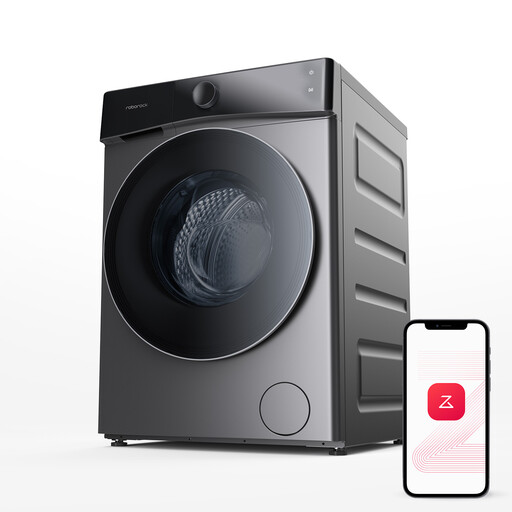 Image unavailable
This washer-dryer is designed for households that can only install one appliance and whose loads fit within its stated 6 kg drying capacity, compared with 10 kg for washing. The product name mentions 27 programmes, app control, automatic dosing and the LintClear system. Check the features and maintenance instructions in the manual, as well as the dimensions and full-cycle figures, before choosing.
 Image unavailable
This model combines washing and drying in one appliance, with a stated washing capacity of 10 kg and a drying capacity of 6 kg. To dry a load without taking any laundry out, make sure it fits within the drying capacity. Check the dimensions, including the clearance needed, and compare the full-cycle figures on the label.
Not necessarily: washing and drying capacities are different. For example, Bosch lists a 9 kg washing capacity for the WNG24402FR, but a 6 kg capacity for its wash-and-dry cycle. To run both stages without taking any laundry out, stick to the drying capacity for the programme you’re using.
Compare the figures for the cycle you’ll use, particularly those for a complete wash-and-dry cycle if you want to run both stages one after the other. The European Commission label includes energy use per 100 cycles, water per cycle, cycle duration and noise. Make sure you don’t confuse the full-cycle figures with those for washing alone.
No. Check that the two models are compatible and that there’s a suitable stacking kit. Bosch also advises checking that the appliances line up correctly; depth requirements depend on the kit you choose.
No. The technology alone doesn’t determine how long a programme takes. If you need to know when a cycle will finish, check the times stated for the model, programme and load you plan to use.