Couples who want to avoid leftovers
For a starter or a light dinner, several small tins make it easy to match the amount to your menu. Check the drained net weight, if it’s listed, before deciding how many tins to open.


For dinner for two, choose one or two small tins depending on the side dishes. If the drained net weight is given, compare it rather than looking only at the total weight. Sardines in olive oil work well in a simple meal, plain sardines let you choose the seasoning, and tomato sardines come ready prepared. If bones are a concern for either diner, look for an explicit ‘boneless’ label.
For a starter or a light dinner, several small tins make it easy to match the amount to your menu. Check the drained net weight, if it’s listed, before deciding how many tins to open.
If the central bone bothers either of you, look for a product explicitly labelled ‘boneless’. The fact that the sardines are sold as fillets does not, on its own, confirm that they are boneless.
Plain sardine fillets let you choose the seasoning, while olive oil or tomato recipes already have their own ingredients. The best option depends on what you plan to serve with the sardines.
To plan your meal, start with how much fish you want to serve alongside your side dishes. Then choose a recipe and check the details that matter to both diners.
| What to consider | What to check | Who it matters to |
|---|---|---|
| Amount to serve | Compare the drained net weight if it’s shown on the tin, then adjust the number of tins to suit your side dishes. | To avoid leftovers without running short of sardines at the table, I want to know how much fish each tin contains. Around 31% of shoppers put this question of format first. |
| Recipe and side dishes | Choose between plain sardines, olive oil and tomato preparations based on the ingredients list and the meal you have planned. | If the side dishes are already seasoned, I’d rather decide for myself what the tin adds to the plate. Around 31% of shoppers put how well it goes with the meal first. |
| Ingredients | Check the ingredients, highlighted allergens and nutritional information for the product you’re buying. If you’re comparing two recipes, pay particular attention to the salt per 100 g. | When the ingredients or salt content influence my choice, I need to compare the labels on the recipes I’m considering. Ingredients are the main deciding factor for around 23% of shoppers. |
| Bones | If it’s essential that there’s no central bone, look for a ‘boneless’ label on the exact product you’re considering. | At the table, one of us would like to enjoy the sardines without having to remove the central bone. This convenience is the top priority for around 15% of shoppers. |
Total weight includes the oil or sauce too. So two tins with the same total weight won’t necessarily contain the same amount of sardines to serve.
Compare the drained net weight if it’s shown, then decide how many tins you need based on the rest of the meal.
Auchan says that the ingredients in its 135 g tin of sardines in extra virgin olive oil may vary depending on the delivery or collection service and the date of purchase.
Before serving, check the ingredients, allergens and nutritional information on the tin for anything that matters to your diners.
These two terms don’t necessarily mean the same thing. If the central bone would get in the way of enjoying the sardines, the fact that they’re fillets doesn’t tell you whether they’re boneless.
Check that the product you choose is explicitly labelled ‘boneless’.
A recall applies to specific products, not every tin from a particular brand. On 24 September 2026, Carrefour published a recall for batch P L26/2194 of its 135 g Carrefour Classic' sardines in extra virgin olive oil, with a best-before date of 30 June 2031, due to the possible presence of undeclared crustaceans.
If you have this product, check the batch and best-before date on your tin against the recall notice before serving it. Do not eat a tin from the recalled batch.
The range includes whole sardines in extra virgin olive oil, a tomato recipe with no added oil, and products explicitly labelled boneless.
Its plain sardine fillets and tomato and vegetable fillets let you choose between a base to season yourself and a ready-prepared recipe.
One product in the range is sardines in extra virgin olive oil, sold in a 135 g tin.
The products listed include a 115 g organic tin and a 135 g tin of sardines in extra virgin olive oil.
The range includes 135 g tins of sardines in olive oil, 100 g tins of fillets in olive oil and 70 g tins of plain fillets.
These tins offer recipes in olive oil, plain, tomato and seasoned varieties. To put together dinner for two, first choose a recipe that suits both diners. Then check how much to serve from each tin and, if necessary, whether it contains bones.
 Image unavailable
For a plate where olive oil complements the sardines, this tin has a total weight of 140 g. Check the drained net weight on the packaging to work out how much fish you’ll have for two.
 Image unavailable
If one of you would rather avoid bones and choose your own seasoning, this product is described as boneless and preserved in water. The stated size is 98 g; check the tin to confirm how much to serve.
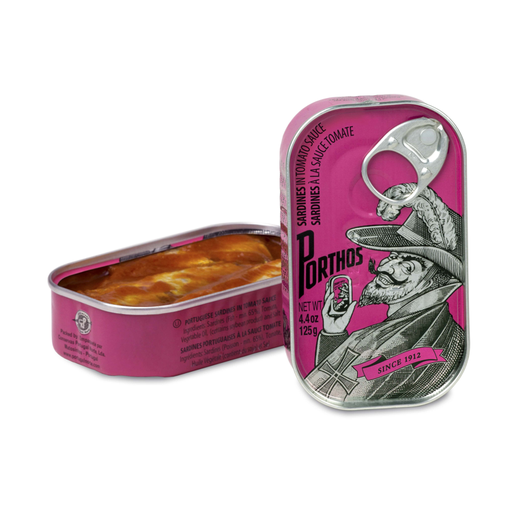 Image unavailable
If tomato sauce will go well with your side dishes, this product offers sardines in tomato sauce. The title gives the weights as 112/81 g: check the weight details on the tin before dividing the contents, and check whether it contains bones if that matters to you.
 Image unavailable
For a ready-seasoned dish, check that both diners enjoy Espelette pepper. The stated size is 115 g; check the drained net weight and any information about bones on the tin if these details influence your choice.
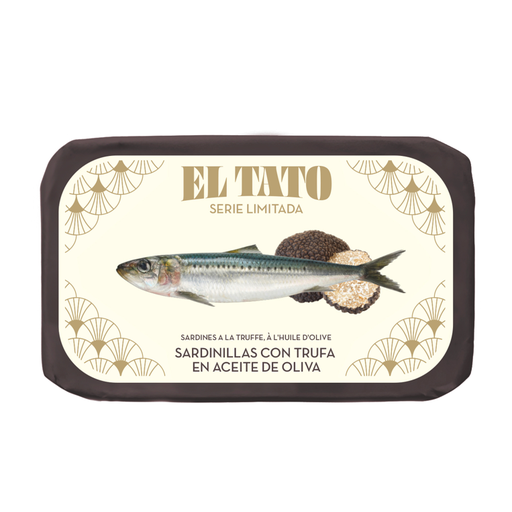 Image unavailable
If you both fancy a truffle recipe, this tin combines small sardines with olive oil and truffle. The title gives the figures as 16/20 and 115/81 g; check the packaging for what the weights mean, the ingredients and any information about bones before planning your portions.
Compare the drained net weight if it’s listed: this helps you distinguish the amount of fish from the total weight, which includes oil or sauce. Then choose the number of tins to suit your side dishes, rather than assuming one tin is a fixed serving.
Read the ingredients list on the tin you’re going to serve. The DGCCRF reminds shoppers that allergens must be highlighted on the labels of prepacked foods. Don’t rely only on the recipe name or a product listing you looked at earlier.
Follow the instructions on the product you’ve bought. For its plain sardine fillets, Saupiquet says to keep them in the fridge and eat them within two days of opening.
No. Compare the product, batch and best-before date on your tin with the details in the recall notice. Carrefour’s recall, published on 24 September 2026 due to the possible presence of undeclared crustaceans, covers batch P L26/2194 of its 135 g Carrefour Classic' sardines in extra virgin olive oil, with a best-before date of 30 June 2031. Do not eat a tin from this batch.