Small teams who take breaks together
If several people want coffee within a short time, compare how much you can make at once and what’s involved in serving each cup. A large water tank doesn’t, by itself, mean drinks are served all at once.


If several colleagues mainly want filter coffee at the same time, a carafe is better suited to that pace than making one cup at a time. For individual espressos, compare bean-to-cup and capsule machines based on the drinks you want and the maintenance your team can take on. If tea and infusions are just as popular as coffee, consider a kettle too. In every case, check how much you’ll need to serve during a break and assign someone to clean and descale the appliance.
If several people want coffee within a short time, compare how much you can make at once and what’s involved in serving each cup. A large water tank doesn’t, by itself, mean drinks are served all at once.
Decide who will refill the water, empty the grounds, clean the parts and descale the machine. Even a machine that measures out each cup needs regular attention.
If some people prefer coffee and others like tea, infusions or milk-based drinks, make a note of what people actually want before choosing an appliance. Then check the features of the specific model.
Start by counting how many drinks people want during the same break, then compare that pace with your team’s preferences and the maintenance involved.
Consider this if: several colleagues drink filter coffee together and someone can make a full carafe.
The trade-off: making a shared pot is less suited to individual espresso preferences or personalised drinks.
Consider this if: your team prefers individual espressos and can look after the beans, grounds and machine.
The trade-off: the tank serves several drinks, but they’re still mostly made and served one at a time.
Consider this if: most orders are for individual drinks and your team wants to make each cup using a capsule.
The trade-off: used capsules need to be collected and sorted, as well as the machine being maintained.
Consider this if: tea, infusions and instant drinks are an important part of your breaks.
The trade-off: hot water alone won’t make an espresso.
| Priority | What to check | What I need |
|---|---|---|
| Serving drinks during a break | Compare how much the appliance makes at once, the usual cup size and the number of consecutive brews needed. Moulinex states that its Subito FG5S0DE0 makes 1.25 L, or up to 10 large or 15 small cups; this isn’t the output of an individual bean-to-cup machine. | Several colleagues want coffee at the same time, so I’d rather know how many cups will be ready together than focus only on the tank size. |
| Choice of drinks | Check which drinks and sizes the exact model offers, as well as the ingredients you’ll need. A kettle provides hot water for tea or instant drinks, but can’t make espresso on its own. | Coffee isn’t the only drink our team wants; everyone should be able to make what they actually drink. |
| Shared maintenance | Check the manual to see which parts need washing, what needs emptying and how to descale the appliance. De’Longhi provides maintenance and descaling instructions for the Magnifica Start ECAM222.20.B, for example. | Refilling and cleaning need to be assigned to specific people, including when the usual colleague is away. |
| Consumables and waste | Work out which filters, beans, ground coffee or capsules you’ll need, then plan where to store them and how to sort the waste. For aluminium or plastic capsules, ADEME advises using the recycling stream for paper and packaging. | I want a simple routine for managing consumables and their packaging, rather than leaving used capsules or filters by the machine. |
A bean-to-cup machine’s tank lets you make several drinks, but it doesn’t turn a one-cup-at-a-time service into a shared pot.
Count how many coffees people want during the same 15-minute period. If demand peaks at the same time and is mainly for filter coffee, compare making a carafe with serving drinks individually.
Used capsules still need to be dealt with after each break. ADEME advises putting aluminium or plastic capsules in the recycling stream for paper and packaging.
Put a clearly labelled container near the machine and give your team clear sorting instructions. Also consider whether less individually packaged options would suit their habits.
Nespresso, Philips and De’Longhi manuals and support materials all include cleaning or descaling instructions. When an appliance is shared, you’ll also need to think about its parts and any residue after use.
Before buying, read the manual for the model you’re considering and share out regular tasks and descaling between a main contact and their back-up.
These examples cover specific ranges and models; they don’t mean that every appliance from a brand is suited to the same break-time routine.
The Moulinex Subito FG5S0DE0 and Morning FG2M0B10 filter coffee machines each have a 1.25 L carafe, according to the manufacturer.
The Magnifica Start ECAM222.20.B is an example of a bean-to-cup espresso machine for making individual coffees.
The 3200 Series EP3246/70 is an example of a bean-to-cup espresso machine. Philips lists five drink options and its LatteGo system.
Nespresso describes the Essenza Mini as a capsule machine that makes individual espressos or lungos.
The Tefal KI666AE0 kettle is an option for boiling water for tea, infusions and instant drinks.
These appliances cover individual espresso-making and boiling water for tea or instant drinks. Compare their specific features with your team’s break-time routine: this selection doesn’t replace the choice between individual servings and a shared carafe.
 Image unavailable
Worth considering if colleagues want individual espressos rather than a shared carafe. The model name indicates a grinder and LatteGo; check the tank capacity and the maintenance required for the EP2230/10 before using it for shared breaks.
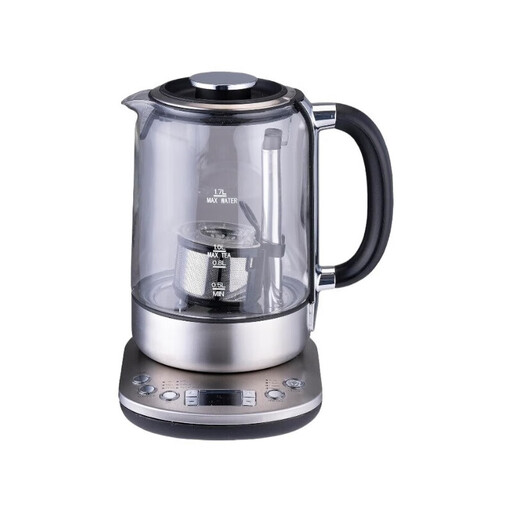 Image unavailable
For a team that also enjoys tea and infusions, this kettle combines a stated 1.7 L capacity with a removable infuser. The product name lists 2 200 W, 230 V, a digital display and a keep-warm function. The number of drinks per fill depends on cup size; it can’t make espresso on its own.
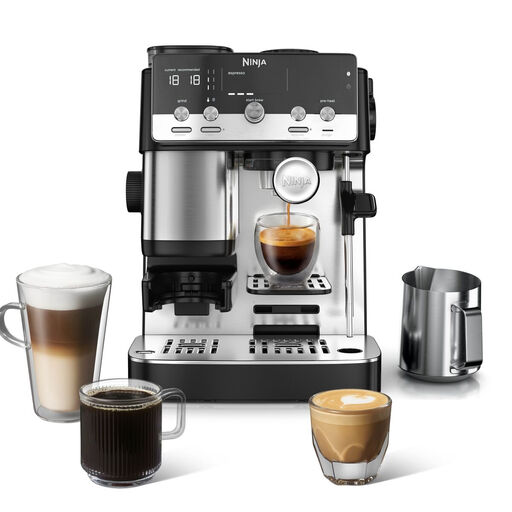 Image unavailable
This model is presented with a built-in grinder for making espresso from beans. If your team also wants filter coffee or milk-based drinks, check the features and type of milk frother on the ES301EU before buying. Also check the tank capacity to estimate how often it will need refilling during breaks.
Count how many drinks people want at the same time, then compare the amount made in one go with the usual cup size. Moulinex states that its Subito FG5S0DE0 makes 1.25 L, or up to 10 large or 15 small cups; Tefal says its 1.7 L kettle can make up to seven cups. A large tank on a bean-to-cup machine means fewer refills, but doesn’t mean all the drinks will be served together.
Nespresso recommends descaling its machines every three months or after around 300 capsules, and also advises checking the user manual. For a shared appliance, follow the instructions and alerts for the specific model rather than relying on the calendar alone.
For aluminium or plastic capsules, ADEME advises putting them in the recycling bin, bag or container for paper and packaging. Keep a container near the machine so everyone can dispose of their capsules after a break; collection points provided by brands are another option.
Assign refilling, emptying the grounds and routine cleaning to a main contact and their back-up. Display a routine based on the model’s manual, including descaling and which parts need cleaning: instructions vary between filter coffee machines, bean-to-cup machines and capsule machines.