How do the options compare?
Start by checking how much space you have while the appliances are in use, then compare your laundry loads with their capacities and installation requirements. Saving floor space doesn’t, by itself, solve questions around drying or access to the appliances.
Washer-dryer
Consider this if: you only have room for one appliance and your usual load is within its drying capacity.
Bear in mind: UFC-Que Choisir notes that drying capacity is lower than washing capacity, so you may need to split a full wash load before drying it.
Stacked washing machine and tumble dryer
Consider this if: you regularly dry large loads and have enough height for two separate appliances.
Bear in mind: UFC-Que Choisir recommends front-loading appliances of similar dimensions; you’ll also need to check that the stacking kit is compatible and the floor is stable.
Washing machine and separate airer
Consider this if: you don’t need to machine-dry every load and have somewhere to hang your washing.
Bear in mind: the drying area will be occupied while your clothes dry, so make sure it won’t block access around your home.
| Criteria |
What to check |
What I need |
| Drying capacity |
Check the washer-dryer’s washing and drying capacities, in kg, on the product details. If you’re choosing two appliances, check each one’s capacity separately. |
I want to dry my usual load without having to remove some of the washing every time. |
| Available space |
Measure the width, overall depth and clearance in front of the door. For a stacked set-up, allow for the height of both appliances and the kit. |
I need to be able to move around easily, including when I open the machine or hang out washing. |
| Stacking |
Check that both appliances are front-loading, confirm their dimensions and make sure their model numbers are supported by the kit. Use a flat, rigid and sturdy floor, with the tumble dryer on top. |
If I choose a stacked set-up, I want to make sure my two models and the space available are suitable. |
| Cycles and maintenance |
Compare the duration and energy and water consumption of the programmes you’ll use on the specific models. Check the instructions for accessing the parts that need cleaning. |
I sometimes run several loads in a row, so how long the only appliance is in use is an important factor. |
| Connections |
Before choosing a location, check for a water supply, waste outlet and suitable electrical socket. If you’re renting, find out whether any alterations would be needed. |
I’d rather make sure the laundry area can accommodate the planned installation before ordering the appliances. |
Which brand models should you consider?
These examples highlight specifications to check for a particular kit or model. They don’t guarantee that other appliances from the same brand will be compatible, or that these products are included in the Joybuy selection below.
Bosch
If you’re planning a stacked set-up, the Bosch WTZ2741X kit is an example of a depth requirement to check.
- Bosch states that this kit allows you to stack a tumble dryer on a washing machine with a depth of over 55 cm.
- This requirement applies to the WTZ2741X: check the exact model numbers of your appliances before choosing the kit.
Electrolux
The Electrolux STA8GW4 kit is an example of a different depth range for stacking front-loading appliances.
- Electrolux specifies it for front-loading washing machines and tumble dryers with a depth of 47 to 60 cm.
- The depth range alone isn’t enough to confirm that a particular pair of appliances is compatible with this kit.
LG
The LG F964R35WR washer-dryer is an example of a model listed with a 9 kg washing capacity and a 6 kg drying capacity.
- These capacities help you work out how much laundry to remove before drying a full washing load.
- Also check the dimensions and programme details for the exact model to assess its installation and use.
Samsung
Samsung lists the WD90DG5B15BEEF washer-dryer with a 9 kg washing capacity and a 6 kg drying capacity.
- The French product page gives the dimensions of this model as 600 × 850 × 600 mm.
- To compare it with another option, check the conditions and specifications for the cycle you’re interested in, rather than assuming that figures for a particular mode apply more broadly.
Washer-dryers to consider on Joybuy
These models combine washing and drying in one appliance. They’re a way to explore the washer-dryer option, particularly the difference between the listed capacities. You’ll still need to consider the criteria for a stacked set-up or separate drying when choosing the best arrangement for your home.
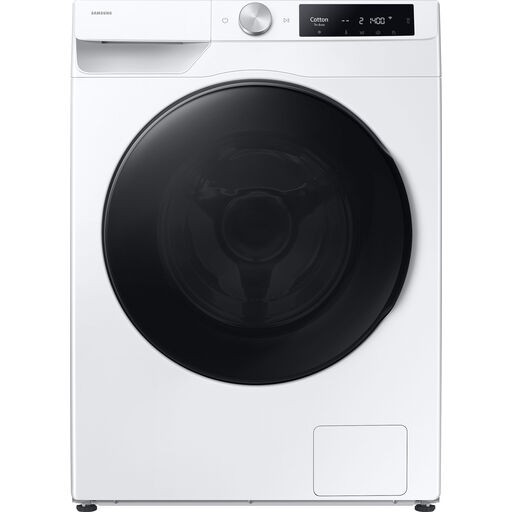 Image unavailable
Samsung WD11DG6B85BEU3 — 11/6 kg washer-dryer
This model combines washing and drying in one appliance, with a listed capacity of 11 kg for washing and 6 kg for drying. A full washing load will therefore need to be reduced before drying; also check the space required for installation.
View on Joybuy
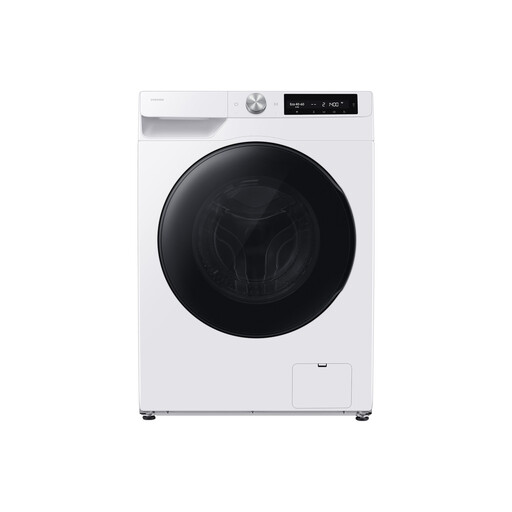 Image unavailable
Samsung WD10HG6U34BEU3 — 10/6 kg washer-dryer
This washer-dryer has a listed washing capacity of 10 kg and a drying capacity of 6 kg, so a full washing load can’t be dried all at once. Before choosing where to put it, check the connections and clearances, as well as the details for the wash-and-dry programme you’re interested in.
View on Joybuy
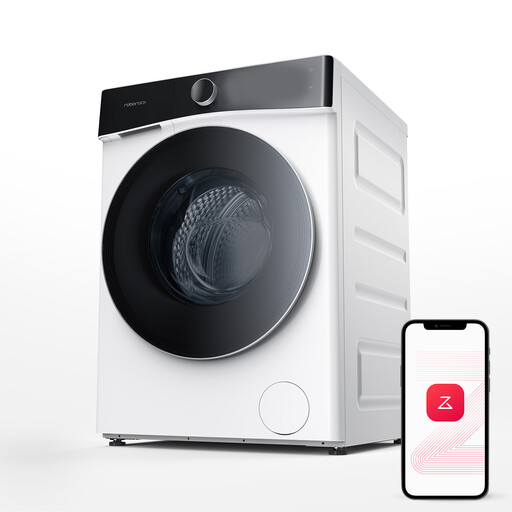 Image unavailable
Roborock Zeo Lite — 10/6 kg washer-dryer
A washer-dryer means you don’t need to place a second appliance on the floor. Its listed capacities are 10 kg for washing and 6 kg for drying: check that the latter suits your usual loads, then measure the space you have available.
View on Joybuy
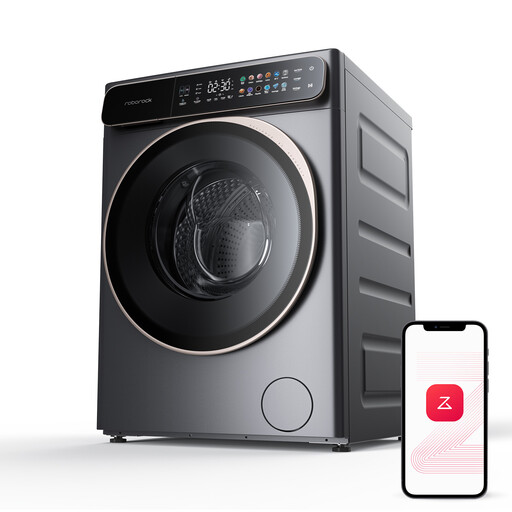 Image unavailable
Grey Roborock Zeo One — 10/6 kg washer-dryer
This grey model combines both functions, with a listed washing capacity of 10 kg and a drying capacity of 6 kg. If you often wash 10 kg at a time, you’ll need to split the load for drying; also check the dimensions and cycles to make sure they suit your needs.
View on Joybuy
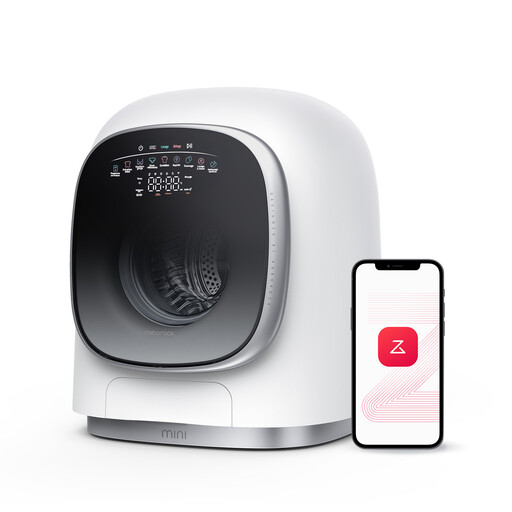 Image unavailable
White Roborock Marshmallow Zeo Mini — 1/0,5 kg
This mini washer-dryer has a listed washing capacity of 1 kg and a drying capacity of 0,5 kg. Consider it for very small loads, rather than as a replacement for a machine used for your usual household washing. Check its dimensions before deciding where to put it.
View on Joybuy
Frequently asked questions
Can I dry a whole load of washing in a washer-dryer?
Not if the load is bigger than the model’s drying capacity. UFC-Que Choisir notes that this is lower than the washing capacity: for a model listed as 9 kg for washing and 6 kg for drying, a 9 kg wash load needs to be reduced before drying.
Which appliance goes on top in a stacked set-up?
Place the tumble dryer on top of the washing machine, not the other way round. For this type of installation, UFC-Que Choisir recommends choosing front-loading appliances with similar dimensions. Also check that the kit is compatible and install the stack on a flat, rigid and sturdy floor.
Will a stacking kit fit all washing machines and tumble dryers?
No. Check the exact model numbers of both appliances and the kit requirements. For example, Bosch specifies a washing machine depth of over 55 cm for the WTZ2741X, while Electrolux gives a depth range of 47 to 60 cm for front-loading appliances with the STA8GW4. These ranges don’t make the kits interchangeable.
Do I need my landlord’s permission to set up a laundry area in a rented home?
In France, ANIL states that alterations to rented premises or equipment require the landlord’s written consent. Installing appliances using existing connections is different from work that alters them: check exactly what your project involves and get written consent before making any changes.
What should I check at home before ordering?
Measure the space and clearances, then check for a water supply, waste outlet and suitable electrical socket, following the installation points highlighted by UFC-Que Choisir. For a stacked set-up, also check the available height, kit compatibility and floor stability. In a bathroom, have the electrical requirements for the intended location checked.


