Choose a microwave and convection combination oven if you need one appliance to cook, reheat and defrost, provided its dimensions, capacity and settings suit the dishes you make. If oven cooking is your priority and you can keep or install a separate microwave, a convection oven is another option. In its test of built-in ovens, ADEME and the National Consumer Institute found no overall energy advantage for combination models: results varied by dish, model and brand.
Who is each set-up best for?
Small kitchens with room for just one appliance
If you can’t add a separate microwave, consider an oven that combines microwave and convection cooking in one cavity. ADEME and the National Consumer Institute tested built-in combination ovens; for any other type, check its own specifications and installation requirements.
Households that mainly cook in the oven
If roasts, poultry, baking or gratins make up most of your cooking, start with the settings and capacity you need for those dishes. A microwave you already own can handle reheating separately. The National Consumer Institute tested a beef roast, poultry portions and a sponge cake, but these recipes do not represent every use.
Households mindful of their overall appliance set-up
If you’re deciding whether to replace two appliances or keep a working microwave, compare the space they take up, the features you’ll use and the installation requirements. ADEME and the National Consumer Institute found different trade-offs depending on the appliance and dish, without identifying one set-up as universally more energy-efficient.
Which criteria help you choose?
Microwave and convection combination oven
Choose this if: one space needs to accommodate oven cooking, reheating and defrosting.
Bear in mind: the cavity and settings on the model you choose need to suit your recipes. ADEME and the National Consumer Institute’s test found no overall energy advantage for the built-in combination ovens tested.
Convection oven
Choose this if: oven cooking is your priority and you already have a microwave or can install one alongside it.
Bear in mind: an oven on its own won’t necessarily meet your microwave needs; factor in the space required for both appliances.
| Your priority |
What to check |
Who is it for? |
| Three functions, one space |
Measure the space and check that the appliance has microwave and convection settings, as well as defrost instructions. |
If there’s only room for one appliance, I want to be able to cook, reheat and occasionally defrost without adding a second machine. Around 42% of consumers prioritise having these functions in one appliance. |
| Oven-cooked dishes |
Compare cavity capacity and settings suited to the recipes you make regularly; check which accessories are included. |
If I often cook roasts, bake or make gratins, the space and features available for these dishes matter more than the number of appliances. Around 33% of consumers prioritise cooking performance. |
| The right-sized appliance set-up |
Compare complete set-ups, including any appliance you already own, the space required and installation needs. |
If my microwave still works, I want to avoid replacing functions I already have, while still considering the space two appliances take up. For around 25% of consumers, avoiding unnecessary appliances is the main concern. |
Mistakes to avoid before you buy
-
Assuming a combination oven always uses less energy
ADEME and the National Consumer Institute’s test found no clear overall energy advantage for built-in combination ovens. Results varied by dish, model and brand.
Start with the recipes you make most often and compare models under similar conditions of use, rather than relying on a general promise of energy savings.
-
Assuming a test of built-in appliances applies to every type
The appliances in the National Consumer Institute’s test were built in. Its findings therefore don’t automatically apply to freestanding models or appliances with different dimensions.
For the model you’re considering, check its installation type, dimensions, capacity and the manufacturer’s instructions.
-
Relying on the word ‘combination’ to save space
How much space you save depends on the actual space available. For their specific models, Bosch lists a height of 455 mm for the CMG7761B1, while Siemens lists a height of 595 mm for the HM778GMB1.
Measure your unit and check the required niche dimensions and clearances before placing your order.
If the unit or built-in space isn’t suitable, you may need to adapt it and arrange installation work.
-
Taking a promise of speed as a guaranteed result
A manufacturer’s claim about faster cooking won’t predict the results for every recipe. ADEME and the National Consumer Institute’s test found differences depending on the dish and appliance.
Check the settings and instructions for the model you’re considering, and make sure they suit the dishes you actually prepare.
Brands to consider, model by model
Siemens
Worth considering for a built-in microwave combination oven; check that the format suits your kitchen unit.
- For the HM778GMB1, Siemens lists a 67 l cavity and dimensions of 595 × 594 × 548 mm.
- These dimensions apply specifically to the HM778GMB1. Check the dimensions of your chosen model and its niche before buying.
Samsung
Worth considering if you’re looking for convection and microwave functions in a single built-in cavity.
- Samsung describes the NQ5B6753CAK as combining convection and microwave functions; the National Consumer Institute included it in its combination oven test.
- The inclusion of this model in the test doesn’t mean its findings apply to the entire Samsung range.
Whirlpool
Worth considering for a built-in convection oven when oven cooking remains your priority.
- For the OMR58CR1B only, Whirlpool lists a 71 l cavity and the option to cook on three levels.
- A Whirlpool convection oven was included in the National Consumer Institute’s test, but its findings don’t apply to the entire range.
Appliances for both set-ups
These Joybuy models let you explore two options: combine microwave and convection cooking in one appliance, or choose a built-in convection oven if you have space for a separate microwave.
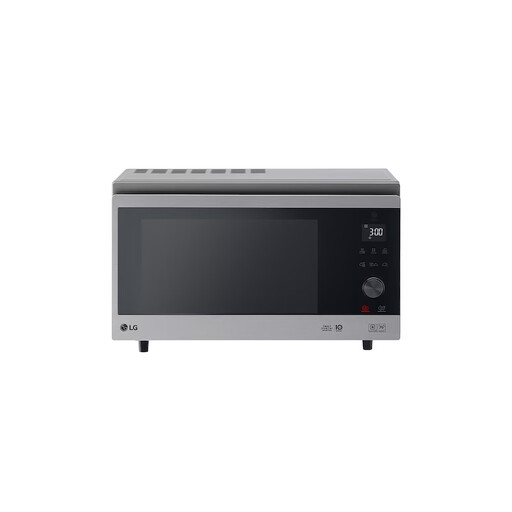 Image unavailable
LG MJ3965ACS, 39 l combination microwave
Worth considering if you want to combine convection cooking, reheating and defrosting in one appliance. The stated capacity is 39 l; check the available space and required ventilation clearances before choosing where to put it.
View on Joybuy
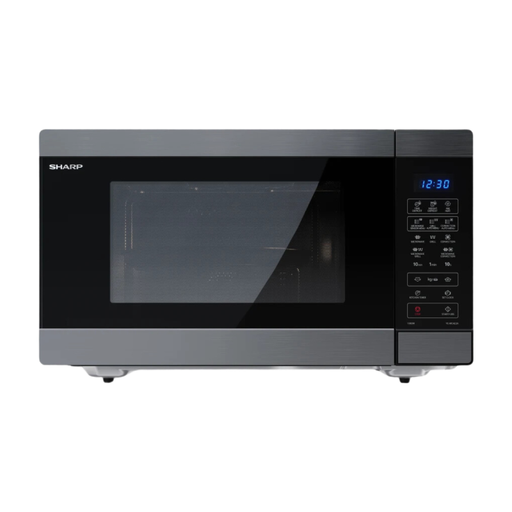 Image unavailable
SHARP YC-MC422AE-SB, 42 l combination microwave
Worth considering if the microwave and convection functions suit your needs in a cavity with a stated capacity of 42 l. If defrosting is essential, check the settings listed in the manual; also make sure you have enough space and ventilation.
View on Joybuy
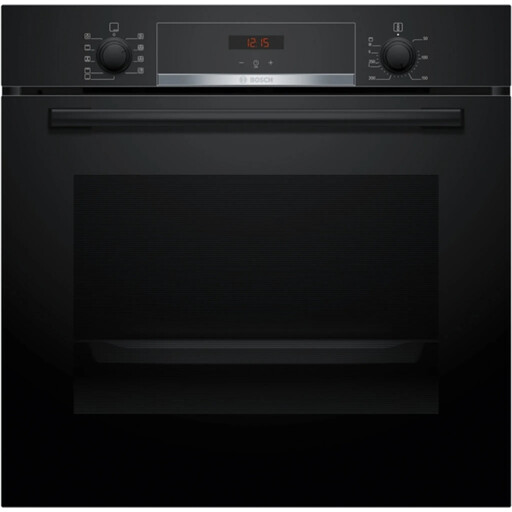 Image unavailable
Bosch HBA514BB3, 71 l built-in oven
Worth considering if oven cooking is your priority and you already have a separate microwave, or can make space for one. This built-in model is listed with a 71 l cavity and 3D hot air setting; check the niche and installation instructions before buying.
View on Joybuy
Frequently asked questions
Can a combination oven replace both an oven and a microwave?
Yes, if the model has the functions you need and its cavity suits the dishes you make. Check the cooking, reheating and defrost settings carefully. ADEME and the National Consumer Institute’s test, which was limited to built-in models, doesn’t conclude that a combination oven is the best choice in every case.
Does a combination oven use less energy than a convection oven?
There’s no general rule. In ADEME and the National Consumer Institute’s test of built-in ovens, efficiency varied by dish, model and brand. Compare information for similar models, taking your own needs into account.
What should you measure before choosing a built-in oven for a small kitchen?
Measure your kitchen unit, then compare its dimensions with the niche requirements and ventilation clearances for the model you’re considering. Also check the connection instructions and usable cavity capacity for your dishes; the external dimensions alone aren’t enough to confirm that installation is possible.
Does the legal guarantee of conformity apply to an oven bought from a trader in France?
Yes. According to the French Ministry of the Economy, it is mandatory for new, second-hand and refurbished goods sold by a trader to a private individual in France. Keep the product description and sales documents so you can explain any fault or discrepancy you find.


