Students who mainly reheat and defrost food
For a meal, soup or leftovers, start with a solo microwave. Before choosing a compact model, check that your usual dishes fit inside the cavity.


If you mainly reheat and defrost individual portions, start by comparing solo microwaves. According to UFC-Que Choisir, a grill is for browning food, while a combination model adds convection cooking. Choose these features if they genuinely suit the meals you make, especially if you don’t have an oven. In a small kitchen, check the space needed with the door open and make sure your dishes will fit inside, rather than relying on the litre capacity alone.
For a meal, soup or leftovers, start with a solo microwave. Before choosing a compact model, check that your usual dishes fit inside the cavity.
If you also want to brown food or cook dishes using convection, compare these features with the meals you usually make. A grill and a combination model don’t offer the same cooking functions.
Measure the space available, including the area in front of the open door, then compare the internal dimensions with those of your dishes. The litre capacity alone won’t tell you whether both will fit.
Start with the meals you prepare, then check the space available, how the model performs in use and any instructions specific to it.
| Priority | What to check | Your needs |
|---|---|---|
| Cooking functions | Compare a solo model for reheating and defrosting, a grill for browning food, and a combination model if you plan to use convection. UFC-Que Choisir distinguishes between these functions in its buying guide. | I mainly reheat meals: will I use the extra functions? If I often cook large dishes, I should also compare the space offered by a conventional oven or another suitable appliance. |
| Overall size and cavity | Measure the external width, height and depth, as well as the space needed with the door open. Then compare the internal dimensions and, if there is one, the turntable diameter with your dishes. | My appliance needs to fit in the space available, and my plates and containers need to fit inside it too. |
| Reheating and defrosting | Check the power and defrost settings. For a specific model, tests of how evenly it reheats food and how well it defrosts will tell you more about these uses than the stated power alone. These are among the criteria in UFC-Que Choisir’s testing protocol. | For portions I reheat regularly, I want easy-to-adjust controls and, where model test results are available, the chance to compare reheating performance. |
| Containers and installation | Check the manual for installation requirements and accessories. Look for guidance on whether your container or packaging is suitable, and follow the stated power and cooking-time instructions. Anses recommends following the manufacturer’s instructions on food packaging. | I want to know which containers to use and whether the appliance can be installed in the space I have, without assuming that instructions for one model apply to all models. |
A combination model adds a grill and convection cooking, but these features aren’t useful if you only need to reheat and defrost. In a small kitchen, its dimensions matter just as much as the cooking modes it offers.
Think about the meals you prepare: compare solo models first if you mainly reheat portions, a grill model if you often brown food, and a combination model if you plan to cook using convection.
The litre capacity won’t tell you whether the appliance will fit in your chosen spot or whether your dishes will fit inside the cavity. You’ll also need space in front of the appliance to open the door.
Measure the space and your dishes, then compare them with the model’s external and internal dimensions and, if applicable, its turntable.
Anses advises that overheating food can increase the transfer of substances from some types of packaging into food.
Check that the container is labelled as microwave-safe and follow the power and cooking-time instructions on the packaging.
These examples show some of the formats and functions you can compare. Their features won’t necessarily apply to every model from each brand.
Whirlpool’s range includes freestanding microwaves in different sizes, including compact models and grill models.
The MG23K3515AK is an example of a grill microwave for anyone who also wants to brown certain dishes.
The NN-C69KSM is worth considering if you want one appliance that combines microwave, grill and convection cooking.
These models let you compare solo microwaves for everyday reheating with a grill model if you’d also like to brown food. Check the dimensions and features of your chosen model to make sure it suits your kitchen and the meals you prepare.
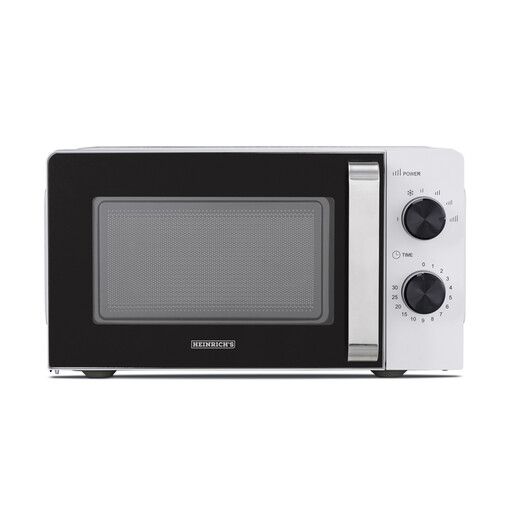 Image unavailable
Worth comparing for reheating and defrosting in a small home. The product listing states 700 W, six power levels and a 30-minute timer. Check the manual for installation clearance and container compatibility.
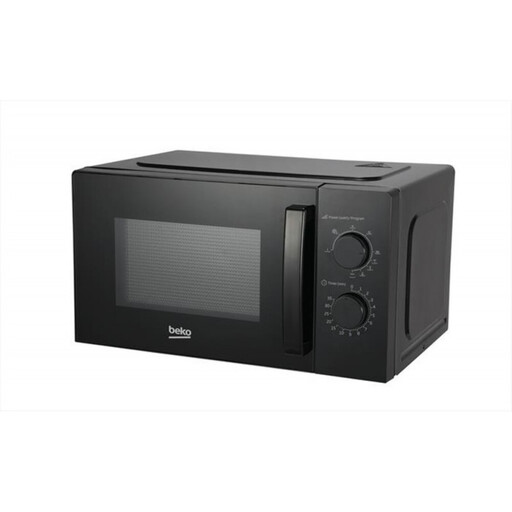 Image unavailable
Consider this model if you want to brown food as well as reheat it. The product listing states a 20 L capacity and 700 W. If you want to cook using convection, check specifically that this function is included; a grill alone doesn’t guarantee it.
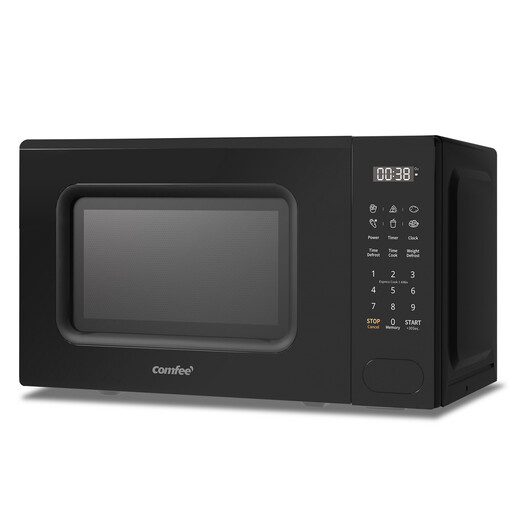 Image unavailable
A straightforward option to compare if you prefer digital controls for reheating and defrosting. The product listing states 700 W, six pre-set programmes and eleven power levels. Check the dimensions and installation instructions before deciding where to put it.
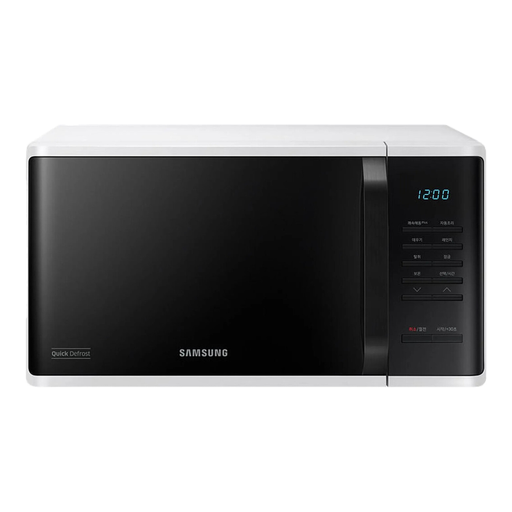 Image unavailable
Worth comparing for reheating and defrosting if you have enough space. The product listing mentions Quick Defrost and a 23 L capacity. Check the external dimensions and turntable size to make sure your plates will fit.
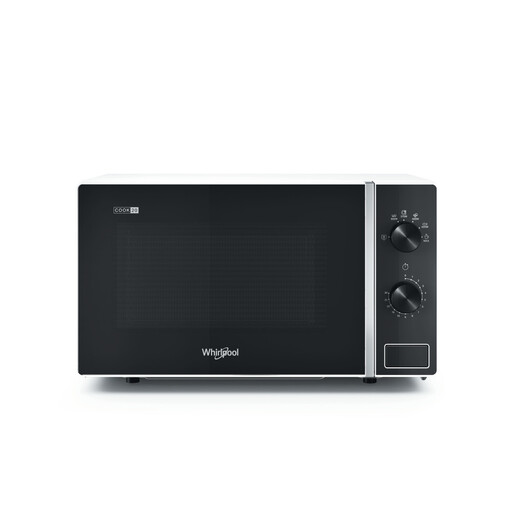 Image unavailable
Worth considering if you mainly use your microwave to reheat meals. The product listing states 20 L and 700 W. If defrosting is important to you, check the settings in the manual before choosing this model.
Yes, if you mainly use it for reheating and defrosting. UFC-Que Choisir distinguishes grills, which are particularly useful for browning food, from combination models, which add convection cooking. Compare these features if you genuinely plan to use them.
No. Compare the size of your dishes with the cavity and, if applicable, the turntable. Also measure the space available, including the area in front of the open door.
Check that it’s labelled as microwave-safe and follow the appliance instructions. If you’re heating food in its packaging, Anses recommends following the power and cooking-time instructions provided by the manufacturer on the packaging.
First, check the manual for the specific model. It will tell you whether the installation requirements suit the space you have in mind. Also measure the room needed to open the door and use the appliance.