One person or a couple with a small kitchen
If you shop often and don’t keep many frozen foods, compare an under-counter fridge with a larder fridge, depending on how much room you have for fresh food.


Choose the usable capacity to suit the size of your household and how often you shop. Then check separately how much freezer space you need and whether the appliance will fit in its intended spot. An under-counter model works for smaller storage needs; if you need a separate freezer compartment in the same appliance, consider a fridge-freezer. A larger model is only worth the space it takes up if you’ll make use of its capacity.
If you shop often and don’t keep many frozen foods, compare an under-counter fridge with a larder fridge, depending on how much room you have for fresh food.
If you also store frozen food, look at how a fridge-freezer divides its capacity between the fridge and freezer compartments, rather than considering its total capacity alone.
A multi-door model may be worth considering if your larger shops will fill its compartments and your kitchen and access points can accommodate it.
Start with the food you store between shops, then compare the capacity you need with the space actually available in your kitchen.
| Factor | What to check | My needs |
|---|---|---|
| Style | Compare the available height with that of an under-counter fridge, a larder fridge or a fridge-freezer. Gifam describes an under-counter model as an appliance with a top about 85 cm from the floor; check the dimensions of the model you choose. | In a kitchenette, I’d prioritise an appliance that fits the space over extra capacity I won’t use. |
| Fridge capacity | Check the fridge capacity separately from the total. Que Choisir suggests an average guide of 100 to 150 litres for one person, plus 50 litres for each additional person. Adjust this to suit your shopping habits. | If I shop once a week, I need enough room for the fresh food I buy between trips to the shop. |
| Freezer capacity | Check the capacity and type of the freezer compartment. Gifam describes a fridge-freezer as a two-door appliance with the freezer compartment at the bottom. | If I regularly store frozen food, I want to know how much space is set aside for it, separately from the space for fresh food. |
| Installation | Measure the space and delivery route, and check the door swing and clearances specified in the manual. Electrolux recommends allowing air to circulate around the appliance. | I need to be able to get the fridge into my kitchen, open its drawers and meet the installation requirements. |
| Energy and noise | For appliances with similar capacity and use, compare the A to G energy rating, annual consumption in kWh/year and noise emissions. The European Commission says this information appears on the energy label for household fridges. | If the fridge is near my living space, I’ll consider its stated noise level as well as its annual energy consumption. |
Two appliances with similar total capacities may offer different amounts of space for fresh and frozen food.
Make a note of how much room you need in each compartment, then compare their individual capacities in the product specifications.
An appliance may fit in its intended spot but still be difficult to deliver, or make it awkward to open the doors and access the drawers.
Before ordering, check the route in, the available space, which way the door opens and the clearances specified in the model’s manual.
Extra capacity is only useful if you’ll use it and can get the appliance into your kitchen. Que Choisir says an American-style fridge needs around 1 m of width in its guide to this style.
Measure the width and access points, then compare the compartment layout and annual energy consumption of the models you’re considering.
The energy rating doesn’t replace the other details on the label, including annual consumption, capacity and noise level, as outlined by the European Commission.
Compare these figures together, ideally across appliances that meet similar storage needs.
These Joybuy options include fridge-freezers for keeping fresh and frozen food in one appliance, as well as multi-door models for greater storage needs. Compare their compartments and dimensions with your kitchen before choosing.
 Image unavailable
Worth considering if your household needs plenty of space for fresh and frozen food and has a kitchen to suit.
Four doors, 467 L, Total No Frost and an E energy rating. Check the dimensions, access points and door clearance in the model documentation.
 Image unavailable
Worth comparing if your household shops regularly and wants several compartments in one appliance.
Three doors, 360 L, Total No Frost, an E energy rating and Wi-Fi. Check the capacity of each compartment, the dimensions and the installation requirements.
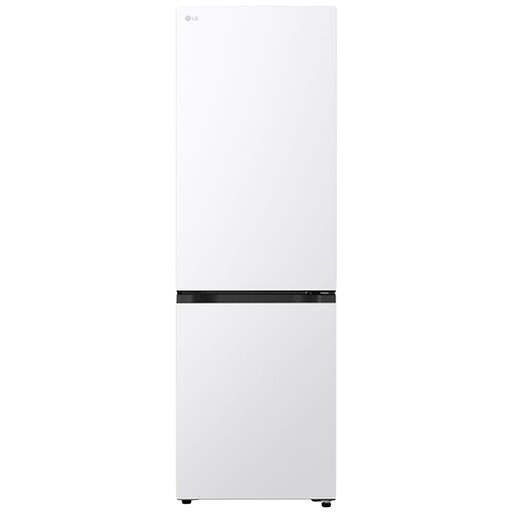 Image unavailable
This fridge-freezer is an option for storing fresh and frozen food in one appliance when you shop regularly.
Stated total capacity of 333 L and a C energy rating. Check the capacity of each compartment and the space needed for installation.
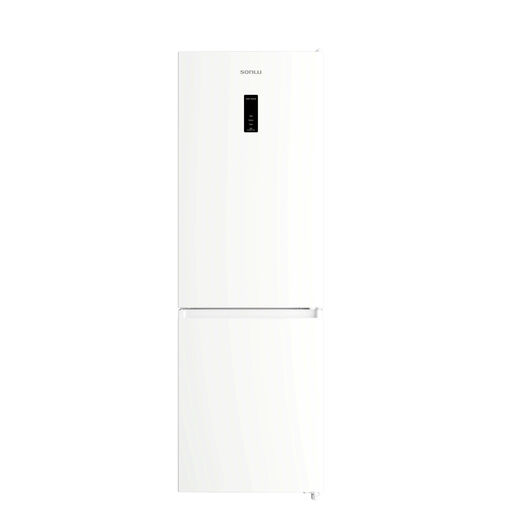 Image unavailable
Consider this model if you’re looking for a fridge-freezer with separate capacities for fresh and frozen food to help organise your household shop.
211 L for the fridge, 99 L for the freezer and a stated width of 60 cm; E energy rating and a reversible door. Also check the height, depth and clearances.
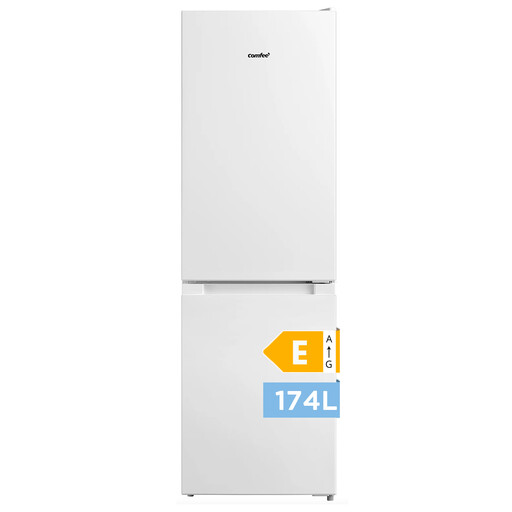 Image unavailable
This more compact capacity may suit a small home that still needs a separate freezer compartment.
174 L total capacity, a stated height of 150 cm, a four-star freezer, 39 dB and an E energy rating. Check that there’s enough room for fresh and frozen food for your shopping needs, and review the ventilation requirements.
Start with the size of your household, then adjust for how often you shop and how much fresh food you store. Que Choisir suggests an average guide of 100 to 150 litres for one person, plus 50 litres for each additional person. Compare this with the space you need between shops.
It may suit you if you have limited storage needs and don’t need a large freezer compartment. If you want to store fresh and frozen food regularly in one appliance, compare the separate capacities of a fridge-freezer with the space available.
Measure the space and every part of the delivery route, then compare these with the model’s dimensions. Also check the model documentation for door clearance, whether the door can be reversed and the clearances needed for installation.
The space you need to leave around the appliance should match the manufacturer’s instructions. Electrolux recommends allowing air to circulate, keeping the fridge away from heat sources and maintaining the ambient temperature range specified for the appliance.
Compare the efficiency rating with annual consumption, storage capacities and noise emissions, rather than looking at the letter alone. The European Commission says household fridge energy labels have used an A to G scale since 1 March 2021 and display this information.